
Introduction
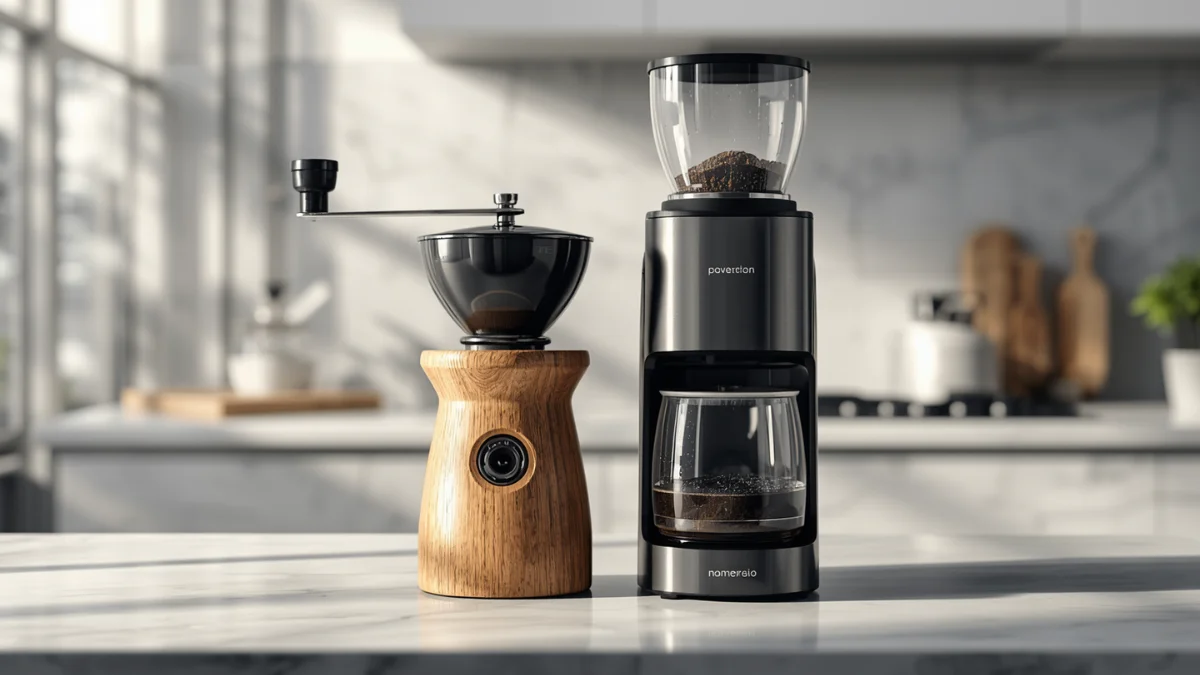
Choosing between a manual vs electric coffee grinder can be confusing—especially if you’re just starting your coffee journey. Both options grind coffee beans, but the experience, effort, and results can vary widely.
The grinder you choose directly affects your coffee’s taste, consistency, and brewing quality. Many beginners make the mistake of choosing based only on price or convenience—only to regret it later.
So, which is better: a manual or electric coffee grinder?
In this guide, we’ll break down the key differences, pros and cons, performance, and best use cases so you can confidently choose the right grinder for your needs.
Related: Read our guide on the best manual coffee grinders
Table of Contents
Quick Answer: Manual vs Electric Coffee Grinder
Manual vs Electric Coffee Grinder — Quick Verdict:
- Choose a manual coffee grinder if you want:
- Affordable option
- Portability for travel
- Hands-on control
- Choose an electric coffee grinder if you want:
- Fast, effortless grinding
- Consistent results daily
- Convenience for busy mornings
Summary:
- Manual grinder = best for budget + portability
- Electric grinder = best for convenience + speed
Key Differences: Manual vs Electric Coffee Grinder
| Feature | Manual Coffee Grinder | Electric Coffee Grinder |
|---|---|---|
| Ease of Use | Requires effort | One-button operation |
| Price | Budget-friendly | More expensive |
| Grind Consistency | Good (depends on user) | Highly consistent |
| Speed | Slow | Fast |
| Maintenance | Simple | Moderate |
| Portability | Excellent | Limited |
What Is a Manual Coffee Grinder?
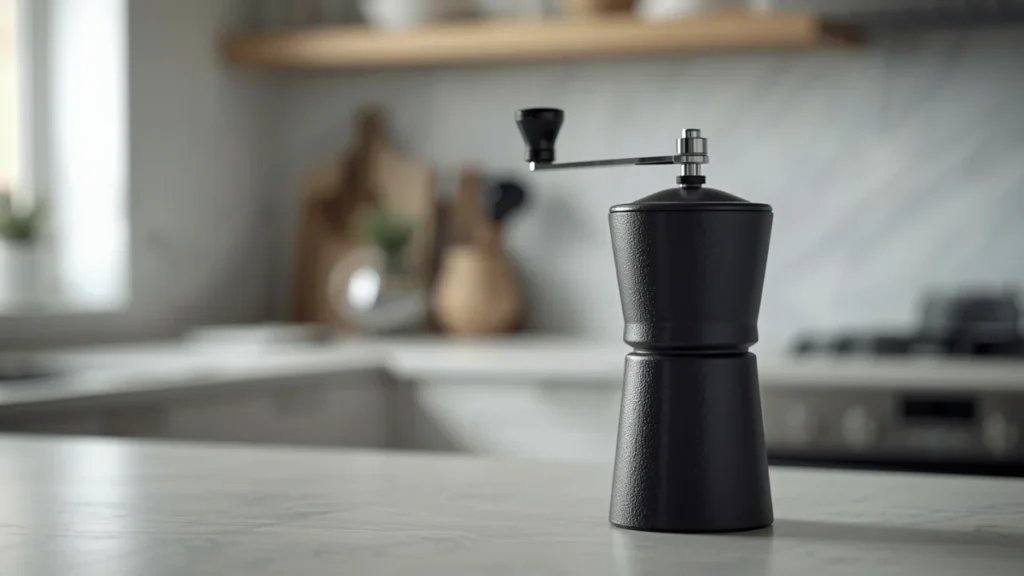
A manual coffee grinder is a hand-operated device that uses a crank to grind coffee beans. Most high-quality models use burr grinding mechanisms, which produce more uniform coffee grounds.
Best for:
- Beginners on a budget
- Travelers
- Coffee enthusiasts who enjoy the process
Manual grinders give you more control over grind size—but require time and effort.
What Is an Electric Coffee Grinder?
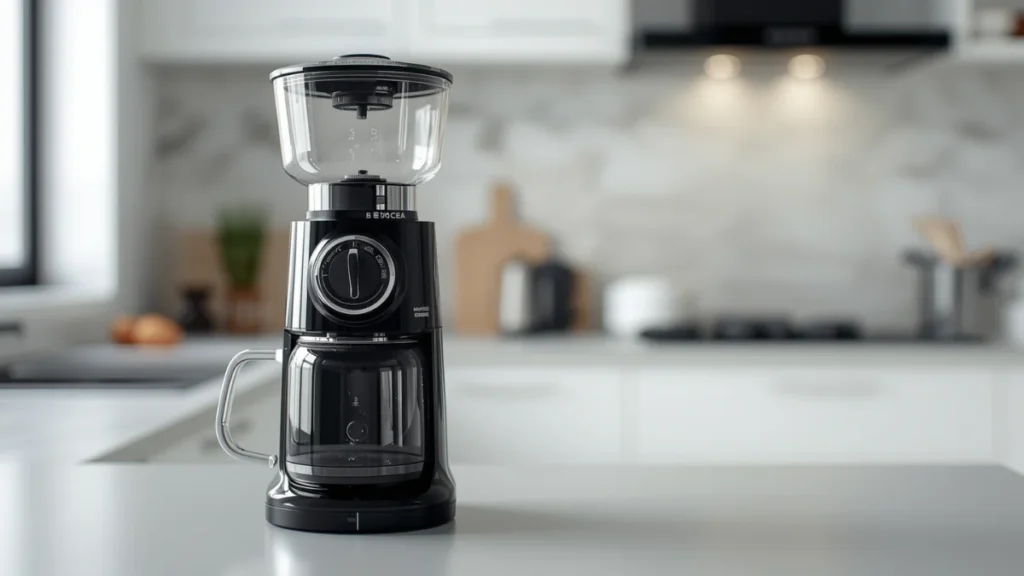
An electric coffee grinder uses a motor to grind beans automatically. With just a button press, you can quickly achieve consistent grind sizes.
There are two main types:
- Blade grinders (less consistent)
- Burr grinders (recommended for quality coffee)
Best for:
- Daily coffee drinkers
- Busy households
- Convenience-focused users
Electric grinders prioritize speed, ease, and consistency.
Real-World Insight
In everyday use, the biggest difference isn’t just grind quality—it’s convenience. Manual grinders feel satisfying but can become tiring over time. Electric grinders, on the other hand, make your morning routine faster and more consistent, especially if you brew coffee daily.
Manual vs Electric Coffee Grinder: Detailed Comparison
1. Ease of Use
Manual grinders require physical effort—you’ll need to crank for 1–3 minutes depending on grind size.
Electric grinders are effortless. Just press a button, and the machine does the work.
Winner: Electric coffee grinder (for ease and convenience)
2. Grind Quality & Consistency
Grind consistency is crucial for good coffee extraction.
- Manual grinders (burr type) can produce excellent results—but depend on user effort
- Electric burr grinders provide more consistent results automatically
Winner: Electric grinder (slightly better consistency)
3. Speed & Efficiency
Manual grinding takes time, especially for multiple cups.
Electric grinders can grind beans in seconds.
Winner: Electric grinder (much faster)
4. Price & Value
- Manual grinders are more affordable and great for beginners
- Electric grinders cost more but save time and effort
Winner: Manual grinder (budget-friendly)
5. Maintenance & Durability
Manual grinders:
- Fewer parts
- Easier to clean
- Less prone to failure
Electric grinders:
- Require more maintenance
- The motor can wear out over time
Winner: Manual grinder (simpler maintenance)
6. Portability & Storage
Manual grinders are:
- Compact
- Lightweight
- Ideal for travel
Electric grinders:
- Bulky
- Require power
Winner: Manual grinder (high portability)
Pros and Cons of Manual vs Electric Coffee Grinders
Manual Coffee Grinder
Pros:
- Affordable
- Portable
- Quiet operation
- Good control over grind
Cons:
- Requires effort
- Slower grinding
- Not ideal for large batches
Electric Coffee Grinder
Pros:
- Fast and convenient
- Consistent grind quality
- Ideal for daily use
- Handles large quantities easily
Cons:
- More expensive
- Noisy
- Less portable
Which Coffee Grinder Is Best for You?
Choose a Manual Coffee Grinder if:
- You brew 1–2 cups at a time
- You enjoy hands-on coffee making
- You travel often
- You want a budget-friendly option
Choose an Electric Coffee Grinder if:
- You drink coffee daily
- You want speed and convenience
- You brew multiple cups
- You prefer effortless operation
Once you’ve chosen your grinder, the next step is mastering your brew—this coffee brewing basics guide is a great place to start.
Common Mistakes When Choosing a Coffee Grinder
1. Choosing based only on price
A cheap grinder may compromise the grind quality and the coffee’s taste.
2. Ignoring your daily usage
Manual grinders can feel tiring if used frequently.
3. Overlooking grind consistency
Inconsistent grind leads to poor extraction and bad coffee
Grind consistency plays a big role in taste. Understanding coffee grind size and extraction can help improve your results.
Best Use Cases
- Best coffee grinder for beginners: Manual grinder
- Best for daily use: Electric grinder
- Best for travel: Manual grinder
- Best for convenience: Electric grinder
Related Coffee Guides
If you’re building your coffee setup, consider learning about:
FAQs: Manual vs Electric Coffee Grinder
Which is better: manual or electric coffee grinder?
It depends on your needs. Manual grinders are great for budget and portability, while electric grinders are better for convenience and daily use.
Does a manual grinder make better coffee?
Not necessarily. Both manual and electric burr grinders can produce excellent coffee. The difference lies in effort and consistency.
Is an electric coffee grinder worth it?
Yes, especially if you make coffee daily. It saves time and provides consistent results with minimal effort.
How long does it take to grind coffee manually?
Usually 1–3 minutes, depending on grind size and quantity.
TL;DR: Manual vs Electric Coffee Grinder
- Manual grinder = best for budget, travel, and control
- Electric grinder = best for speed, convenience, and daily use
- Key difference = effort vs ease
- Choose based on your lifestyle and coffee habits
Final Thoughts
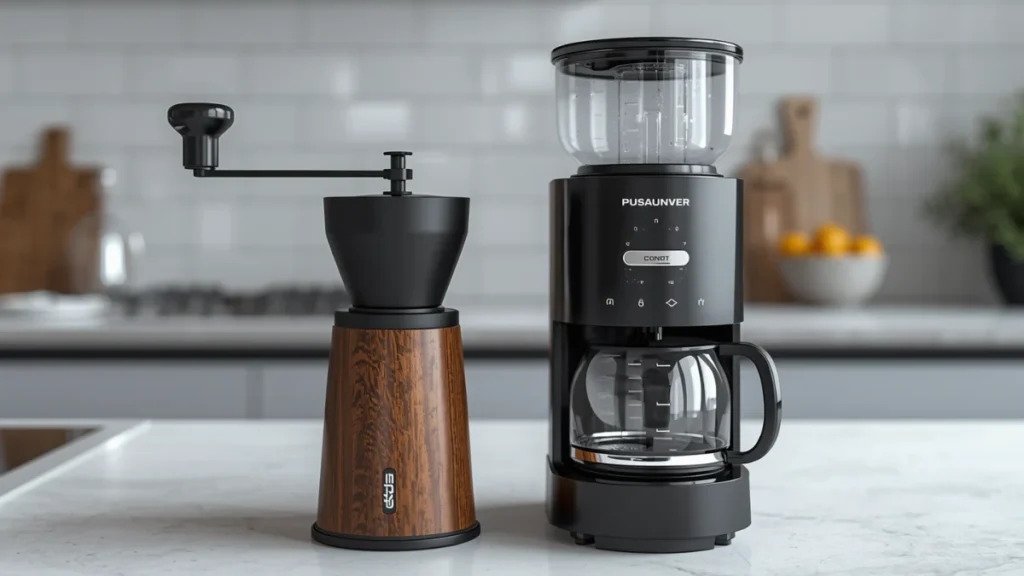
When comparing a manual vs electric coffee grinder, there’s no one-size-fits-all answer.
If you enjoy the process, value portability, and want to save money, a manual grinder is a fantastic choice. But if you prioritize speed, consistency, and convenience—especially for daily coffee—an electric grinder is worth the investment.
At the end of the day, the best coffee grinder is the one that fits seamlessly into your routine—and helps you enjoy better coffee every single day.