
Introduction
Brewing the perfect cup of coffee isn’t just about high-quality beans or fancy equipment—it all starts with the grind size. Whether you’re making espresso, pour-over, French press, or cold brew, choosing the right grind size is the single most important factor that determines how your coffee tastes.
This complete Coffee Grind Size Chart guide breaks down everything you need to know—from understanding grind sizes to matching them with brewing methods for optimal flavor extraction. If your coffee ever tastes too bitter, too weak, or just “off,” the grind size is likely the reason.
The taste of coffee is also affected by the oils and fine-ground buildup inside the grinder. Check out this Coffee Grinder Cleaning Guide for a step-by-step tutorial.
In this pillar guide, you’ll learn:
- What does coffee grind size mean
- How grind size affects extraction and flavor
- A complete grind size chart by brewing method
- Expert tips to improve your coffee instantly
- Common mistakes to avoid
By the end, you’ll have the confidence to grind your coffee like a pro and consistently brew café-quality coffee at home.
If you’re new to brewing, this complete home coffee brewing guide will give you a solid foundation in methods, grinders, and essential tools.
Table of Contents
Quick Answer: What Is the Best Coffee Grind Size?
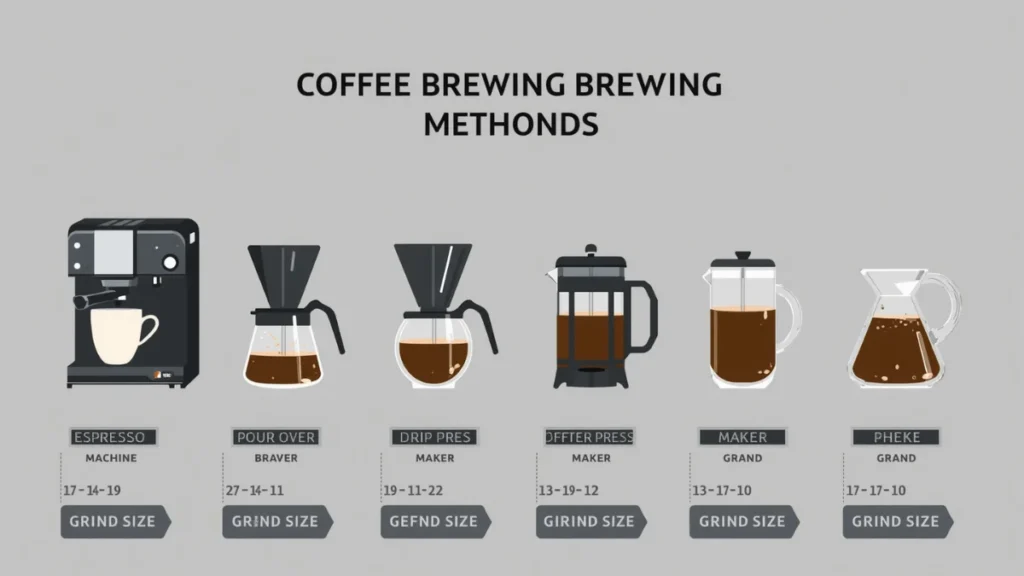
The best coffee grind size depends on your brewing method:
- Espresso → Fine grind
- Pour Over → Medium grind
- Drip Coffee → Medium grind
- French Press → Coarse grind
- Cold Brew → Extra coarse grind
Key takeaway: Match grind size to brew time—short brew = finer grind, long brew = coarser grind.
What Is Coffee Grind Size?
Coffee grind size refers to how finely or coarsely coffee beans are ground before brewing. It directly impacts how water interacts with the coffee grounds during extraction.
When coffee is ground:
- Finer particles increase surface area → faster extraction
- Coarser particles reduce surface area → slower extraction
This balance determines whether your coffee tastes rich and smooth—or bitter and weak.
Why Grind Size Matters
Grind size affects three critical elements:
- Extraction Speed – How quickly flavors are pulled from coffee
- Flavor Balance – Sweet, bitter, or sour notes
- Brew Time – How long water stays in contact with coffee
The right grind size ensures your coffee extracts evenly and tastes balanced.
Grind size works closely with brewing ratios, so understanding the coffee brewing ratio guide will help you achieve better balance and consistency.
Coffee Grind Size Chart (Quick Reference)
| Brewing Method | Grind Size |
| Espresso | Fine |
| Pour Over | Medium |
| Drip Coffee | Medium |
| French Press | Coarse |
| Cold Brew | Extra Coarse |
Bookmark this chart—it’s your go-to guide for consistent brewing.
To apply these grind sizes correctly, it’s important to use the right equipment—this essential coffee brewing tools guide covers everything you need.
Coffee Grind Sizes Explained (With Texture Guide)
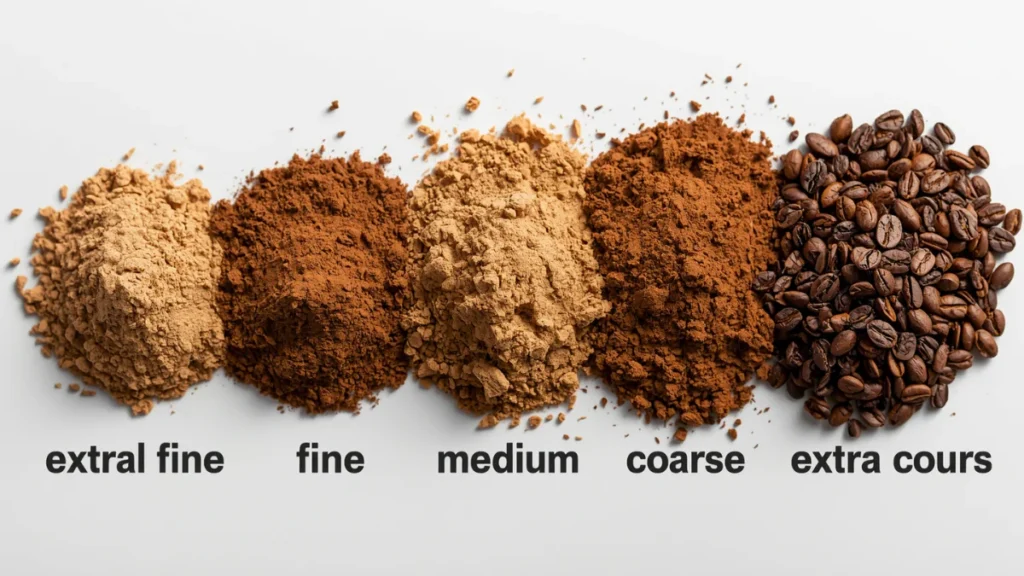
Understanding each grind level helps you fine-tune your brewing process.
1. Extra Fine Grind
- Texture: Powder-like (similar to flour)
- Feel: Very smooth
- Brewing Method: Turkish coffee
This ultra-fine grind allows maximum extraction in a very short time. It creates intense, bold coffee with a thick body.
2. Fine Grind
- Texture: Similar to table salt
- Brewing Method: Espresso
Fine grind is essential for espresso because the brewing time is very short (20–30 seconds). It ensures quick and efficient extraction under pressure.
👉 Too coarse = weak espresso
👉 Too fine = bitter, over-extracted shot
3. Medium Grind
- Texture: Similar to sand
- Brewing Methods:
- Pour-over
- Drip coffee makers
This is the most versatile grind size. It provides balanced extraction and is ideal for most home brewing setups.
4. Coarse Grind
- Texture: Similar to sea salt
- Brewing Method: French press
Coarse grind allows water to flow freely and prevents over-extraction during long steeping times.
👉 Produces a smooth, full-bodied cup with less bitterness.
5. Extra Coarse Grind
- Texture: Large chunks (like peppercorns)
- Brewing Method: Cold brew
This grind is perfect for long brewing times (12–24 hours), allowing slow and even extraction.
👉 Results in a mellow, low-acid, smooth coffee.
Why Grind Size Matters (Deep Dive)
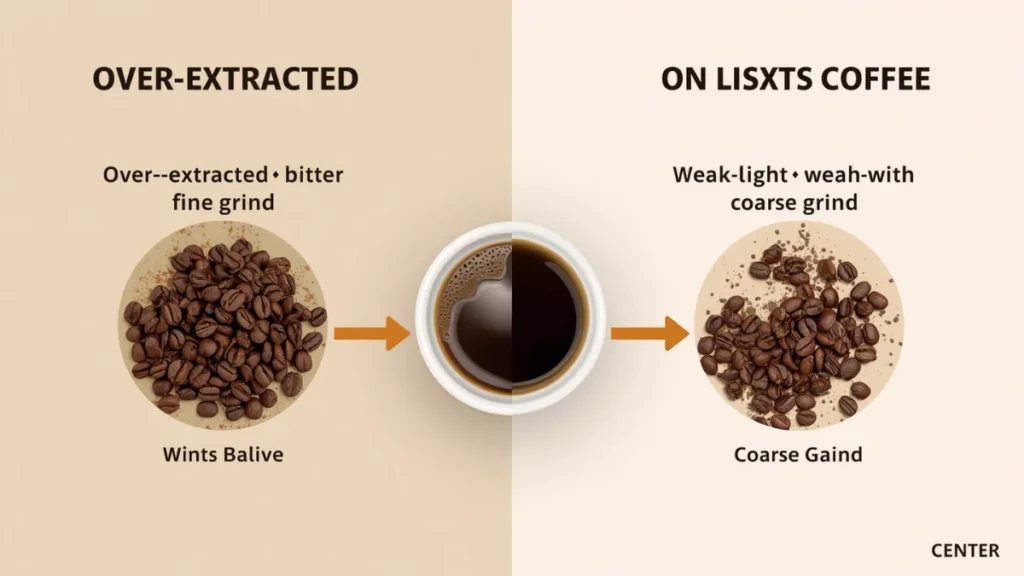
Getting grind size wrong can ruin your coffee—even with premium beans.
If the Grind Is Too Fine
- Water flows slowly
- Over-extraction occurs
- Taste becomes:
- Bitter
- Harsh
- Astringent
If the Grind Is Too Coarse
- Water flows too quickly
- Under-extraction occurs
- Taste becomes:
- Weak
- Sour
- Watery
The Perfect Balance
👉 Balanced grind size = balanced extraction = perfect flavor
This is the golden rule of coffee brewing.
Grind Size by Brewing Method (Detailed Guide)
Pour Over Coffee
- Recommended Grind: Medium
- Brew Time: 2–4 minutes
A medium grind ensures water flows evenly through the coffee bed, extracting balanced flavors.
👉 Too fine → clogged filter
👉 Too coarse → weak coffee
For better clarity and control, follow this pour-over coffee brewing guide to refine your technique.
French Press
- Recommended Grind: Coarse
- Brew Time: 4–5 minutes
Coarse grind prevents sediment and over-extraction.
👉 Gives a rich, full-bodied cup with natural oils intact.
To get the best results, check out this French press coffee brewing guide for detailed steps.
Cold Brew
- Recommended Grind: Extra coarse
- Brew Time: 12–24 hours
A coarse grind ensures slow extraction, resulting in smooth and low-acid coffee.
If you prefer smooth, low-acid coffee, this cold-brew coffee guide will walk you through the process.
Espresso
- Recommended Grind: Fine
- Brew Time: 20–30 seconds
Fine grind creates the resistance needed for pressure-based extraction.
👉 Small adjustments can drastically change flavor.
Drip Coffee Maker
- Recommended Grind: Medium
This grind allows consistent water flow and balanced extraction in automatic machines.
How to Choose the Right Grind Size
Choosing the perfect grind size depends on several factors:
1. Brewing Method
Always start here—each method requires a specific grind size.
2. Brew Time
- Short brew → Fine grind
- Long brew → Coarse grind
3. Taste Preference
- Prefer strong coffee → Slightly finer grind
- Prefer smooth coffee → Slightly coarser grind
4. Equipment Type
Different machines may require slight adjustments to the grind.
Your grinder plays a major role in consistency—this manual coffee grinder buying guide explains how to choose the right one.
Common Coffee Grind Mistakes (And How to Fix Them)
1. Using One Grind Size for Everything
Problem: Poor extraction
Fix: Adjust grind size for each method
2. Using a Blade Grinder
Problem: Uneven grind → inconsistent flavor
Fix: Use a burr grinder for uniform particles
3. Grinding Too Early
Problem: Loss of aroma and freshness
Fix: Grind just before brewing
4. Ignoring Taste Feedback
Problem: Repeating bad coffee
Fix: Adjust grind size based on taste
Pro Tips for Better Coffee Grinding
Want to elevate your coffee instantly? Follow these expert tips:
1. Always Grind Fresh
Freshly ground coffee preserves aroma and flavor compounds.
2. Use a Burr Grinder
Burr grinders provide:
- Consistent particle size
- Better extraction
- Improved flavor
3. Adjust Gradually
Make small changes:
- Too bitter? Go coarser
- Too weak? Go finer
4. Store Beans Properly
Keep beans in:
- Airtight container
- Cool, dark place
5. Dial In Your Grind
Experiment until you find your “perfect cup.”’
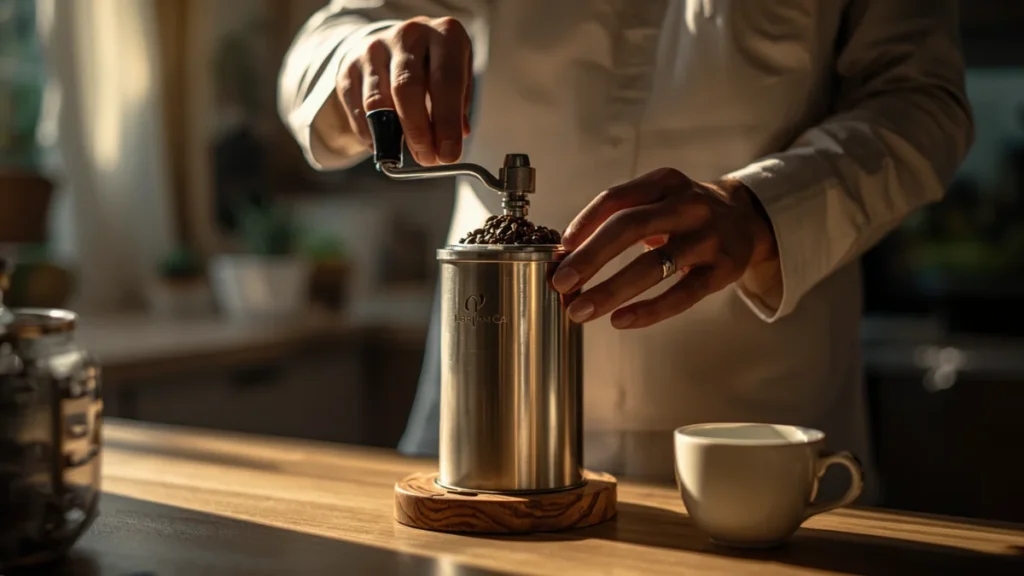
If you’re looking for recommendations, explore our list of the best manual coffee grinders for consistent and precise grinding.
Coffee Grind Size Chart: FAQ
What grind size is best for pour-over coffee?
Medium grind is ideal because it provides balanced extraction and smooth flavor.
What grind size is best for French press?
Coarse grind works best to prevent over-extraction and sediment.
Does grind size really affect coffee taste?
Yes, grind size significantly affects extraction, which directly impacts flavor, strength, and aroma.
Can I use the same grind for all brewing methods?
No. Each brewing method requires a specific grind size for optimal results.
Why does my coffee taste bitter?
Your grind is likely too fine, causing over-extraction.
Why does my coffee taste weak?
Your grind is probably too coarse, leading to under-extraction.
To bring everything together—from grind size to brewing technique—refer to this beginner’s guide to brewing coffee at home for a complete overview.
Conclusion
Mastering coffee grind size is one of the simplest yet most powerful ways to improve your coffee. It’s the foundation of proper extraction and the key to unlocking the full flavor potential of your beans.
From fine grinds for espresso to coarse grinds for French press and cold brew, each brewing method requires precision and attention to detail. When you match the right grind size to the right method, everything changes—your coffee becomes richer, smoother, and perfectly balanced.
The Coffee Grind Size Chart is more than just a reference—it’s your roadmap to consistently great coffee. By understanding how grind size influences extraction, you can troubleshoot issues, refine your technique, and experiment with confidence.
Whether you’re a beginner or a seasoned coffee lover, dialing in your grind size transforms everyday coffee into an exceptional experience.
👉 Remember: Great coffee doesn’t start with the machine—it starts with the grind.