
Introduction
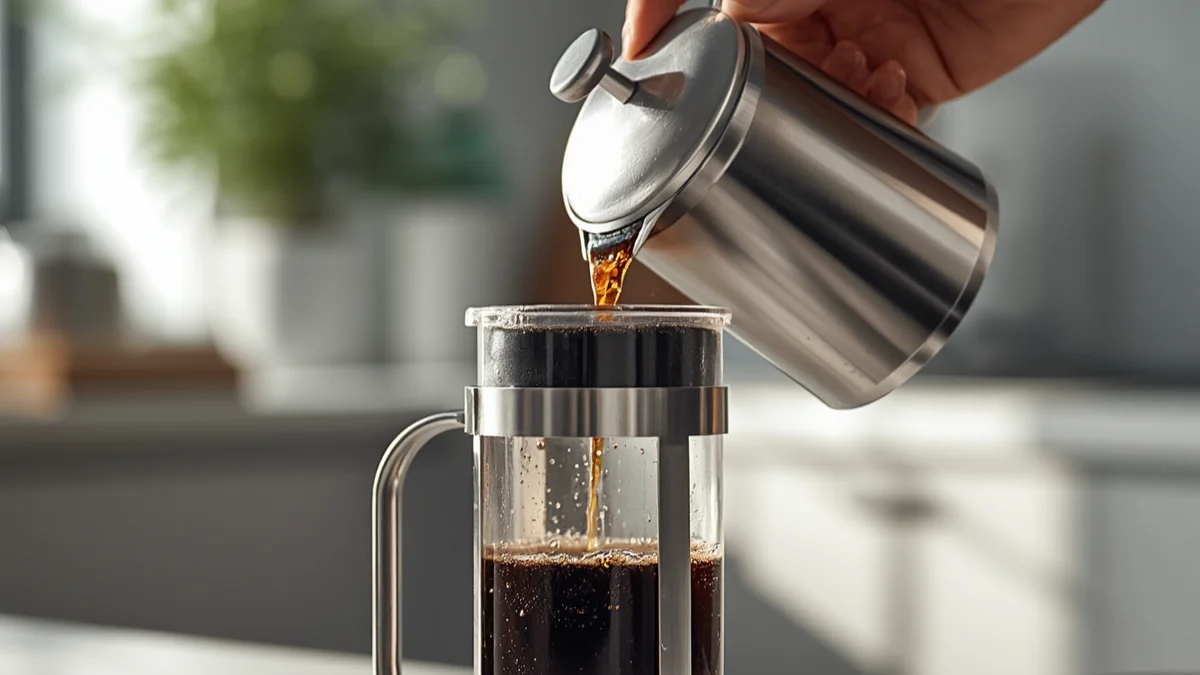
The French press coffee ratio is one of the most important factors in brewing rich, full-bodied coffee at home. Using the right coffee-to-water ratio ensures proper extraction, balanced flavor, and consistent results.
If your French press coffee tastes too strong, weak, bitter, or watery, the ratio is often the first thing you should adjust.
In this guide, you’ll learn;
- The ideal French press coffee ratio
- How to adjust it to taste
- How to measure it accurately for better brewing results.
Table of Contents
Quick Answer: Best French Press Coffee Ratio
The ideal French press coffee ratio is 1:15 (coffee to water).
Use 1:14 for stronger coffee
Use 1:16 for a lighter cup
Start with 1:15 and adjust as needed.
What Is a Coffee-to-Water Ratio?
A coffee-to-water ratio refers to the amount of coffee used relative to the amount of water during brewing.
It is usually written as:
👉 1:X (coffee: water)
Example:
- 1:15 → 1 gram of coffee for 15 grams of water
- 1:14 → stronger brew
- 1:16 → lighter brew
Using a consistent ratio helps you control strength and repeat good results.
For a broader understanding, see our Coffee Brewing Ratio Explained guide.
Why Ratio Matters in French Press Coffee
French press brewing uses an immersion method, where coffee grounds steep directly in water. As a result, the ratio plays a key role in extraction.
If the Ratio Is Too Strong
- Coffee may taste bitter or heavy
- Over-extraction occurs
If the Ratio Is Too Weak
- Coffee may taste thin or watery
- Under-extraction occurs
Adjusting the ratio is the easiest way to improve your French press coffee.
How to Measure French Press Coffee Ratio
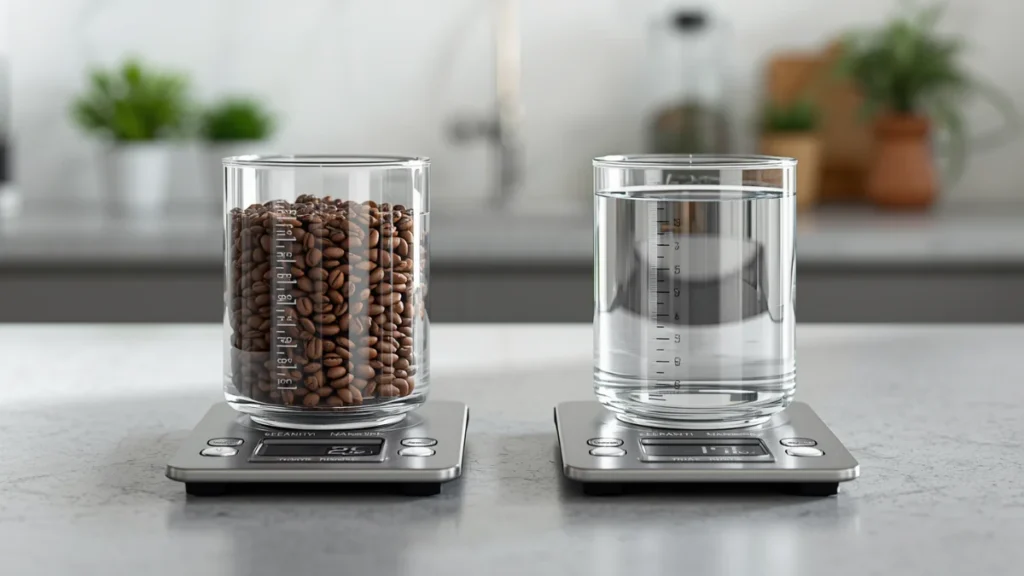
Using a digital scale is the most accurate way to measure coffee and water.
Step-by-Step Guide
- Weigh your coffee (e.g., 20 grams)
- Multiply by ratio (20 × 15 = 300 grams water)
- Add water and steep
Measuring accurately ensures consistent brewing results.
For better precision, see our Coffee Brewing Tools guide.
Adjusting Ratio Based on Taste
Once you understand the standard ratio, you can adjust it to match your preference.
Stronger Coffee
👉 Use 1:14
- Richer and heavier body
- More intense flavor
Balanced Coffee
👉 Use 1:15
- Most common recommendation
- Full-bodied and smooth
Lighter Coffee
👉 Use 1:16
- Less intense flavor
- Lighter body
Small changes can significantly affect taste.
How Ratio Works with Grind Size
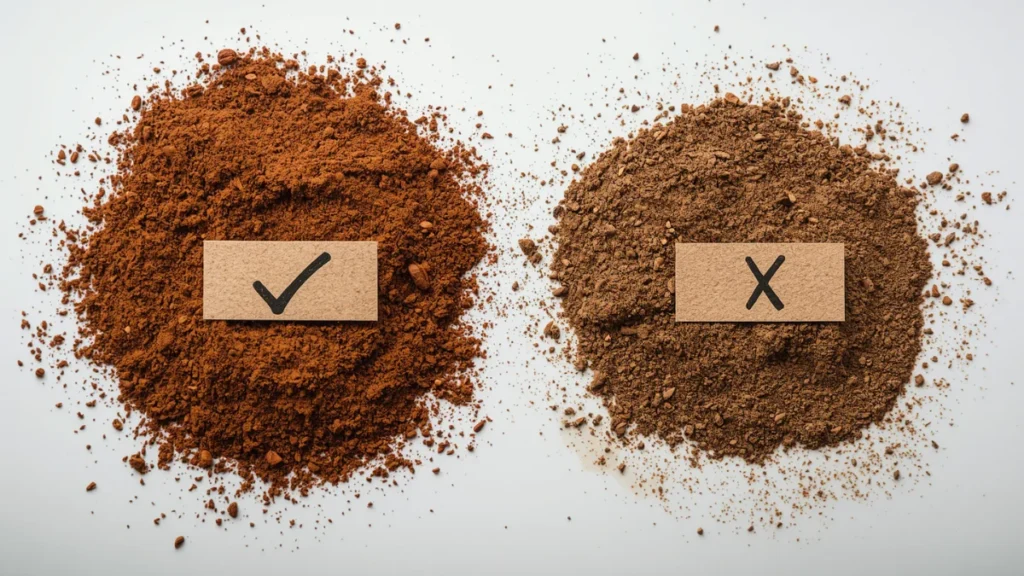
Ratio and grind size must work together for proper extraction.
- The French press requires a coarse grind size
- Fine grind → over-extraction → bitterness
- Coarse grind → balanced extraction
If Coffee Tastes Bitter
- Try a slightly coarser grind
- Or reduce the coffee amount
If Coffee Tastes Weak
- Try a slightly finer grind
- Or increase the coffee amount
Learn more in our Coffee Grind Size Chart.
Common French Press Ratio Mistakes
These are some of the common mistakes and the fixes:
Using the Wrong Grind Size
Your coffee ends up bitter and sludgy instead of smooth and balanced.
French press requires a coarse grind — not a fine one.
Not Measuring Coffee
Your brew tastes weak one day and overpowering the next.
You should always measure your coffee to maintain a consistent flavor and strength.
Using Volume Instead of Weight
Your coffee turns out unpredictable because scoops don’t account for bean density.
Grams are more accurate than spoons.
Changing Too Many Variables
You’ll never know what caused the bad brew, making it impossible to fix.
Adjust the ratio first before changing the grind size.
Quick Reference Table
This is a ready reckoner for various levels of coffee strength
| Strength | Ratio | Example (20g coffee) |
|---|---|---|
| Strong | 1:14 | 280g water |
| Balanced | 1:15 | 300g water |
| Light | 1:16 | 320g water |
How to Choose the Right Ratio
If you’re unsure where to start:
- Prefer strong coffee → 1:14
- Want balanced flavor → 1:15
- Prefer lighter coffee → 1:16
Start with a standard ratio and adjust gradually.
TL;DR Summary: French Press Coffee Ratio Explained — How to Brew the Perfect Cup
Mastering the French press coffee ratio is the key to achieving a rich, balanced, and flavorful brew every time. The ideal ratio is 1:15 (coffee to water) — meaning one part coffee for every fifteen parts water. For a bolder taste, use 1:14, and for a lighter, smoother cup, go with 1:16.
Understanding and adjusting your coffee-to-water ratio ensures proper extraction and consistency, helping you avoid coffee that’s too bitter, weak, or watery. Whether you’re a beginner or a seasoned coffee lover, measuring your ingredients accurately and experimenting with ratios will help you brew the perfect French press coffee at home.
This guide breaks down the science behind ratios, how to tweak them to your taste, and the best methods for precise measurement — so every cup is full-bodied, aromatic, and perfectly balanced.
The best coffee maker for you depends on your preferred strength, flavor, grind size, and brewing style, so see how a French press compares with a moka pot.
French Press Coffee Ratio: FAQs
What is the best French press coffee ratio?
The most recommended ratio is 1:15.
Why does my French press coffee taste bitter?
It may be due to too much coffee or a too-fine grind.
Can I use tablespoons instead of grams?
It’s not recommended — weight provides better accuracy.
Why does my coffee taste weak?
You may be using too little coffee or a too-coarse grind.
Final Thoughts

The French press coffee ratio is one of the easiest ways to improve your brewing results. Starting with a 1:15 ratio and making small adjustments based on your taste preferences will help you achieve consistent and flavorful coffee.
Once you understand how ratio affects extraction, you’ll have better control over strength and balance.
- For a complete brewing method, read our French Press Coffee Guide
- If you are a beginner in French Press coffee brewing, you may read the related guides to improve consistency and perfection
- To find fixes to the issue of pour-over coffee draining too fast: read our related guide