
Introduction
If your pour-over coffee tastes bitter, sour, or inconsistent, the problem often isn’t your beans—it’s your pouring technique.
In pour-over brewing, how you pour water directly controls extraction. Even with the right grind size and coffee ratio, poor pouring can lead to uneven saturation and disappointing results.
This guide breaks down exactly how to pour water for pour-over coffee step by step, so you can achieve a balanced, smooth, and flavorful cup every time.
Let’s start with the essential technique you need to know
Quick Answer: How to Pour Water in Pour-Over Coffee
To pour water correctly in a pour-over coffee:
- Start with a bloom pour (2–3× coffee weight)
- Wait 30–45 seconds
- Pour slowly in circular motions
- Maintain a steady, controlled flow
- Use 2–3 stages (pulse pouring)
👉 This ensures even extraction and better flavor balance.
For precise measurements, refer to our Coffee Brewing Ratio Guide
Understanding why this technique works will help you master it faster
Why Pouring Technique Matters
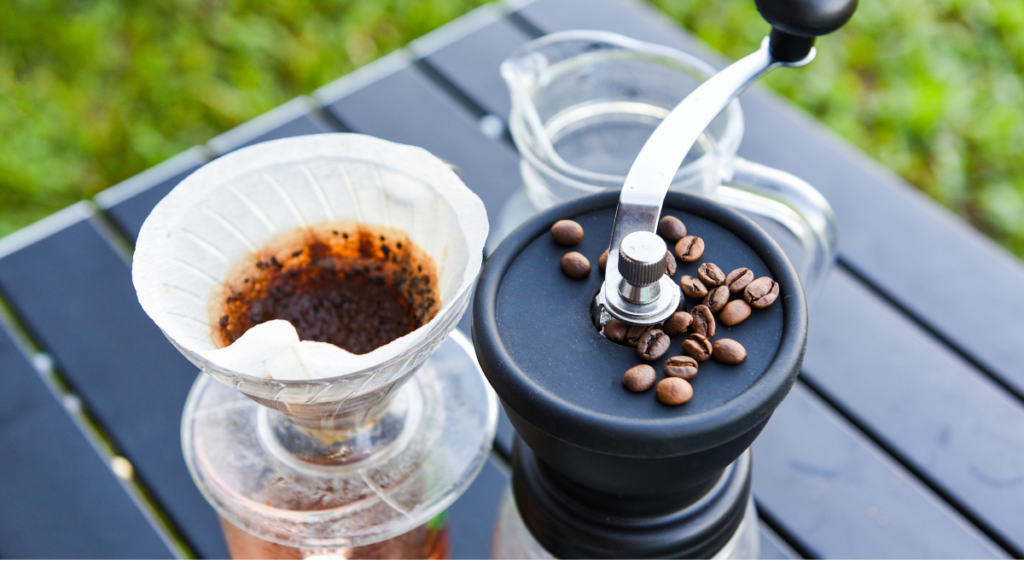
In pour-over coffee, the flow of water determines how flavors are extracted from the coffee grounds.
Good Pouring Technique
- Even saturation of coffee grounds
- Balanced extraction
- Clean, smooth flavor
Poor Pouring Technique
- Uneven extraction
- Bitter or sour taste
- Weak or inconsistent coffee
👉 Pouring is just as important as grind size and coffee ratio.
Pouring is just as important as grind size and ratio. For grind consistency, check our Coffee Grind Size Chart
Now let’s break down the exact process into simple, actionable steps
Step-by-Step Pour Over Pouring Technique
1. Start with the Bloom
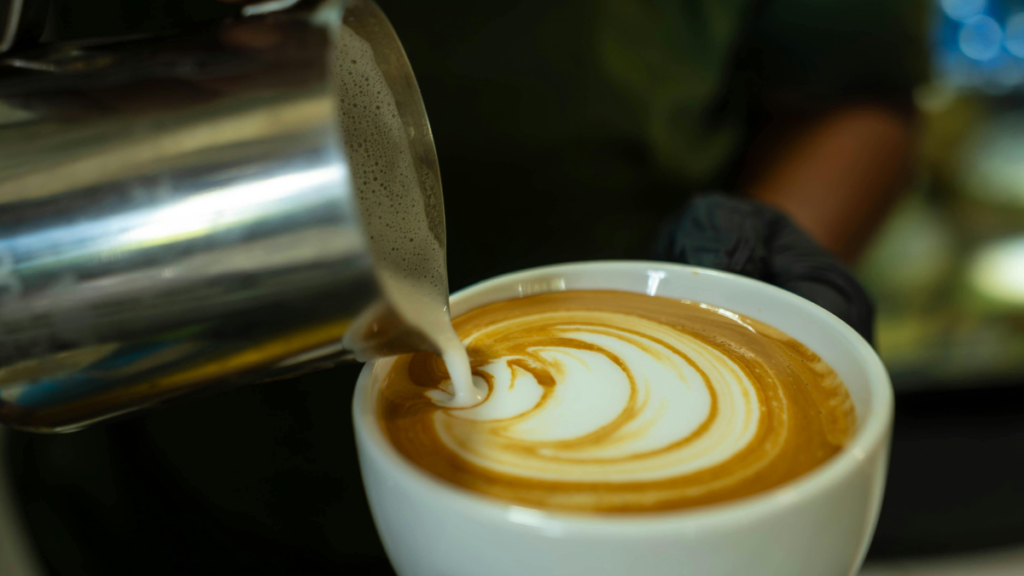
👉 Pour 2–3× the weight of your coffee in water
- Example: 20g coffee → 40–60g water
- Let it sit for 30–45 seconds
💡 Blooming releases trapped gases (CO₂), allowing for even extraction.
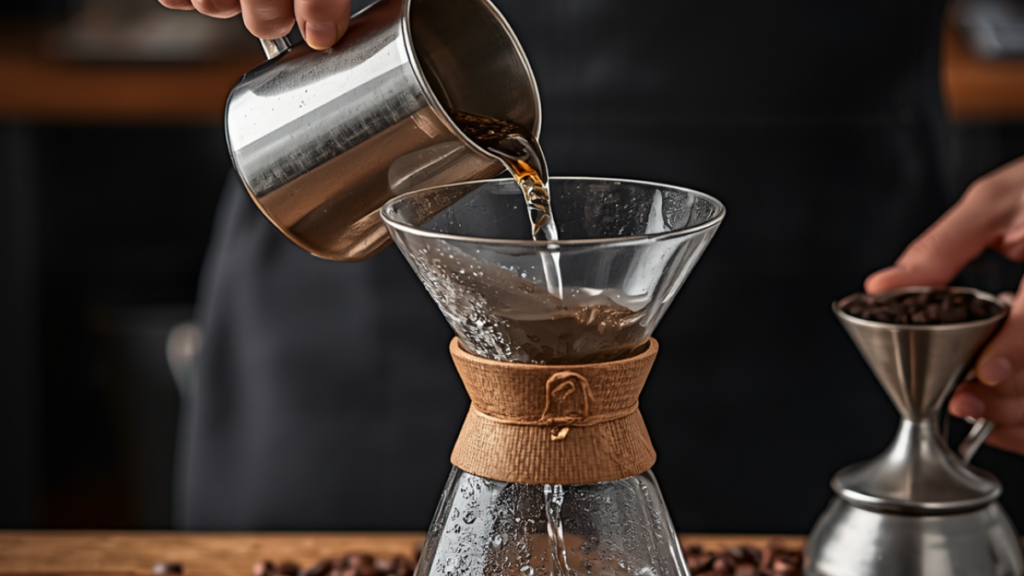
2. Pour in Slow Circular Motions
After blooming:
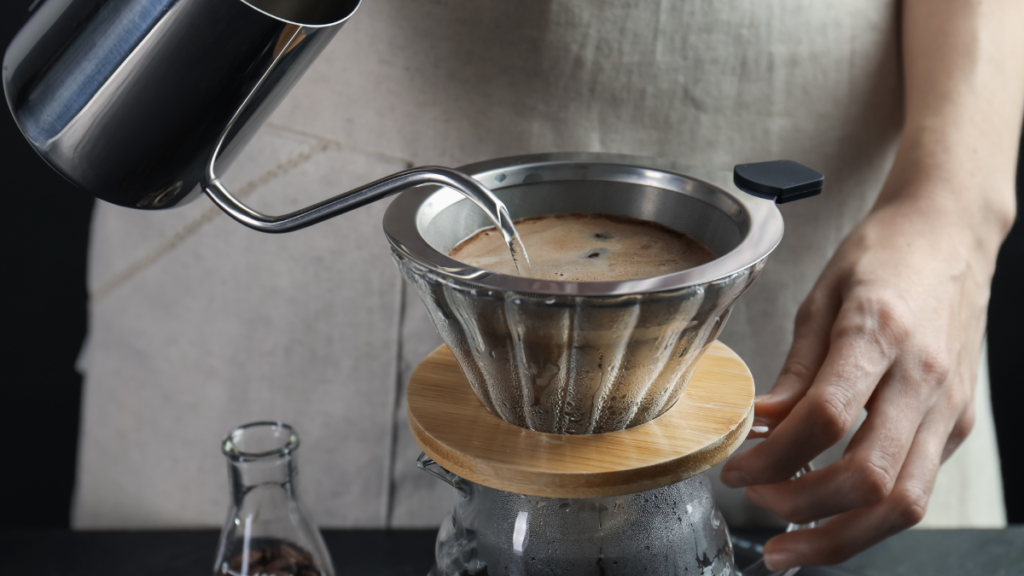
👉 Pour water in controlled circles
- Start from the center
- Move outward gently
- Avoid pouring directly on filter edges
👉 This ensures all grounds are evenly saturated.
3. Maintain a Steady Flow
- Avoid aggressive or uneven pouring
- Keep a consistent stream
- Use a gooseneck kettle for better control
👉 Consistency is key to balanced extraction.
4. Use Pulse Pouring (Pour in Stages)
Instead of pouring all at once:
👉 Divide your brew into 2–3 pours
- Bloom phase
- Main pour
- Final pour
👉 This improves extraction control and flavor clarity.
5. Finish Within the Right Brew Time
- Ideal total brew time: 2.5 to 3 minutes
- Water should drain evenly
👉 Too fast = under-extraction
👉 Too slow = over-extraction
If your brew tastes off, it may be due to the grind size—use our upcoming Grind Size Guide
Even with the right steps, certain mistakes can still affect your results
Common Pour Over Mistakes (And Fixes)
1. Pouring Too Fast
Leads to under-extraction and sour taste
👉 Fix: Slow down your pour
2. Pouring on the Filter Edges
Water bypasses coffee grounds
👉 Fix: Aim at the coffee bed
3. Uneven Pouring
Creates an inconsistent extraction
👉 Fix: Use steady circular motion
4. Skipping the Bloom
Results in flat, uneven flavor
👉 Fix: Always bloom first
Here’s exactly how your pouring speed translates to flavor in your cup
How Pouring Affects Coffee Taste
If You Pour Too Fast
- Under-extraction
- Sour, weak coffee
If You Pour Too Slowly
- Over-extraction
- Bitter taste
👉 Balanced pouring = balanced flavor.
If bitterness is your issue, read: why your coffee tastes bitter (coming soon)
The right equipment makes achieving consistent results much easier.
Tools That Improve Pouring Technique
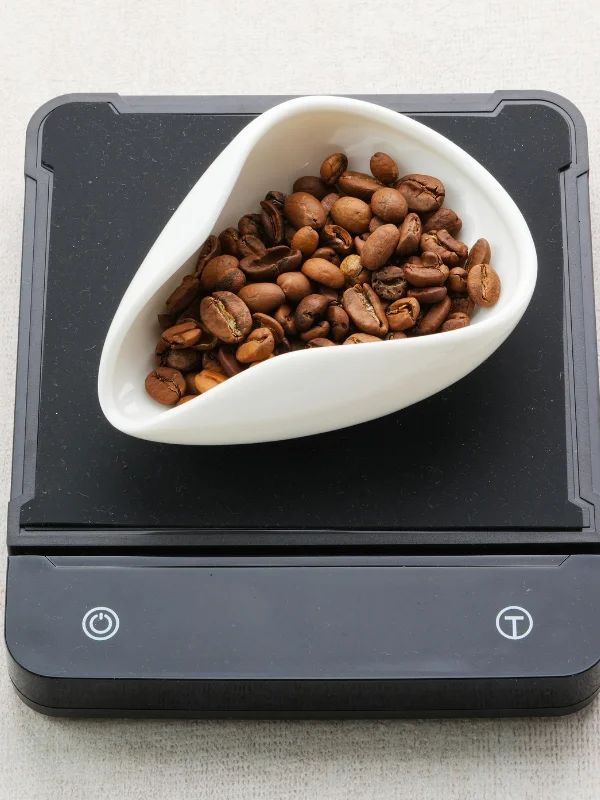
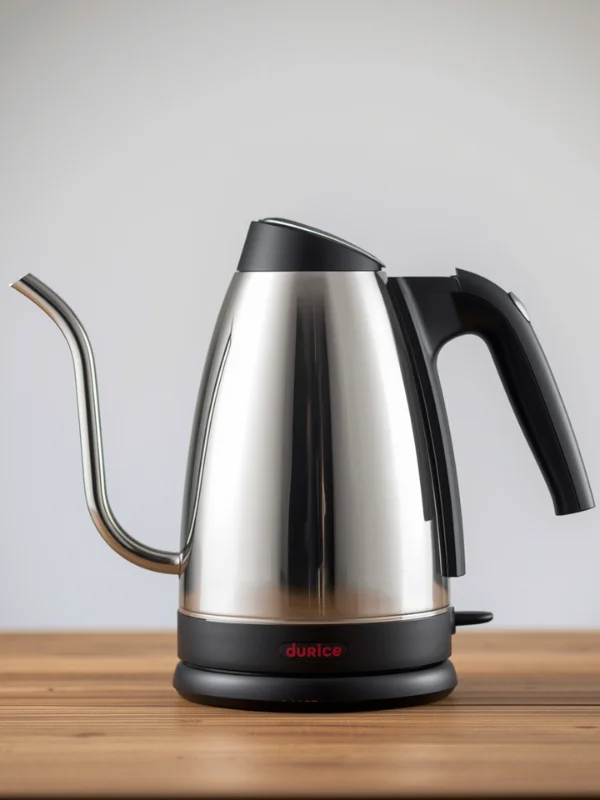
Gooseneck Kettle
- Better control over water flow
- More precise pouring
Coffee Scale
- Accurate water measurement
- Consistent results
👉 Good tools make good technique easier.
👉 If you’re setting up your brew station, check our Home Coffee Brewing Guide:
Beyond equipment, these practice tips will refine your technique over time
How to Improve Your Pouring Technique
- Practice slow, controlled pouring
- Keep your hand steady
- Focus on consistent flow
- Use proper brewing tools
👉 Small improvements can dramatically improve taste.
👉 Also, clean equipment matters. Coffee oils can affect taste—follow this
How To Pour Water In Pour Over Coffee: FAQs
Why does my pour-over coffee taste bitter or sour?
Bitter = pouring too slow (over-extraction)
Sour = pouring too fast (under-extraction)
How important is the bloom phase?
Blooming is essential. It releases trapped gases and ensures even extraction.
Do I need a gooseneck kettle?
Not required, but highly recommended for better control and consistency.
Conclusion
Learning how to pour water for pour-over coffee is one of the most impactful skills you can develop as a home brewer.
By mastering blooming, controlled circular pouring, and steady flow, you can dramatically improve extraction and unlock better flavor in every cup.
With practice, your technique will become more consistent—and your coffee will taste noticeably better.
👉 For a complete process, read our Pour Over Coffee Guide