
Introduction
Mastering the pour-over coffee ratio is key to unlocking a perfectly balanced, flavorful cup. This simple yet crucial element determines how well your coffee extracts, influencing everything from aroma and body to sweetness and acidity. Whether the goal is a bold, rich brew or a lighter, more delicate flavor, understanding the right coffee-to-water ratio makes all the difference.
Many home brewers struggle with inconsistent results—coffee that’s too bitter, sour, or weak. The culprit is often an incorrect ratio. By learning how to measure and adjust the pour-over coffee ratio, it becomes possible to fine-tune every cup to personal taste.
This guide breaks down the science behind the ideal ratio, explains how grind size and brewing method affect extraction, and provides practical tips for achieving consistency. With the right ratio, every pour over can taste balanced, smooth, and satisfying—just like a professional barista’s brew.
👉 If you’re just starting out, this complete home coffee brewing guide will help you understand the basics of methods, grinders, and tools.
Table of Contents
Quick Answer: Best Pour Over Coffee Ratio
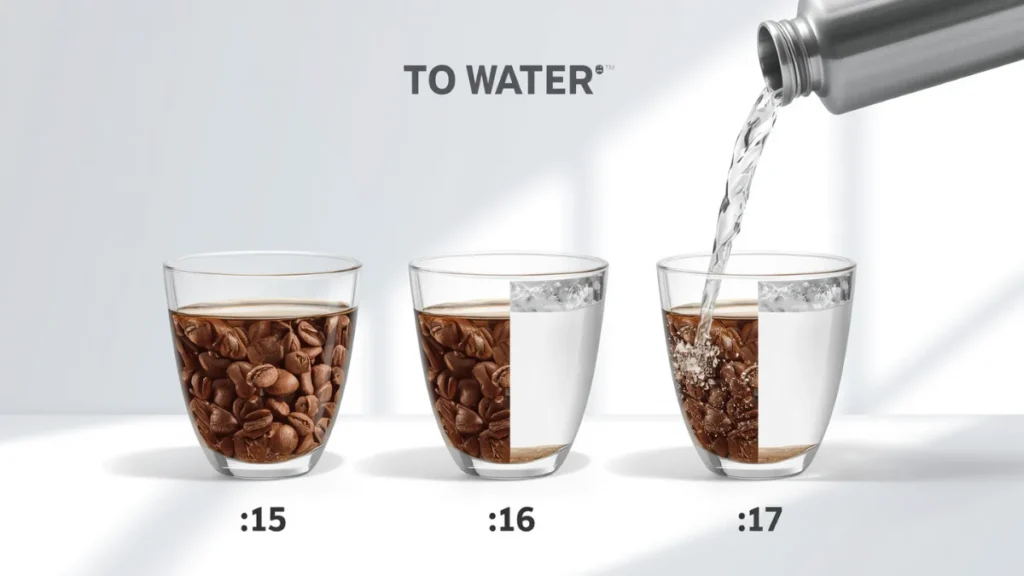
👉 The ideal pour-over coffee ratio is 1:16 (coffee to water).
- Use 1:15 for stronger coffee
- Use 1:17 for a lighter, more delicate cup
👉 Start with 1:16 and adjust based on your taste preference.
What Is a Coffee-to-Water Ratio?
A coffee-to-water ratio refers to how much coffee you use compared to the amount of water during brewing.
It is usually written as:
👉 1:X (coffee: water)
Example:
- 1:16 → 1 gram of coffee for 16 grams of water
- 1:15 → stronger brew
- 1:17 → lighter brew
Using a consistent ratio helps you control strength and replicate good results.
For a broader explanation, see our Coffee Brewing Ratio Explained guide.
Why Ratio Matters in Pour Over Coffee
Pour-over brewing is highly sensitive to small changes.
The ratio directly affects:
- Strength of coffee
- Extraction level
- Flavor balance
If the Ratio Is Too Strong (Too Much Coffee)
- Coffee may taste bitter
- Over-extraction occurs
If the Ratio Is Too Weak (Too Little Coffee)
- Coffee may taste sour or thin
- Under-extraction occurs
👉 If your coffee tastes off, adjust the ratio before changing other variables.
How to Measure Pour Over Coffee Ratio
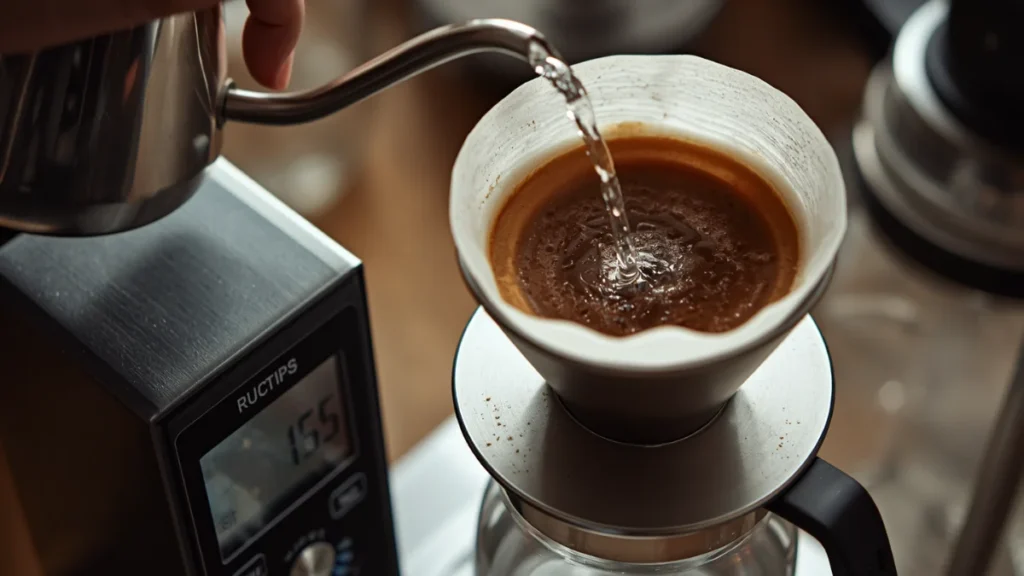
Using a digital scale is the most accurate way to measure your ratio.
Step-by-Step Guide
- Weigh your coffee (e.g., 20 grams)
- Multiply by ratio (20 × 16 = 320 grams water)
- Measure water during brewing
👉 Accurate measurement ensures consistent results every time.
To improve your setup, see our Coffee Brewing Tools guide.
Adjusting Ratio Based on Taste
Now that you know the standard ratio, you can fine-tune it based on your preference.
Stronger Coffee
👉 Use 1:15
- Richer and fuller flavor
- Slightly heavier body
Balanced Coffee
👉 Use 1:16
- Most common recommendation
- Balanced flavor and clarity
Lighter Coffee
👉 Use 1:17
- More delicate flavor
- Less intense strength
👉 Adjust gradually to find your ideal cup.
How Ratio Works with Grind Size
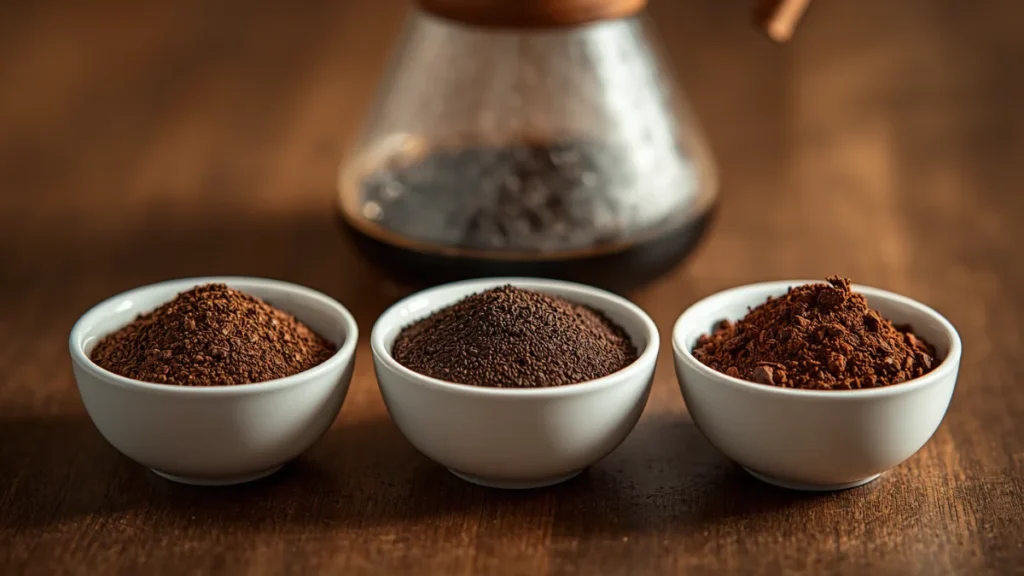
Ratio and grind size work together to control extraction.
- Medium grind → ideal for pour over
- Finer grind → slower extraction
- Coarser grind → faster extraction
If Coffee Tastes Bitter:
- Try a coarser grind
- Or slightly reduce the coffee amount
If Coffee Tastes Sour:
- Try a finer grind
- Or slightly increase the coffee amount
👉 Learn more in our Coffee Grind Size Chart.
Recommended Equipment for Accurate Ratios
Getting the pour-over coffee ratio right starts with using the proper tools. Precision ensures consistency and helps you replicate your favorite brew every time.
- Digital Scale: Measures coffee and water accurately.
- Gooseneck Kettle: Controls water flow for even extraction.
- Timer: Tracks brew time precisely.
- Thermometer: Maintains ideal water temperature.
- Quality Filters: Prevents unwanted flavors and ensures clarity.
How Water Quality Affects Your Pour-Over
Water makes up over 98% of your coffee, so its quality directly impacts flavor and extraction. Understanding water composition helps you fine-tune your pour-over coffee ratio for better results.
- Filtered Water: Reduces impurities and chlorine taste.
- Mineral Balance: Enhances flavor clarity and sweetness.
- Temperature Range: Ideal between 195°F and 205°F.
- Avoid Distilled Water: Lacks minerals needed for proper extraction.
Troubleshooting Common Pour Over Issues
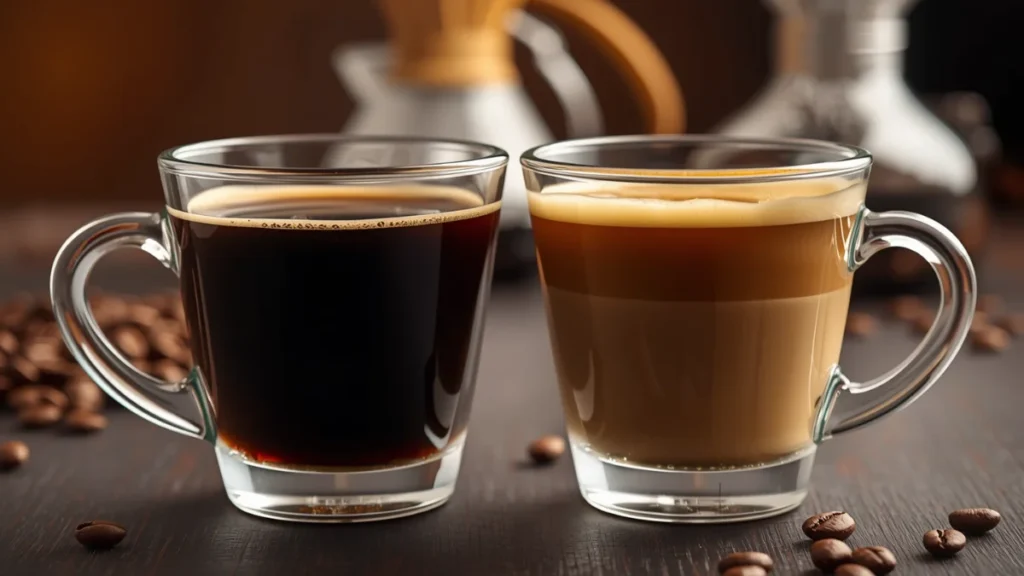
Even with the right pour-over coffee ratio, small mistakes can affect taste. Identifying and fixing these issues ensures a balanced, flavorful cup.
- Bitter Taste: Use a coarser grind or a lower ratio.
- Weak Coffee: Increase coffee amount slightly.
- Uneven Extraction: Pour in slow, circular motions.
- Sour Notes: Extend brew time or use a finer grind.
Expert Tips for Perfecting Your Pour Over Technique
Once you’ve mastered the pour-over coffee ratio, refining your technique elevates your brew to café quality.
- Pre-Wet Filter: Removes paper taste.
- Bloom Coffee: Let gases escape for 30 seconds.
- Steady Pour: Maintain consistent flow and height.
- Agitate Gently: Swirl or stir for even saturation.
- Serve Immediately: Enjoy at peak flavor and aroma.
Common Pour Over Ratio Mistakes
1. Not Measuring Coffee Properly
Eyeballing leads to inconsistent results.
2. Using Volume Instead of Weight
Spoons are unreliable — use grams.
3. Changing Too Many Variables
Adjust the ratio first before changing the grind size.
Quick Reference Table
| Strength | Ratio | Example (20g coffee) |
|---|---|---|
| Strong | 1:15 | 300g water |
| Balanced | 1:16 | 320g water |
| Light | 1:17 | 340g water |
How to Choose the Right Ratio
If you’re unsure where to start:
- Prefer strong coffee → 1:15
- Want balanced flavor → 1:16
- Prefer lighter coffee → 1:17
👉 Start simple and adjust based on taste.
Por Over Coffee Ratio: FAQs
What is the best pour-over coffee ratio?
The most commonly recommended ratio is 1:16.
Can I use tablespoons instead of grams?
It’s not recommended — weight is more accurate and consistent.
Why does my pour-over taste bitter?
It may be due to too much coffee or a too-fine grind.
Why does my pour-over taste weak?
You may be using too little coffee or a too-coarse grind.
Final Thoughts
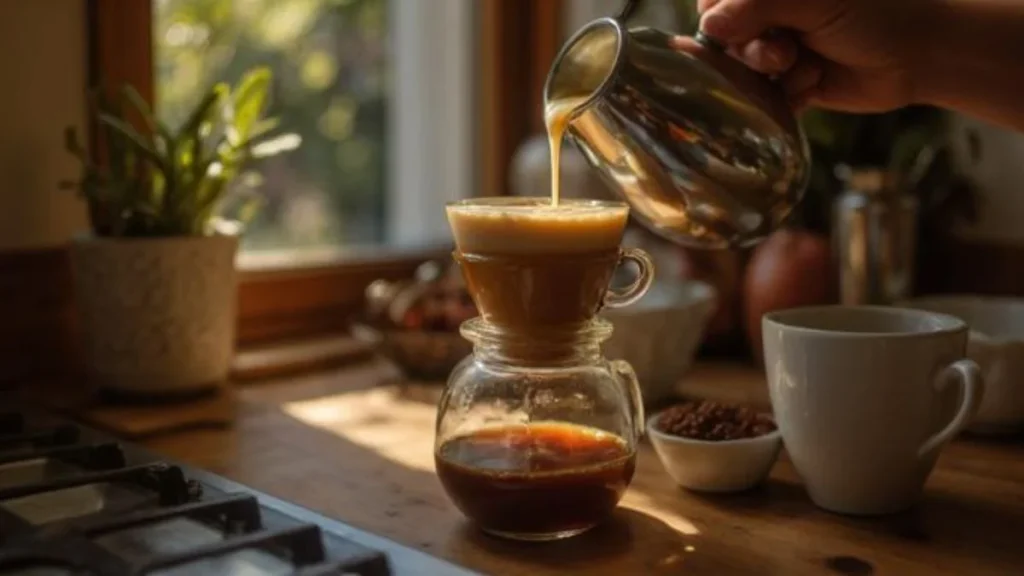
Perfecting the pour over coffee ratio transforms the home brewing experience from guesswork to precision. Starting with a standard 1:16 coffee-to-water ratio provides a reliable foundation, but the real magic happens when small adjustments are made to suit personal taste.
Understanding how ratio interacts with grind size, water temperature, and brew time allows for complete control over flavor and strength. A slightly higher ratio can create a bolder, more intense cup, while a lower ratio produces a lighter, more nuanced profile.
Consistency is the ultimate goal, and mastering the pour over coffee ratio ensures that every cup meets the same high standard. With practice and attention to detail, anyone can achieve a perfectly balanced pour over—one that highlights the coffee’s natural sweetness, aroma, and complexity.
👉 For a complete brewing method, read our Pour Over Coffee Guide
👉 To improve consistency, see our Coffee Brewing Tools guide