
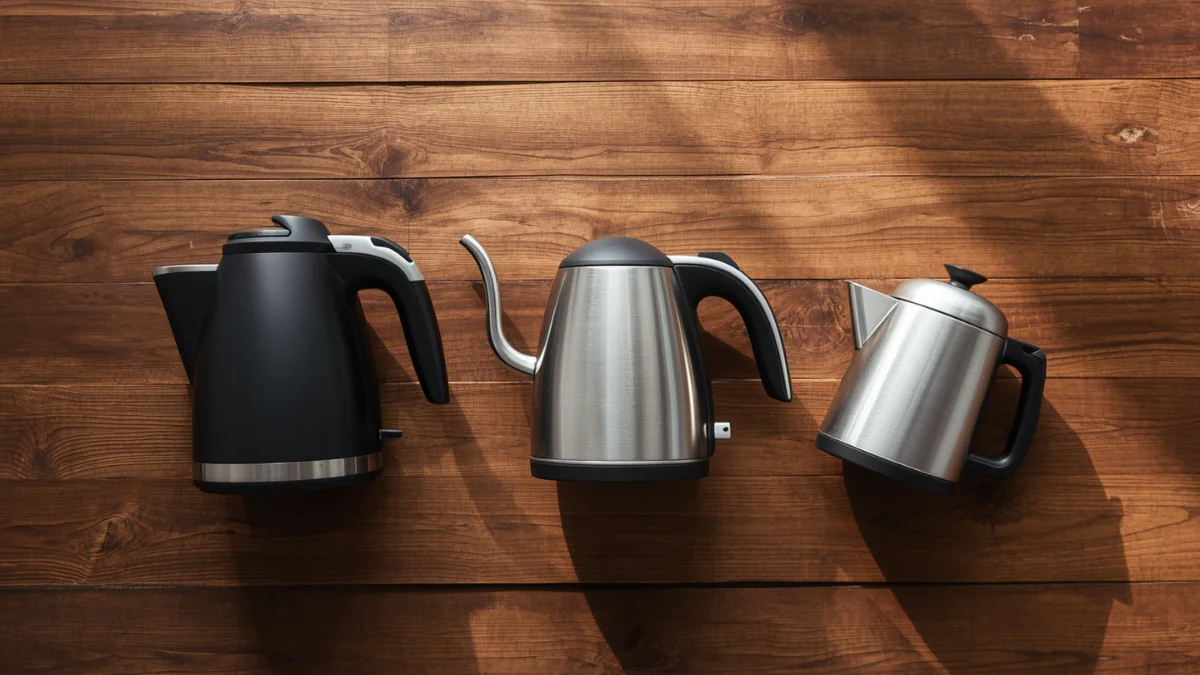
Your kettle controls more of your coffee than you think — here’s how to choose the right one.
If you brew pour-over coffee at home and still use a standard jug kettle, your pour control is the single biggest thing holding your cup back. A gooseneck kettle’s narrow, curved spout lets you pour slowly and precisely — keeping the water moving in a controlled spiral that saturates the grounds evenly rather than flooding them unevenly and producing a flat, muddy extraction.
The best gooseneck kettle for coffee for most home brewers in 2026 is the Fellow Stagg EKG — it offers degree-by-degree temperature control, a counterbalanced handle for effortless slow pours, and a 60-minute keep-warm mode that removes water temperature as a variable entirely. For stovetop users, the Hario V60 Buono is the industry-standard pick — no electronics, no display, but a beautifully engineered spout that baristas have relied on for decades. For a capable electric kettle at roughly half the price of the Fellow, the COSORI Electric Gooseneck is the best budget pick.
This guide compares the top options across every category — electric and stovetop, premium and budget — with clear recommendations based on your brewing setup, budget, and daily routine.
New to pour over? Start with our Pour Over Coffee Guide before choosing a kettle.
Quick Verdict
| Fellow Stagg EKG | COSORI Electric | Hario V60 Buono | |
|---|---|---|---|
| Type | Electric | Electric | Stovetop |
| Price Range | $$$ (~$150) | $$ (~$60) | $ (~$40) |
| Temperature Control | ✅ Degree-by-degree | ✅ 5 presets | ❌ (thermometer needed) |
| Keep-Warm | ✅ 60 min | ✅ 60 min | ❌ |
| Capacity | 0.9L | 0.8L | 1.0L |
| Best For | Daily pour over brewers | Budget-conscious beginners | Purists, travel |
| Amazon | View on Amazon | View on Amazon | View on Amazon |
Bottom Line: For daily pour-over brewing, the Fellow Stagg EKG is the clearest recommendation — temperature control and pour precision in one tool. If budget is a priority, the COSORI delivers 80% of the Fellow’s functionality at 40% of the price. For brewers who prefer simplicity and durability over electronics, the Hario Buono is a lifetime purchase.
Why Your Kettle Matters More Than Most Guides Admit
Pour-over brewing is fundamentally a water-delivery exercise. The difference between a clean, well-extracted cup and a flat, muddled one often comes down to two variables: how precisely you can control water flow, and whether the water is at the right temperature when it hits the grounds.
A standard wide-spouted kettle makes both of those things impossible to control consistently. It pours too fast and too unevenly, and cools unpredictably depending on how long it’s been sitting. A gooseneck kettle solves the first problem by design. A gooseneck kettle with temperature control solves both.
The bloom — the initial 30–45-second pre-wet in which CO₂ escapes from the fresh grounds — requires a slow, even pour of roughly twice the weight of the coffee in water. If you pour too fast, the bloom is uneven. Channeling develops. The main pour becomes unpredictable. A gooseneck spout makes it easy to repeat a controlled bloom every morning. Without one, it’s genuinely difficult.
👉 If you brew pour over once a day, a gooseneck kettle is the single highest-impact equipment upgrade available for under $60.
The Best Gooseneck Kettles for Home Brewing (2026)
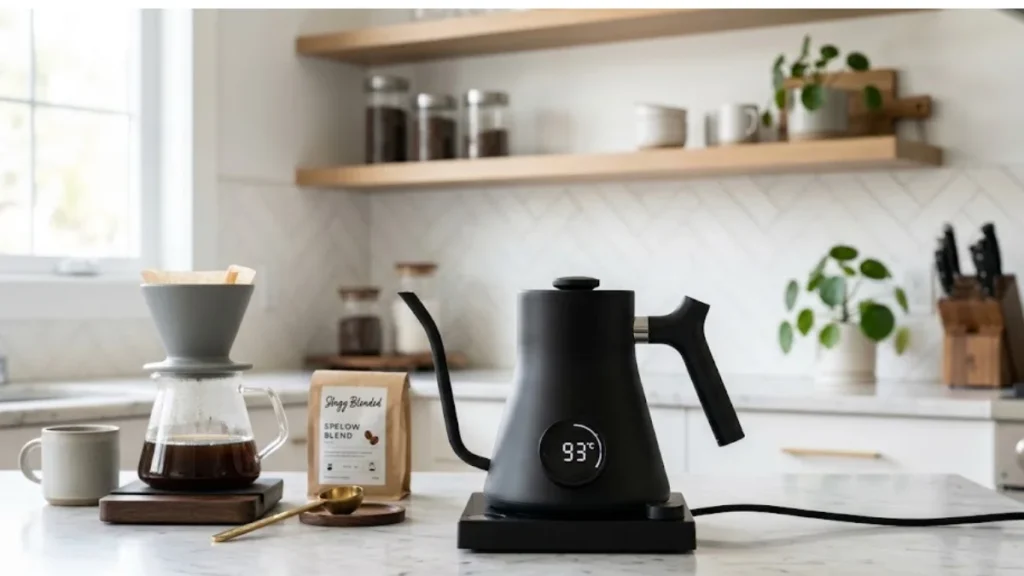
🥇 1. Fellow Stagg EKG Electric Gooseneck Kettle — Best Overall
Best for: Daily pour over brewers who want full temperature control and repeatable results. Amazon: View on Amazon (~$150, Matte Black) | EKG Pro version (~$185)
The Fellow Stagg EKG has become the default recommendation for pour-over kettles — not because of marketing, but because its engineering genuinely solves the two problems that matter most: temperature precision and pour control.
Temperature control ranges from 135°F to 212°F (57°C to 100°C) in 1°F (0.5°C) increments, displayed on a clear LCD screen on the base that shows both the target and real-time temperatures simultaneously. Once the water reaches your set temperature, the 60-minute hold mode keeps it there without any action from you — so if your grinder takes longer than expected, your water doesn’t cool while you wait.
The spout is the other standout feature. The Stagg EKG’s counterbalanced handle shifts the center of gravity back toward your hand, so you can sustain a slow pour — 1.5 to 2 grams per second — without your wrist tiring. For a three-to-four-minute pour over, that level of control is what separates an even extraction from an inconsistent one.
Build quality is premium throughout. The 304 stainless steel body feels dense and substantial. The base is compact enough to sit comfortably on most kitchen counters.
Reported limitations based on owner reviews: the water sensor occasionally malfunctions if water is left in the kettle for extended periods (Fellow acknowledges this and recommends draining after use). The price is the primary barrier for beginners.
| Spec | Detail |
|---|---|
| Type | Electric |
| Capacity | 0.9L |
| Temperature Range | 135°F–212°F / 57°C–100°C |
| Keep-Warm | 60 minutes |
| Wattage | 1200W |
| Material | 304 Stainless Steel |
| Rating | ★★★★★ |
Best for: Brewers who make pour-over daily and want to eliminate temperature as a variable. Not ideal for: Beginners on a tight budget, or those who prefer simple stovetop tools.
🥈 2. COSORI Electric Gooseneck Kettle — Best Budget Electric
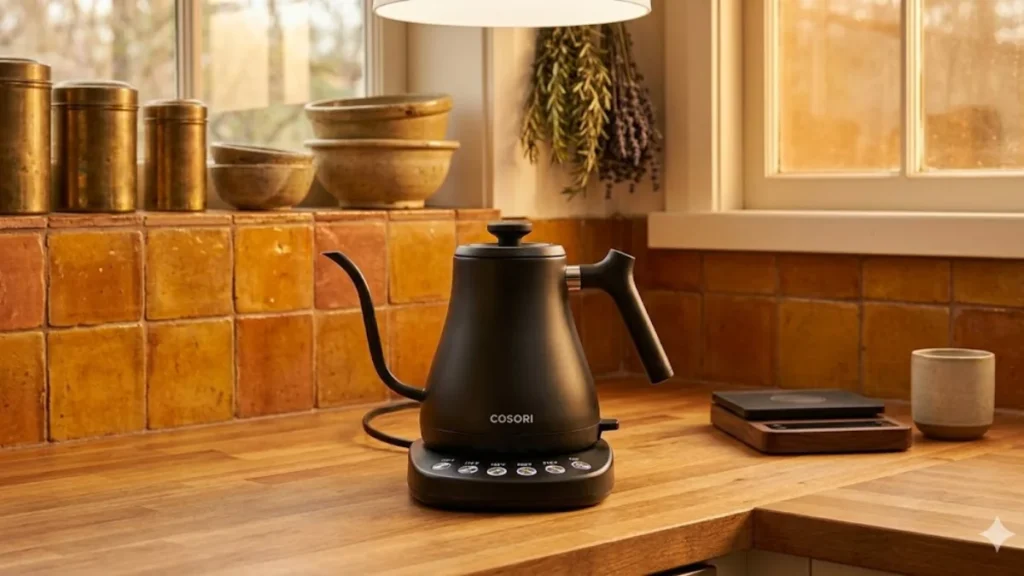
Best for: Beginners and value-focused brewers who want temperature control without the premium price. Amazon: View on Amazon (~$55–$65, multiple colors)
The COSORI Electric Gooseneck is the most compelling value proposition in the gooseneck kettle category in 2026. For roughly a third of the Fellow’s price, it delivers five one-touch temperature presets, a 60-minute keep-warm function, and a precisely engineered gooseneck spout — everything a home brewer needs for consistent pour over brewing.
Temperature presets are fixed rather than variable (you choose from five positions rather than dialing in any specific degree), but for the vast majority of home brewers, the preset for pour-over coffee — 205°F / 96°C — is exactly where most medium and dark roasts need to be. Light roast brewers who want 91°C to 93°C may find the preset system slightly limiting, but adjustable electric kettles at this price point are far less common.
The spout is narrower and more controlled than what most people expect at this price. Pour control is noticeably better than entry-level competitors, and the counterbalanced handle makes slow pours comfortable. It is not as refined as the Stagg EKG’s spout, but the difference is meaningful only for experienced brewers pursuing very high precision.
Build quality is solid for the price. The interior, lid, and spout are 100% food-grade stainless steel — there’s no plastic contact with the water, which matters for taste neutrality.
| Spec | Detail |
|---|---|
| Type | Electric |
| Capacity | 0.8L |
| Temperature | 5 presets (104°F–212°F) |
| Keep-Warm | 60 minutes |
| Wattage | 1200W |
| Material | 304 Stainless Steel interior |
| Rating | ★★★★☆ |
Best for: Beginners, anyone upgrading from a standard kettle, and budget-conscious daily brewers. Not ideal for: Brewers who need precise single-degree temperature control for a flight-roast pour-overer.
🥉 3. Hario V60 Buono Gooseneck Kettle — Best Stovetop Option
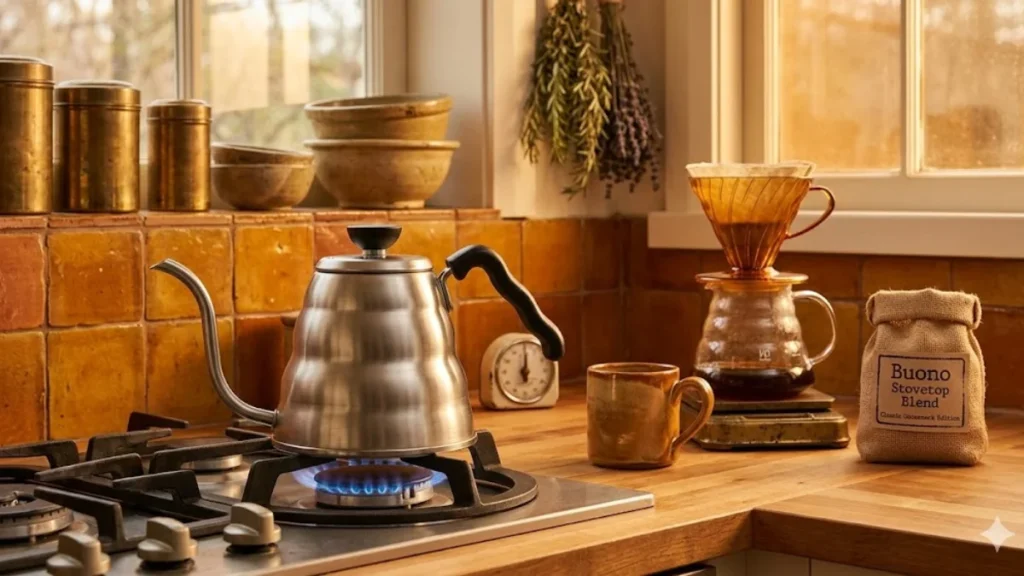
Best for: Brewers who prefer simplicity, durability, and no electronics. Amazon: View on Amazon (~$35–$45, Stovetop version)
The Hario Buono has been the reference stovetop gooseneck kettle for specialty coffee for well over a decade. Its curved, narrow spout produces one of the most controlled pours available in a stovetop kettle — the kind of slow, steady stream that baristas reach for when they want to demonstrate precise pour technique.
Unlike electric kettles, the Buono has no built-in temperature control. You heat it on the stove, use a separate thermometer or the boil-and-wait method to hit your target temperature, and pour from there. For brewers who find this process meditative rather than inconvenient, the Buono is a genuine lifetime purchase. There are no electronics to fail, no sensors to malfunction, and the stainless steel construction is exceptionally durable.
The 1.0L capacity is the largest of the three picks reviewed here, making it well-suited for multi-cup brewing sessions or households where the kettle is shared among multiple brewers.
The main trade-off is convenience. Without built-in temperature control, you are adding a step to your morning routine. For brewers who already use a thermometer and prefer a simpler, lower-cost setup, this is not an issue.
| Spec | Detail |
|---|---|
| Type | Stovetop |
| Capacity | 1.0L |
| Temperature Control | None (separate thermometer required) |
| Keep-Warm | No |
| Wattage | N/A |
| Material | Stainless Steel |
| Rating | ★★★★☆ |
Best for: Brewers who prefer simplicity, travelers, and those who already own a thermometer. Not ideal for: Brewers who want set-it-and-forget-it temperature control, or beginners who find water temperature management a barrier.
Electric vs Stovetop Gooseneck Kettle: Which Is Right for You?
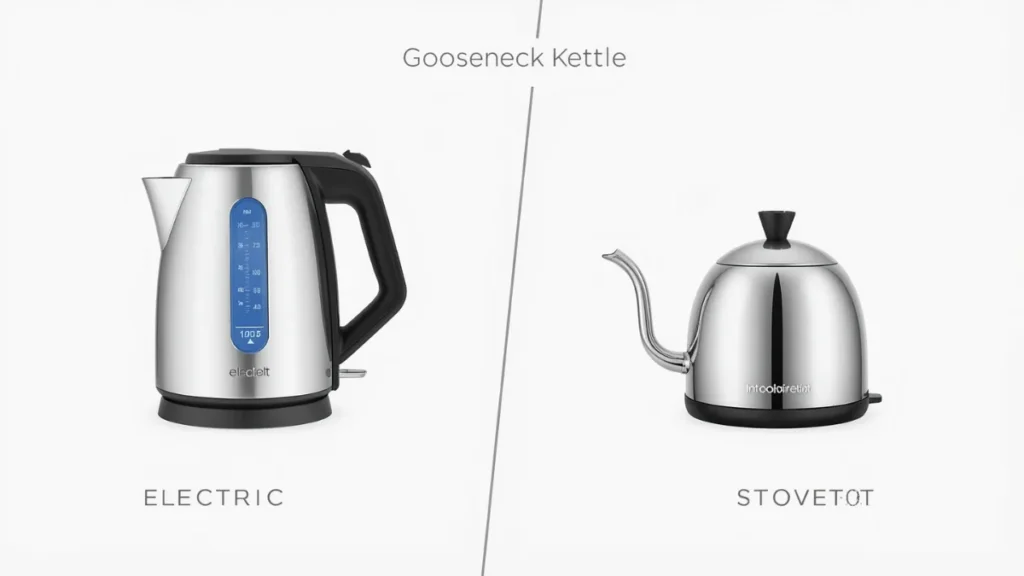
This is the decision most home brewers face first — and the honest answer is that both work well. The right choice depends on your priorities.
| Factor | Electric | Stovetop |
|---|---|---|
| Temperature control | ✅ Built in, precise | ❌ Manual thermometer needed |
| Pour control | ✅ Equal — both have gooseneck spouts | ✅ Equal |
| Convenience | ✅ Press a button | ❌ Monitor heat source |
| Durability | ⚠️ Electronics can fail | ✅ No electronics — decades of use |
| Price | $$–$$$ ($55–$150+) | $ ($30–$50) |
| Best for | Daily home brewing | Travel, camping, purists |
If you brew pour over every day and want the most consistent results with the least effort, an electric kettle is the clear choice. Temperature consistency compounds over hundreds of brews — removing it as a variable makes a measurable difference.
If you value simplicity, already use a thermometer, or are buying for travel or camping, a stovetop kettle paired with a $10 instant-read thermometer delivers 90% of the electric experience at a fraction of the cost.
👉 For most beginners, the COSORI electric is the best starting point — temperature presets remove one of the most common early mistakes (water that’s too hot) without requiring any additional gear.
What Makes a Good Gooseneck Spout?
Not all gooseneck kettles pour equally well. The spout design is the most important factor — and it’s where cheap kettles tend to fall short.
What to look for:
- Narrow spout tip — controls flow rate, makes slow pours possible
- Curved, elongated neck — distributes flow evenly, prevents splashing
- Counterbalanced handle — moves the center of gravity back toward the hand, reducing wrist fatigue during long pours
- No drip after pouring — a well-engineered spout cuts off cleanly; cheaper spouts dribble
What to avoid:
- Wide or short spout openings — produce fast, uncontrolled pours that over-saturate the grounds
- The handle is positioned directly over the water reservoir, makes it harder to sustain a slow pour comfortably
- Thin-walled kettles — lose heat faster during pouring, affecting temperature consistency
Common Gooseneck Kettle Mistakes (And How to Avoid Them)
| Mistake | What Happens | Fix |
|---|---|---|
| Not preheating the kettle | Temperature drops during the first pour | Run the kettle to target temp, then pour immediately |
| Leaving water in the kettle overnight | Mineral buildup, sensor issues in electric models | Empty the kettle after each session |
| Setting temperature too high for dark roast | Over-extraction, harsh bitterness | Use 88°C–91°C for dark roasts |
| Pouring too fast even with a gooseneck | Uneven saturation, channelling | Slow down — aim for 2–3g of water per second in the bloom |
| Ignoring hold mode | Water cools while grinding | Always use keep-warm if your grinder takes 1–2 minutes |
Do You Really Need a Gooseneck Kettle for Pour Over?
Technically, no. You can make pour-over coffee with a regular kettle. But the results are noticeably less consistent. Without the controlled pour that a gooseneck spout provides, the bloom is harder to execute evenly, and the main pour tends to flood sections of the coffee bed unevenly — producing cups that vary significantly from brew to brew.
For most home brewers who switch from a standard kettle to a gooseneck, the improvement in pour over consistency is immediate and obvious. The cup becomes more repeatable, and the flavour clarity improves because the extraction is more even.
If you brew French press or cold brew exclusively, a gooseneck kettle is genuinely unnecessary — those methods don’t require pour control. But for pour over, it’s the most impactful single upgrade available at almost any budget.
Beginner Tips for Getting the Most from Your Gooseneck Kettle
- Preheat your dripper and cup — pour a small amount of hot water through before brewing to prevent temperature loss at the start of extraction
- Start with the keep-warm on — always set your electric kettle to hold temperature before you start grinding, so the water is ready exactly when you are
- Practice your pour without coffee first — fill the kettle, set a target flow rate, and pour slowly into a jug to build muscle memory before your morning brew
- Invest in a thermometer if you use a stovetop kettle — a basic instant-read thermometer costs under $10 and makes a stovetop setup as reliable as an electric one for temperature targeting
- Clean the spout monthly — mineral deposits can narrow the spout opening over time; a 50:50 water-vinegar descaling cycle keeps it clear
Frequently Asked Questions
What is the best gooseneck kettle for pour-over coffee in 2026?
The Fellow Stagg EKG is the best gooseneck kettle for pour-over coffee in 2026 for most home brewers. Its degree-by-degree temperature control, 60-minute keep-warm, and counterbalanced pour handle make it the most complete tool available for daily pour-over brewing. For a budget alternative, the COSORI Electric Gooseneck delivers the essential features — temperature presets and a precision spout — at roughly a third of the price.
Is an electric or stovetop gooseneck kettle better for home brewing?
For daily home brewing, an electric gooseneck kettle is the more practical choice. Built-in temperature control removes one of the most common variables in pour over brewing, and the keep-warm function means water is always at the right temperature when you’re ready to pour. Stovetop kettles are equally good for pour control, but require a separate thermometer and more manual attention to temperature. They last longer due to the absence of electronics and are the better choice for travel and camping.
Do you need a gooseneck kettle for a French press or cold brew?
No. The gooseneck spout exists specifically to control water flow during pour over brewing. French press is a full-immersion method where pour precision doesn’t materially affect extraction — you can pour from any standard kettle. Cold brew doesn’t use hot water at all. A gooseneck kettle only becomes essential when pour control matters, which is primarily for pour over, AeroPress, and Chemex.
What temperature should a gooseneck kettle be set to for pour-over?
For most pour over brewing, the ideal range is 90°C to 96°C (194°F to 205°F), adjusted by roast level. Light roasts benefit from the higher end of the range (93°C–96°C) to ensure full extraction of denser beans. Dark roasts should be brewed at the lower end (88°C–92°C) to avoid over-extraction and bitterness. Medium roasts sit comfortably in the middle — 91°C to 93°C is a reliable default.
Is the Fellow Stagg EKG worth the price?
For brewers who make pour over coffee every day, the Fellow Stagg EKG is worth the price. The combination of precise temperature control, a well-engineered pour spout, and the 60-minute hold mode removes the two largest variables in home pour over brewing. For occasional brewers or those on a tighter budget, the COSORI Electric Gooseneck delivers the most important features at a fraction of the cost and is a better value choice.
How do I descale a gooseneck kettle?
For electric gooseneck kettles, fill to the halfway point with a 50:50 mix of water and white vinegar, bring to a boil, let sit for 30 minutes, then discard and rinse thoroughly with fresh water twice. Run a full cycle of clean water before brewing. For stovetop kettles, the same vinegar solution works — bring to a boil, let cool, rinse. Monthly descaling prevents mineral buildup, particularly in hard-water areas, which can narrow the spout and affect flow rate.
Can I use a gooseneck kettle on an induction hob?
Stovetop gooseneck kettles work on induction only if the base is induction-compatible (magnetic stainless steel base). Check the product listing before buying — the Hario Buono stovetop version is compatible with most induction hobs, but confirm for your specific model. Electric gooseneck kettles are not used directly on the hob — they sit on a cordless base and are not affected by hob type.
Conclusion
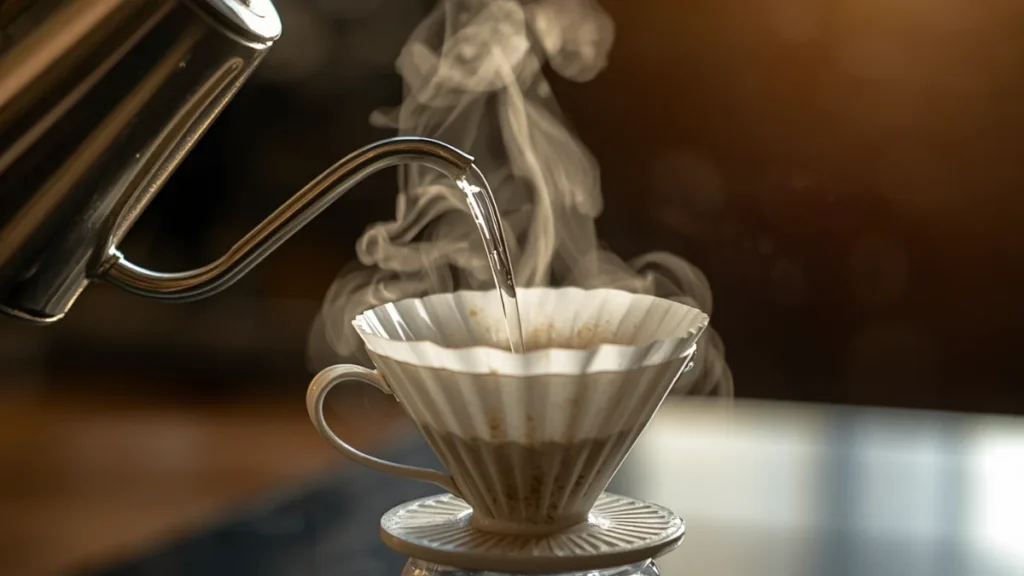
For most home pour over brewers, a gooseneck kettle is the single most impactful equipment upgrade available. The pour control it provides — slow, even, repeatable — makes an immediate and noticeable difference in extraction consistency, regardless of which dripper you use.
The Fellow Stagg EKG is the clearest recommendation for daily brewers. Temperature control, hold mode, and precision pour in one tool — it removes the two largest variables in pour over at once. The COSORI Electric Gooseneck is the best value choice for beginners and budget-conscious brewers — five temperature presets and a precision spout at roughly a third of the Fellow’s price. The Hario V60 Buono is the right choice for brewers who prefer simplicity, durability, and no electronics — pair it with a basic thermometer and it delivers consistent results for decades.
Once your kettle is sorted, grind consistency becomes the next most important variable to address.
For grinder recommendations that pair well with your new kettle, visit our Coffee Grinder Hub. For the full pour over technique this kettle is built for, see our Pour Over Coffee Guide.
Our Research & Selection Standards
We don’t personally brew with every kettle on the market — but we act as your dedicated research team. We synthesize technical specifications, cross-reference professional barista critiques and barista competition usage data, and analyze thousands of verified owner reports to identify patterns that a single hands-on test might miss. Every pick in this guide is selected based on spout engineering, temperature accuracy, handle balance, long-term durability reports, and real-world usability for home pour-over brewers. Our goal is to cut through marketing claims and give you a clear, honest recommendation at every budget.