
Introduction
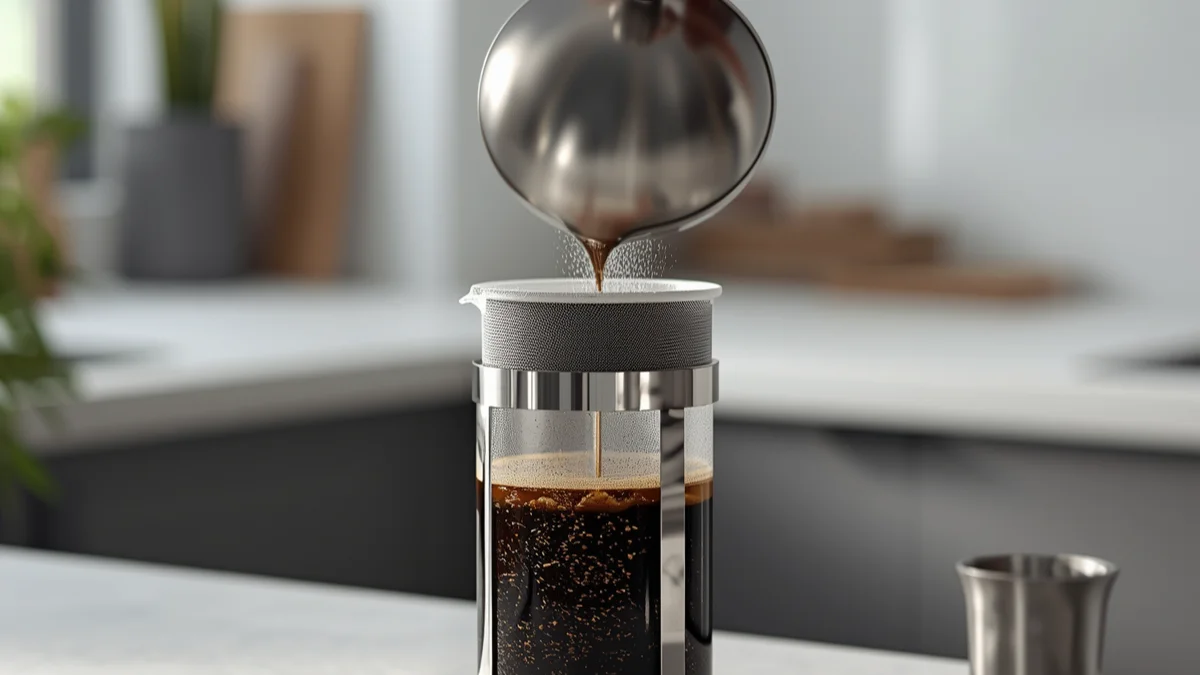
French press coffee is known for its rich, full-bodied flavor—but it often comes with a downside: sediment at the bottom of the cup.
If your coffee feels gritty or has too many fine particles, it can affect both taste and texture.
The good news is that the sediment in a French press can be reduced with a few simple adjustments.
In this guide, you’ll learn why sediment occurs and how to reduce it for a cleaner, smoother cup.
If you are new to French Press Brewing at home, read our related guides for a better understanding
Quick Answer: How to Reduce French Press Sediment
To reduce sediment in French press coffee:
- Use a coarse grind size
- Avoid stirring aggressively
- Let coffee settle before pouring
- Pour slowly and leave the last bit in the press
These small changes can significantly improve clarity.
Why French Press Coffee Has Sediment
The French press uses a metal filter, unlike paper filters.
What This Means
- Allows coffee oils through → richer flavor
- Also allows fine particles → sediment
Sediment is normal, but excessive sediment can be reduced.
If you’re deciding between a full-bodied immersion brew and a stronger stovetop coffee, read our French press vs moka pot comparison before choosing your next brewer.
1. Use the Right Grind Size
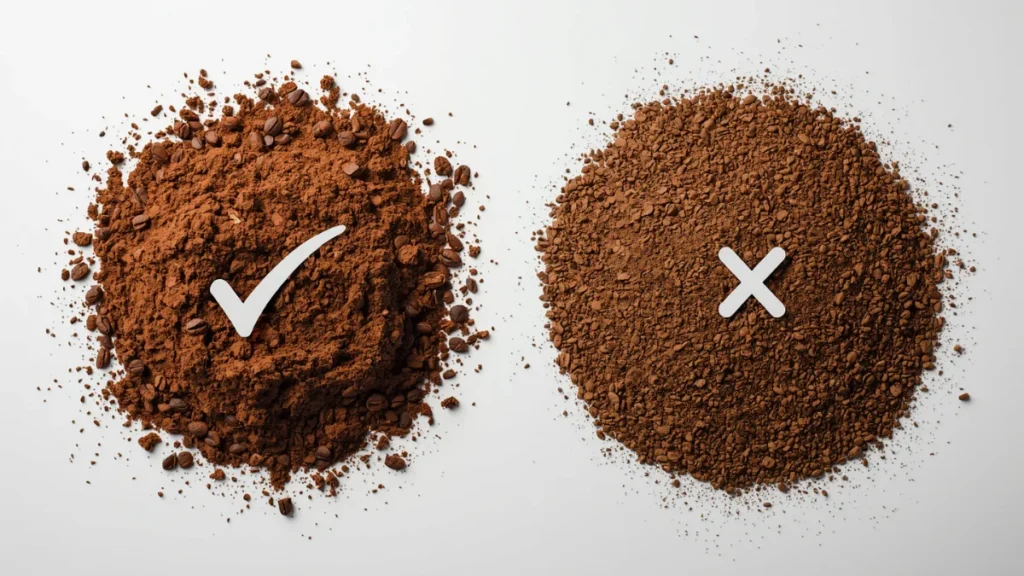
Grind size is the most important factor.
Problem:
Fine grind produces more small particles
Fix:
Use coarse grind size
- Larger particles
- Less sediment
- Better filtration
See our Coffee Grind Size Chart
2. Avoid Over-Stirring
Stirring too much breaks coffee particles.
Problem:
- Creates more fine particles
- Increases sediment
Fix:
Stir gently or minimally
Let water do most of the work.
3. Let Coffee Settle Before Pressing
After brewing:
Wait 30–60 seconds before pressing
Why It Helps
- Grounds settle at the bottom
- Reduces floating particles
This simple step improves clarity.
4. Press Slowly and Gently
Problem:
Pressing too fast:
- Disturbs coffee bed
- Pushes particles upward
Fix:
Press slowly with steady pressure
This keeps sediment down.
5. Pour Carefully (Leave the Last Bit)
Problem:
The final liquid contains most of the sediment
Fix:
Pour slowly and stop before the last bit
Don’t empty the press completely.
6. Use a Better Grinder
Inconsistent grinding creates fine particles.
Blade Grinder
- Uneven grind
- More sediment
Burr Grinder
- Consistent grind
- Less sediment
Learn more in our Burr vs Blade Coffee Grinders guide
7. Optional: Double Filter Method
For cleaner coffee:
👉 Use:
- Fine mesh filter
- Paper filter (optional)
This reduces sediment but may reduce body.
How to Reduce Sediment in French Press Coffee
| Blade grinders produce uneven grind sizes with excessive fines. | Cause | Consequence | Solution / Fix |
|---|---|---|---|
| 1. Use the Right Grind Size | Fine grind produces small particles that pass through the filter. | Leads to more sediment and bitter taste. | Use a coarse, even grind for larger particles, better filtration, and smoother coffee. |
| 2. Avoid Over-Stirring | Excessive stirring breaks coffee particles into smaller bits. | Increases fine sediment and makes coffee cloudy. | Stir gently or minimally—let the water extract naturally. |
| 3. Let Coffee Settle Before Pressing | Pressing immediately after brewing stirs up floating grounds. | Causes more sediment and dulls flavor clarity. | Wait 30–60 seconds before pressing to let grounds settle at the bottom. |
| 4. Press Slowly and Gently | Pressing too fast disturbs the coffee bed and pushes particles upward. | Results in gritty texture and cloudy brew. | Press slowly and evenly to keep sediment down. |
| 5. Pour Carefully (Leave the Last Bit) | The last liquid in the carafe contains most of the fine sediment. | Pouring all of it transfers grit into your cup. | Pour slowly and stop before the last bit—don’t empty the press completely. |
| 6. Use a Better Grinder | Blade grinders create uneven grind sizes with too many fines. | Uneven extraction and more sediment in the cup. | Use a burr grinder for consistent grind size and cleaner coffee. |
| 7. Optional: Double Filter Method | Single mesh filters can’t catch all fine particles. | Some sediment still passes through. | Add a fine mesh or paper filter for extra clarity (note: may slightly reduce body). |
How Sediment Affects Coffee Taste

Too Much Sediment
- Gritty texture
- Muddy flavor
- Over-extraction
Balanced Sediment
- Full-bodied coffee
- Smooth texture
👉 Goal = balance, not complete removal
Common Mistakes to Avoid in Reducing Sediment in French Press Coffee (Simple Fixes)
1. Using Fine Grind
Fine grounds slip through the metal filter and settle at the bottom of your cup, creating a thick layer of sediment. They also over-extract quickly, making the coffee taste harsh or bitter.
Use a coarse, even grind to keep particles from passing through the filter and to achieve a cleaner, smoother brew.
2. Pressing Too Fast
Pushing the plunger down too quickly stirs up the grounds and forces fine particles through the mesh filter. This results in cloudy coffee with a gritty texture.
Press slowly and steadily to allow the grounds to settle and minimize sediment transfer.
3. Pouring Everything
Emptying the entire carafe into your cup disturbs the settled grounds at the bottom, adding unwanted grit to your drink. The last few millimeters of liquid often contain the densest sediment.
Stop pouring just before reaching the bottom to keep your coffee clear and pleasant.
4. Not Letting Grounds Settle
Pouring immediately after plunging stirs up fine particles that haven’t had time to settle. This increases sediment and dulls the flavor.
Wait about 30 seconds after plunging before pouring to let the grounds fully settle for a cleaner cup.
5. Using Water That’s Too Hot
Boiling water extracts bitter compounds and breaks down coffee particles, increasing the amount of fine sediment. It also scorches the grounds, affecting taste.
Use water just off the boil—around 93–96°C (200–205°F)—for balanced extraction and less residue.
For a better water-coffee combination, read our Coffee Brewing Ratio Guide
Frequently Asked Questions
Is sediment in French press coffee normal?
Yes, some sediment is natural due to the metal filter.
Can I remove all sediment?
Not completely, but you can reduce it significantly.
Does grind size affect sediment?
Yes. Coarse grind reduces sediment.
Should I filter French press coffee?
Optional — improves clarity but reduces body.
Final Thoughts
Sediment is a natural part of French press coffee, but too much can affect taste and texture. By using the right grind size, improving your technique, and pouring carefully, you can enjoy a cleaner and more balanced cup.
- 👉 For brewing technique, read our French Press Coffee Guide
- 👉 To improve consistency, see our Coffee Grinders Guide
- 👉 To address the issue of Pour-Over Coffee Draining Too Fast: Read the Causes and Fixes