
Introduction
Getting into coffee doesn’t have to mean spending a fortune on expensive machines and gear. In fact, some of the best-tasting coffee can be made with a simple, budget-friendly setup—if you choose the right tools.
Many beginners make the mistake of overspending on equipment they don’t need or buying cheap gear that produces poor results. The key is finding the sweet spot: affordable tools that consistently deliver high-quality coffee.
Whether you’re moving beyond instant coffee or just starting your home-brewing journey, this guide will help you build the best beginner coffee setup on a budget—without confusion or wasted money. You’ll learn exactly what to buy, what to skip, and how to get the most value from your setup.
For best results, make sure you have the right tools—check out this essential coffee brewing tools guide for all the equipment you’ll need.
Let’s start with a quick, no-nonsense recommendation before breaking everything down.
Quick Answer: Best Budget Coffee Setup for Beginners
If you want a simple, proven setup that works, start here:
| Item | Recommended Pick | Est. Cost (USD) |
| Brewer | Hario V60 or French Press | $10–$35 |
| Grinder | Timemore C2 manual burr grinder | $50–$75 |
| Scale | Any basic digital kitchen scale | $10–$20 |
| Kettle | Any kettle you already own | $0–$35 |
| Beans | Fresh whole beans (local roaster) | $12–$20 |
Total estimated budget: $35–$75 USD
- Balances cost, quality, and simplicity
- Gives you full flavor control without expensive machines
- Covers every variable that matters — grind, ratio, and brew method
Now let’s break down each component so you understand why these choices matter.
Why You Don’t Need Expensive Equipment
Before diving into gear, it helps to understand one important principle: great coffee comes from technique and freshness, not price tags. Expensive espresso machines can produce exceptional results, but they’re not beginner-friendly and often cost ten to twenty times more than necessary.
For beginners, manual brewing methods are simply better. They cost less, are easier to learn, offer more control over extraction, and require virtually no maintenance. Mastering a French press or a V60 dripper will teach you more about coffee than any automatic machine ever could.
👉 Start manual. Upgrade only when you’ve outgrown what you have.
Essential Equipment for a Budget Coffee Setup
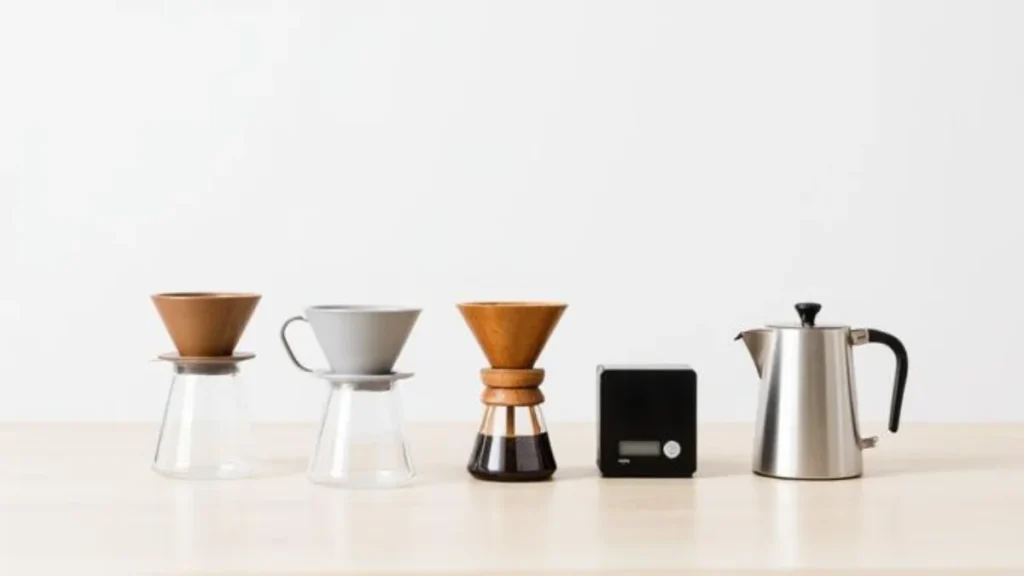
Each item in this setup has a specific role. Here’s what matters, and why.
1. Coffee Brewer — Choosing Your Method
The brewer is the core of your setup and determines your coffee’s character. For beginners, two methods stand out above the rest.
| Feature | Hario V60 | French Press | AeroPress |
| Flavor Profile | Clean, bright | Rich, full-body | Smooth, versatile |
| Difficulty | Moderate | Easy | Easy–Moderate |
| Brew Time | 3–4 min | 4 min | 1–2 min |
| Filter Needed | Yes (paper) | No | Yes (micro) |
| Approx. Cost | $10–$25 | $15–$35 | $30–$40 |
| Best For | Flavor clarity | Simplicity | Travel & speed |
👉 Choose a French press for simplicity. Choose V60 when you want a cleaner flavor and more control.
2. Coffee Grinder — The Most Important Upgrade
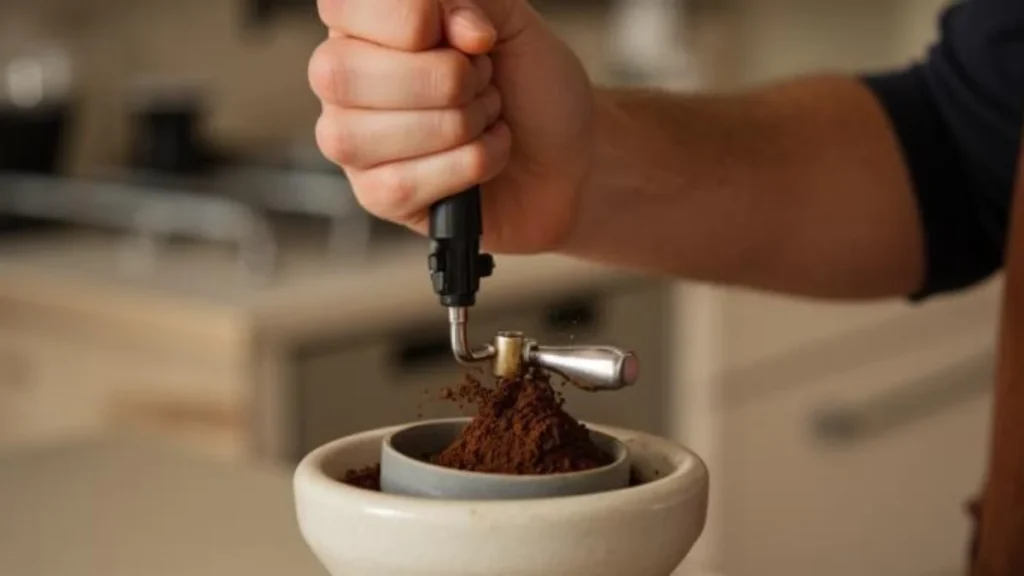
This is where most beginners underinvest, and it costs them in cup quality. Pre-ground coffee loses its freshness within days of opening; grinding just before brewing preserves the volatile compounds responsible for aroma and flavor. A consistent grind also ensures even extraction, which is the difference between a balanced cup and a bitter or sour one.
| Grinder Type | Quality | Consistency | Price Range | Verdict |
| Blade grinder | Poor | Uneven | $10–$20 | Avoid |
| Budget burr (manual) | Good | Consistent | $50–$75 | Best for beginners |
| Electric burr | Very good | Very consistent | $100+ | Upgrade later |
👉 The Timemore C2 is widely regarded as the best value manual burr grinder for beginners.
3. Digital Kitchen Scale — Precision Over Guesswork
A scale removes the single biggest variable in home brewing: inconsistency. Measuring by volume — scoops, tablespoons — produces different results every time, depending on grind size, bean density, and how you pack the spoon. Weighing your coffee and water takes ten extra seconds and transforms your results.
👉 Any basic kitchen scale works perfectly. No specialty coffee scale required.
4. Kettle — Start With What You Have
Your existing kettle is perfectly fine to begin with. A gooseneck kettle offers better pouring control, particularly for V60, where a slow, steady pour affects extraction — but this is an upgrade to consider later, not something you need on day one.
5. Fresh Coffee Beans — No Equipment Fixes Bad Beans
Even the best setup in the world can’t compensate for stale or low-quality coffee. Always buy whole beans, check the roast date, and aim to use them within two to four weeks of roasting. Buying in small batches from a local roaster — or a reputable online supplier — is the single easiest way to improve your coffee immediately.
| Bean Type | Flavor Notes | Best Method | Price Range |
| Arabica (washed) | Bright, fruity, clean | V60, pour-over | $14–$20/250g |
| Arabica (natural) | Sweet, fruity, wine-like | French press | $15–$22/250g |
| Robusta blend | Bold, earthy, bitter | French press | $8–$14/250g |
| Single origin | Unique, terroir-driven flavor | Any method | $16–$30/250g |
👉 Start with a medium roast Arabica — forgiving, balanced, and widely available.
Ideal Budget Breakdown
| Item | Budget Pick | Est. Cost (USD) | Priority |
| Brewer | V60 or French Press | $10–$35 | Essential |
| Grinder | Timemore C2 (manual) | $50–$75 | Most Important |
| Scale | Basic digital scale | $10–$20 | Essential |
| Kettle | Any kettle you own | $0–$35 | Optional upgrade |
| Beans | Fresh whole beans | $12–$20/bag | Essential |
| TOTAL | — | $35–$75 | — |
👉 Most beginners land comfortably around $50–$60 all-in, excluding the kettle if they already own one.
Water Quality — The Most Overlooked Variable
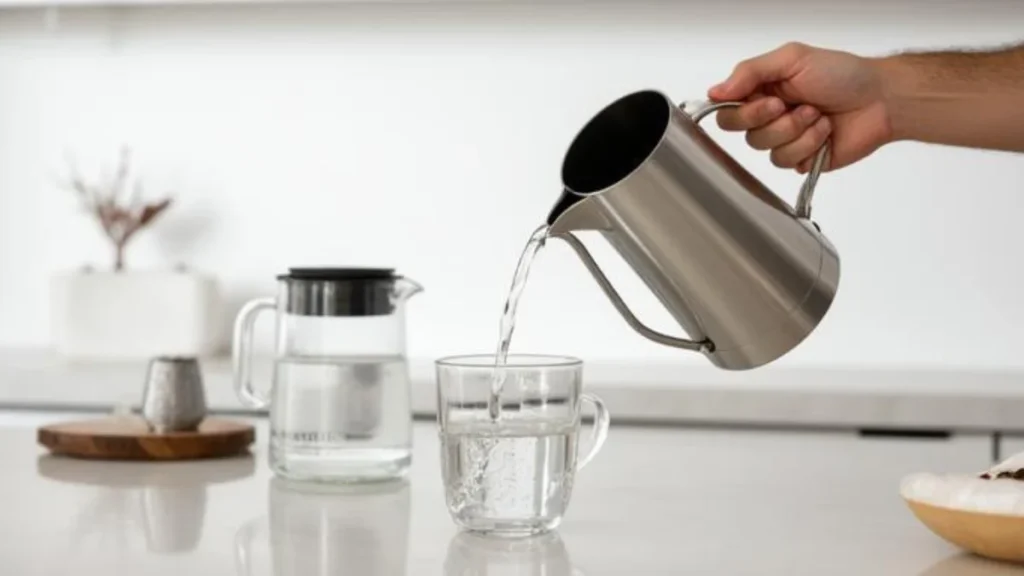
Coffee is approximately 98% water, making water quality one of the most impactful yet most ignored variables in home brewing. Hard tap water introduces mineral compounds that dull flavors and create a chalky aftertaste, while distilled water strips out the minerals that help extract flavor properly. The answer sits in the middle.
| Water Type | Impact on Flavor | Recommended? |
| Tap water (hard) | Chalky, masks true flavors | No |
| Tap water (soft) | Flat, thin body | Marginal |
| Filtered water | Clean, balanced | Yes |
| Bottled still water | Consistent, neutral | Best option |
| Distilled water | Flat — no minerals at all | No |
👉 Filtered or bottled still water gives you the cleanest, most consistent results.
Water Temperature — A Quick Reference
Water temperature directly affects extraction. Too hot and you over-extract — producing a harsh, bitter cup. Too cool and you under-extract — producing a weak, sour one. Getting this right doesn’t require a thermometer; simply boil your water, then rest it for 30 to 45 seconds before brewing.
| Method | Ideal Temp | Notes |
| V60 Pour-Over | 195–205°F / 90–96°C | Off boil, rest 30 sec |
| French Press | 190–200°F / 88–94°C | Off boil, rest 45 sec |
| AeroPress | 175–185°F / 80–85°C | Lower temp = smoother cup |
| Cold Brew | Cold / room temp | No heat required |
Brew Ratios Cheat Sheet
Getting your ratio right from day one eliminates the most common beginner mistakes — a cup that’s too weak, too strong, or simply inconsistent from one brew to the next.
| Method | Coffee | Water | Ratio | Brew Time |
| French Press | 1 oz | 15 oz | 1:15 | 4 min |
| V60 Pour-Over | 0.5 oz | 8 oz | 1:16 | 3–4 min |
| AeroPress | 0.6 oz | 7.5 oz | 1:13 | 1–2 min |
| Cold Brew | 3.5 oz | 21 oz | 1:6 | 12–24 hrs |
👉 Prefer grams? Use 30g of coffee to 450ml of water for a French press as your starting point.
Step-by-Step Beginner Workflow
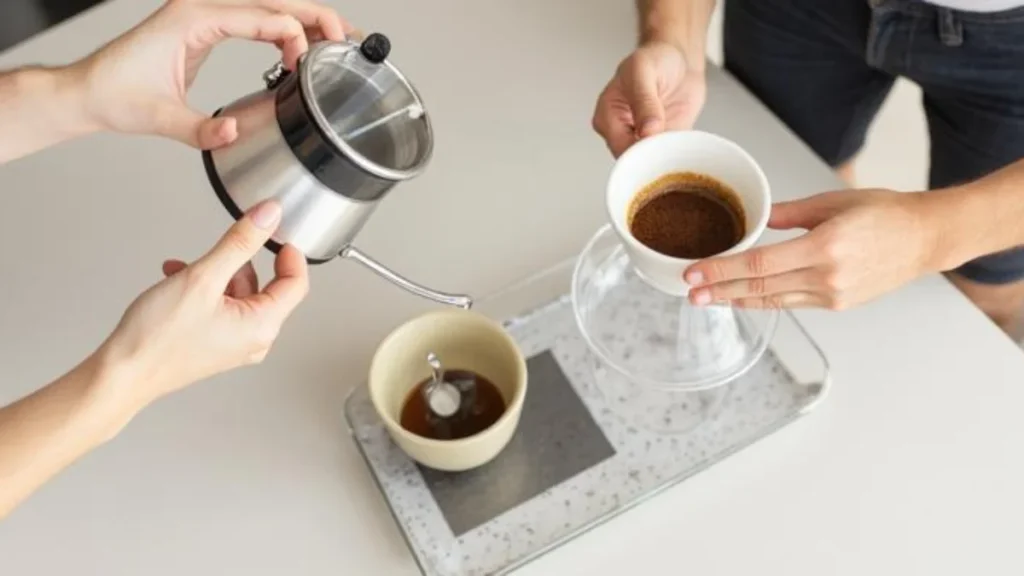
Once your equipment is ready, the process itself is straightforward. Follow this sequence for every brew until it becomes second nature.
- Boil water and let it rest for 30–45 seconds
- Weigh your coffee on your digital scale
- Grind to the correct size for your chosen method
- Measure water to your target ratio
- Brew using your chosen method
- Taste the result, then adjust your ratio or grind next time
👉 Change only one variable per brew session. This is how you improve steadily.
Common Mistakes Beginners Should Avoid
Most bad cups of coffee trace back to the same handful of errors. Knowing these in advance saves you time, money, and a lot of disappointing brews.
| Mistake | Why It Hurts | Quick Fix |
| Using a blade grinder | Uneven grind causes uneven extraction | Switch to a burr grinder |
| Buying pre-ground coffee | Stale within days of opening | Buy whole beans, grind fresh |
| Skipping the scale | Inconsistent results every brew | Use any basic kitchen scale |
| Wrong water temperature | Too hot = bitter; too cool = weak | 195–205°F for most methods |
| Using hard tap water | Minerals dull and distort flavor | Use filtered or bottled water |
| Overcomplicating early on | Discourages consistency and practice | Pick one method and master it |
Best Upgrade Path — When You’re Ready
There’s no rush to upgrade. When you find yourself consistently enjoying your coffee and wanting more, follow this order for the best return on investment.
| Stage | Upgrade | Why It Matters | Approx. Cost (USD) |
| 1 | Better burr grinder | Biggest single jump in cup quality | $100–$150 |
| 2 | Gooseneck kettle | Precise pour for V60 and pour-over | $30–$60 |
| 3 | Premium / single-origin beans | Explore terroir and variety | $16–$30/bag |
| 4 | AeroPress | Versatile, fast, travel-friendly | $35–$40 |
| 5 | Espresso machine | Only if genuinely committed | $300+ |
👉 Do not jump straight to espresso. It requires significant skill, maintenance, and investment.
How This Setup Improves Your Coffee
The difference between instant coffee and a properly brewed fresh cup is not subtle — it’s transformative. With this setup, you gain control over every variable that shapes flavor: grind freshness, extraction ratio, brew time, and water quality. The result is a cup that’s consistently stronger, more aromatic, and more satisfying than anything instant can offer.
| Aspect | Instant Coffee | Budget Brew Setup |
| Flavor | Flat, one-dimensional | Fresh, complex, satisfying |
| Control | None | Full ratio and grind control |
| Consistency | Variable | Repeatable with practice |
| Cost per cup | $0.50–$1.50 | $0.50–$1.00 (far better quality) |
| Customisation | None | Full — strength, ratio, method |
👉 The jump from instant to fresh-brewed is the biggest flavor leap in coffee. You’ll notice it immediately.
Frequently Asked Questions
What is the best budget coffee setup for beginners?
The best beginner setup combines a manual brewer (V60 or French press), a hand burr grinder, a digital scale, and fresh whole beans. This combination is affordable, easy to learn, and produces café-quality coffee at home. Total cost typically ranges from $35 to $75 USD.
How much should a beginner spend on coffee equipment?
A well-chosen setup in the $35–$75 range is more than sufficient for a beginner. Spending significantly more isn’t necessary until you’ve developed a clear sense of what you want from your coffee and feel ready to take the next step.
Is a coffee grinder really necessary?
Yes — and it’s the most impactful investment you can make. Pre-ground coffee begins losing its aroma and flavor compounds almost immediately after grinding. A burr grinder not only keeps your coffee fresh but also gives you a consistent particle size, which is essential for even, predictable extraction.
Which is better for beginners — V60 or French press?
French press is more forgiving and easier to master, making it the natural starting point for most beginners. V60 produces a cleaner, brighter cup but requires a steadier pour and a little more technique. If simplicity matters most, start with a French press. If you enjoy the learning process, V60 is very rewarding.
Can I make good coffee without expensive machines?
Absolutely. Manual brewing methods consistently outperform cheap electric machines, and many specialty coffee professionals prefer them precisely for the control they offer. The quality of your beans, grind, and ratio matters far more than the price of your equipment.
What should I upgrade first?
Your grinder, without question. It delivers the biggest improvement in cup quality of any single upgrade. After that, a gooseneck kettle improves your pour control, and investing in higher-quality or single-origin beans opens up a whole new dimension of flavor.
Does water quality really matter?
More than most beginners expect. Since coffee is approximately 98% water, the minerals and compounds in your water directly affect how flavors are extracted and how the final cup tastes. Hard tap water in particular can introduce chalky, flat notes that mask the character of even very good beans. Filtered or bottled still water makes a noticeable difference.
Is instant coffee cheaper than brewing at home?
In the very short term, yes — but the comparison doesn’t hold up over time. The cost per cup of home-brewed coffee is comparable to or lower than most instant options, and the quality difference is significant. Once you’ve tasted a properly brewed fresh cup, most people find it difficult to go back.
Conclusion
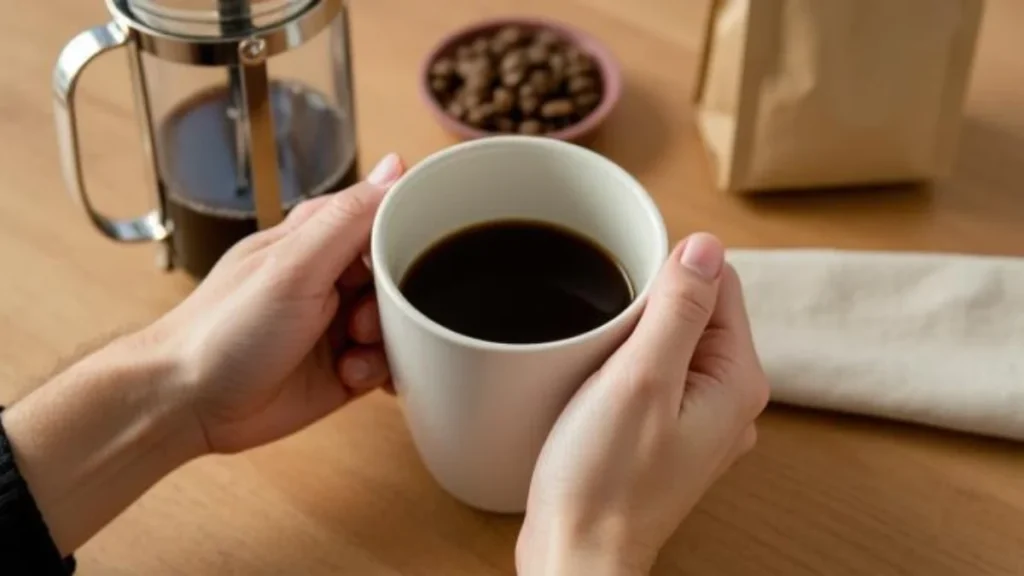
Building the best beginner coffee setup under budget isn’t about buying the most expensive gear — it’s about choosing the right tools that deliver real, consistent results from day one.
With a V60 or French press, a quality manual grinder, a basic scale, and fresh whole beans, you can brew coffee that rivals many cafés at a fraction of the cost. Add filtered water and the correct brewing temperature, and you’ve removed every major variable standing between you and a great cup.
If there’s one principle to carry with you, it’s this: fresh beans, proper grinding, and correct ratios matter more than any piece of equipment. Start simple, focus on technique, and upgrade only when you’ve genuinely outgrown what you have.
With a modest investment and a little practice, consistently excellent coffee at home is well within reach — and far more satisfying than anything that comes out of a jar.
For a better understanding, you may want to visit our Coffee Brewing Tools Hub.