
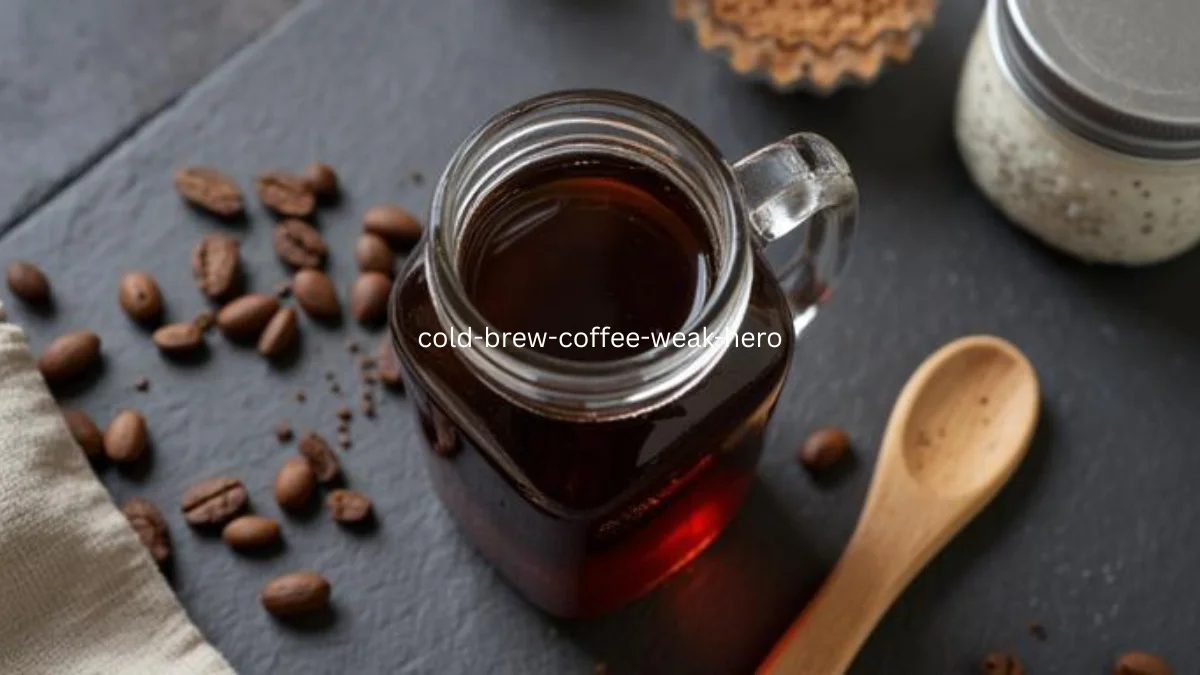
Introduction
Cold brew coffee has earned its reputation for delivering a smooth, low-acid, and intensely flavored cup—but only when it’s brewed correctly. If your cold brew tastes weak, watery, or disappointingly flat, you’re not alone. This is one of the most common complaints among home brewers, and the fix is often simpler than you’d expect.
The problem almost always comes down to a handful of controllable variables: your
Each factor plays a specific role in extraction, and when any one of them is off, the result is a cold brew that lacks the body, depth, and richness you’re aiming for.
In this guide, you’ll learn exactly why cold brew turns out weak, how to diagnose the specific cause in your own brew, and how to fix it—step by step. Whether you’re a first-time brewer or refining an existing process, these practical adjustments will help you produce a consistently strong, flavorful cold brew every time.
Quick Answer: Why Is Your Cold Brew Weak?
If you’re looking for a fast answer, here it is: weak cold brew is almost always caused by one or more of these four core issues.
- Too little coffee relative to water (incorrect ratio)
- Grind size that is too coarse, limiting surface area for extraction
- Steeping time that is too short for full flavor development
- Over-dilution when serving, which waters down an otherwise decent brew
In most cases, correcting your coffee-to-water ratio and extending your steep time will produce an immediate and noticeable improvement. Use a 1:4 to 1:5 ratio of concentrate, and steep for a minimum of 12 hours—ideally 18 to 24 hours — in the refrigerator.
Keep reading for a full breakdown of each cause, specific fixes, and a step-by-step guide to making a strong cold-brew concentrate from scratch.
Now that you have the quick overview, let’s go deeper into each cause so you can pinpoint exactly what’s going wrong in your brew.
What Causes Weak Cold Brew Coffee?
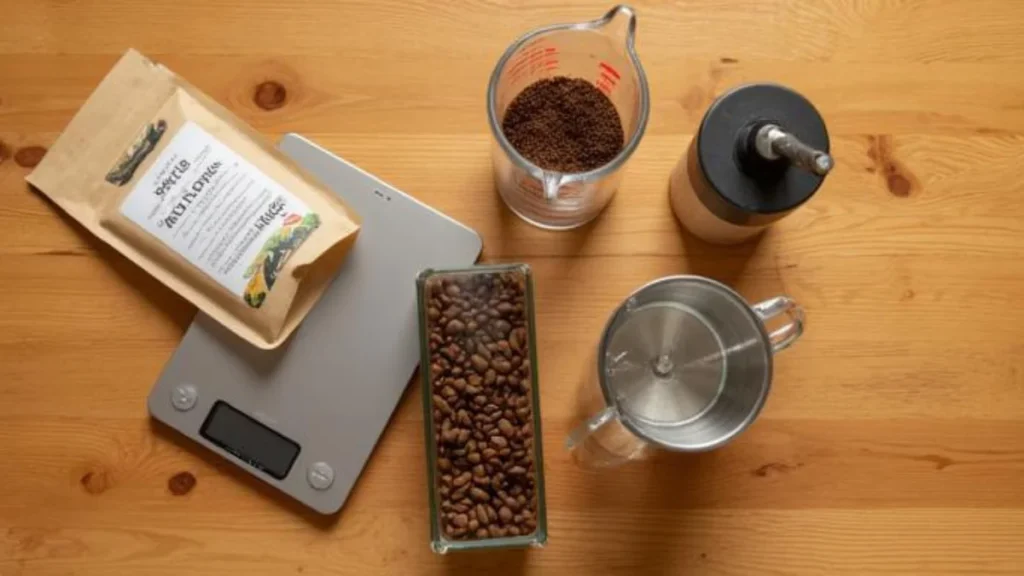
Cold brew relies on slow, cold-water extraction over many hours. Unlike hot brewing, which uses heat to accelerate extraction, cold brew depends entirely on time, grind consistency, and the correct coffee-to-water proportion. This means small errors have a larger impact on the final result. Here are the five most common causes of weak cold brew.
1. Incorrect Coffee-to-Water Ratio
The ratio is the single most important variable in cold brew strength. Using too little coffee or too much water leads to under-extraction, producing a brew that tastes thin and flavorless.
The Problem:
Many beginners start with a ratio that works for hot coffee—around 1:15 or 1:16—without realizing that cold brew requires a much higher coffee concentration to compensate for the slower extraction process.
The Fix:
- For cold brew concentrate: use a 1:4 to 1:5 ratio (1 gram of coffee per 4–5 grams of water)
- For ready-to-drink cold brew: use a 1:8 to 1:10 ratio
- Always dilute the concentrate before drinking—typically at a 1:1 ratio with water or milk
For more details, read our Coffee Brewing Ratio Guide that breaks down everything you need to know about coffee-to- water ratios
2. Grind Size Is Too Coarse
Cold brew does require a coarser grind than most hot methods—but there’s an important nuance. If your grind is too coarse, the water doesn’t have enough surface area to extract flavor compounds efficiently, especially during a cold, slow steep.
The Problem:
An excessively coarse grind leads to under-extraction even with enough steeping time. The water passes through large particles without dissolving the compounds responsible for flavor and body.
The Fix:
- Use a coarse but consistent grind—similar to raw sugar in texture
- Avoid ultra-coarse settings designed for French press; a medium-coarse grind often works better for cold brew
- Invest in a burr grinder for uniform particle size, which dramatically improves extraction consistency
Our Coffee Grind Size Chart Guide offers a comprehensive reference for every brewing method
3. Steeping Time Is Too Short
Cold brew is a slow process by design. Rushing the steep is one of the fastest ways to end up with a weak, underdeveloped result.
The Problem:
Steeping for fewer than 12 hours doesn’t give the cold water enough time to pull the full range of flavor compounds from the coffee grounds. The result is a brew that tastes thin and sour.
The Fix:
- Steep for a minimum of 12 hours
- For best results, steep for 18 to 24 hours in the refrigerator
- If steeping at room temperature, 12 to 16 hours is usually sufficient—but monitor for over-extraction beyond 20 hours
Our comprehensive Cold Brew Coffee Guide explains all about steeping coffee grounds
4. Stale or Poor-Quality Coffee Beans
Even a perfect ratio and steep time can’t compensate for low-quality ingredients. Coffee beans lose their volatile aromatic compounds quickly after roasting, and using stale beans is a common but overlooked cause of flat-tasting cold brew.
The Problem:
Old beans produce a brew that tastes dull and one-dimensional regardless of how long you steep them. The flavor simply isn’t there to extract.
The Fix:
- Use freshly roasted beans, ideally within 2 to 4 weeks of the roast date
- Buy whole beans and grind just before brewing
- Store beans in an airtight container away from heat, light, and moisture
The quality of coffee beans influences the standard of extraction and your coffee’s overall taste. Read more details in our Best Coffee Beans for Different Brewing Methods
5. Over-Dilution When Serving
This is a frequently overlooked cause that happens after brewing. Cold brew concentrate is meant to be diluted, but adding too much water or milk at the serving stage can undo all the work of a properly made brew.
The Problem:
A common mistake is treating cold brew concentrate like ready-to-drink coffee and adding it to a full glass of ice and milk without adjusting quantities.
The Fix:
- Start with a 1:1 dilution ratio (equal parts concentrate and water or milk)
- Adjust gradually based on your preferred strength
- Account for ice melt if serving over ice—use less water initially to compensate
Now that you know the causes, here’s a clear action plan to fix weak cold brew—whether you’re mid-brew or starting fresh.
How to Fix Weak Cold Brew: Step-by-Step
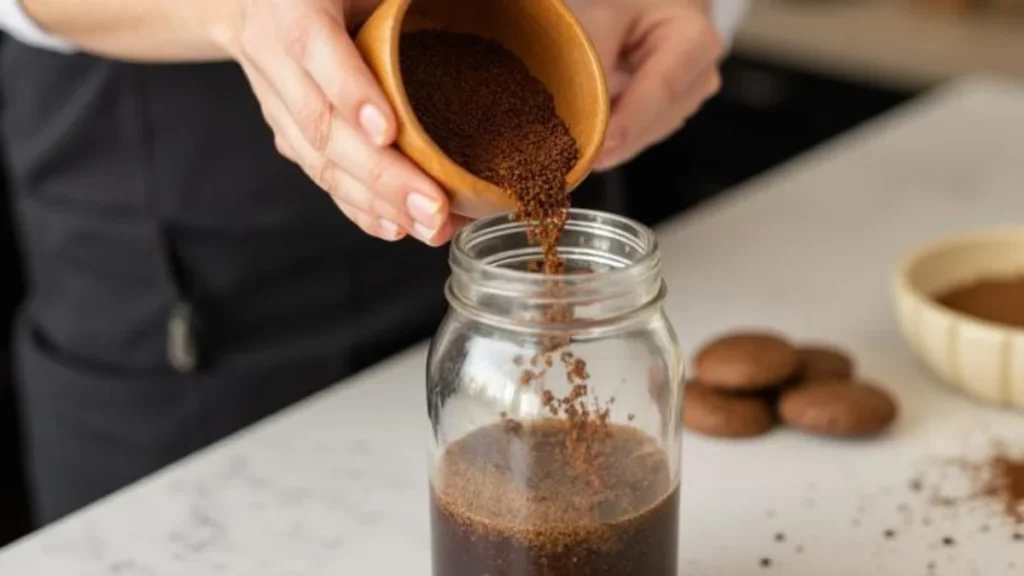
Follow these steps in order. If your brew is already made and tastes weak, start at step 5. If you’re starting a new batch, begin at step 1.
- Adjust your ratio first. Use at least a 1:5 concentrate ratio. Measure by weight for accuracy.
- Check your grind size. Aim for medium-coarse—consistent and uniform, not powdery or chunky.
- Extend your steep time. If you brewed for 10–12 hours, try 18–24 hours on your next batch.
- Use fresh beans. Check the roast date and switch to a newer bag if necessary.
- Reduce your dilution. If your concentrate tastes fine on its own, add less water or milk when serving.
- Change one variable at a time. This helps you identify the exact cause without over-correcting.
Pro tip: If your current brew is already weak, you can blend it with a small amount of fresh, stronger concentrate to rescue it before serving.
If you want to go beyond just fixing weakness and brew a genuinely strong, cafe-quality concentrate at home, here’s exactly how to do it.
How to Make Strong Cold Brew Concentrate
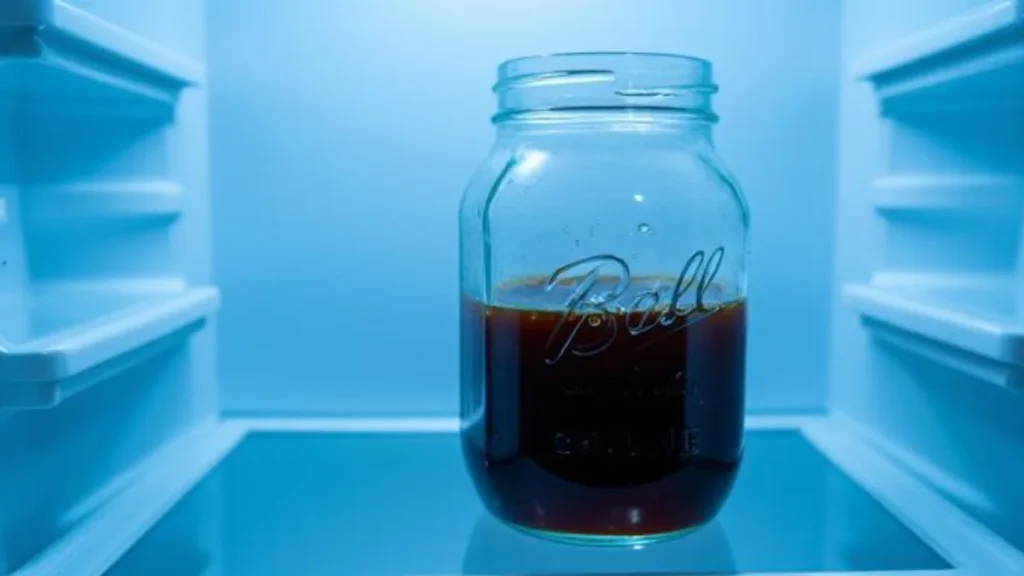
A proper cold brew concentrate is the foundation of great cold brew drinks. Made correctly, it delivers an intensely smooth and rich coffee base that you can dilute to your preferred strength or use in recipes.
What You Need:
- Coarsely ground coffee (freshly ground, medium-coarse setting)
- Filtered cold water
- A mason jar, French press, or dedicated cold brew maker
- A fine-mesh strainer or paper filter
The Method:
- Measure your coffee and water in a 1:4 weight ratio (e.g., 100g coffee to 400g water).
- Combine ground coffee and cold water in your brewing vessel. Stir gently to ensure all grounds are saturated.
- Cover and refrigerate for 18 to 24 hours.
- Strain through a fine-mesh strainer or coffee filter into a clean jar. Discard the spent grounds.
- Store in the refrigerator for up to 2 weeks.
- When serving, dilute 1:1 with water, milk, or a milk alternative. Adjust to taste.
Common Mistakes That Make Cold Brew Weak
Even experienced brewers make these mistakes. Knowing what to avoid is just as important as knowing what to do right.
Using Too Little Coffee
This is the most widespread cause. Many people apply hot-brew ratios to cold brew without realizing the process requires significantly more coffee to achieve the same strength.
Our Coffee Brewing Ratio Guide breaks down everything you need to know about coffee ratios
Brewing for Too Short a Time
Steeping for 8 or 10 hours feels like a long time—but cold extraction simply needs more. Under-brewed cold brew lacks the characteristic depth and richness of a properly steeped batch.
Over-Diluting at the Serving Stage
Cold brew concentrate is strong for a reason. Pouring it liberally over a large glass of ice with generous amounts of milk without accounting for dilution is a common way to accidentally water down a great brew.
Inconsistent or Incorrect Grind Size
Using a blade grinder, which produces uneven particle sizes, leads to a mix of over-extracted fine particles and under-extracted coarse pieces—resulting in a brew that tastes muddy, weak, or both.
How Weak Cold Brew Affects Taste
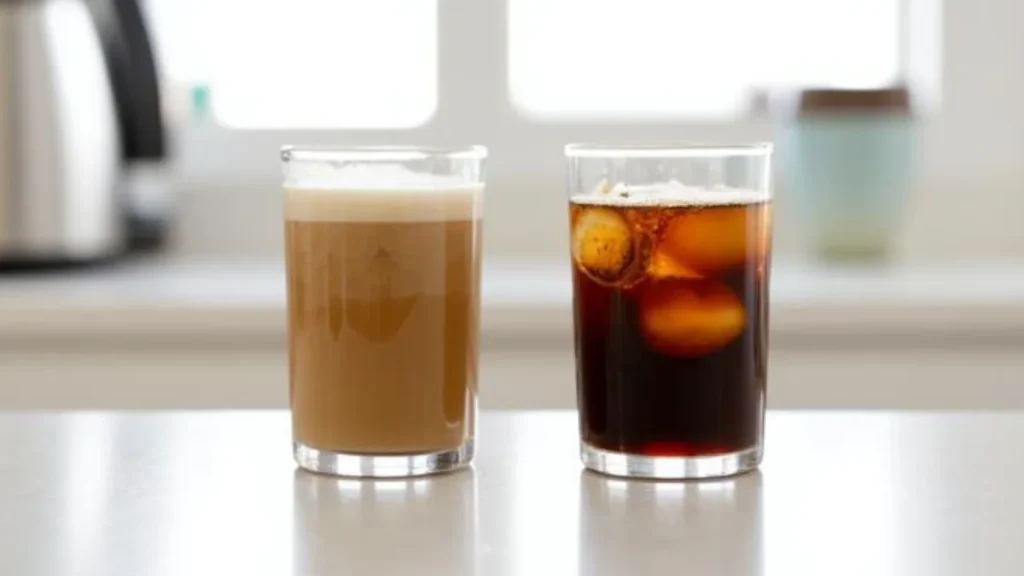
Understanding how weak cold brew differs from a properly brewed batch can help you diagnose problems by taste alone. Here’s a side-by-side comparison.
| Weak Cold Brew | Properly Brewed Cold Brew |
| Watery and thin mouthfeel | Smooth, full body |
| Flat, one-dimensional flavor | Rich, complex flavor |
| Lacks aroma and depth | Balanced and satisfying |
| No lingering finish | Clean, pleasant aftertaste |
The goal is a cold brew that tastes smooth and rich even before dilution—one that has enough body and depth to hold up when served over ice or mixed with milk. If yours tastes thin at the concentrate stage, the ratio or steep time needs to be adjusted before serving.
Below are answers to the most commonly asked questions about weak cold brew, formatted for quick reference.
Frequently Asked Questions
Why does my cold brew taste watery even when I follow the recipe?
If you’re following a recipe and still getting watery cold brew, the most likely culprits are grind size and bean freshness. A grind that’s too coarse reduces the extraction surface area, resulting in a weak brew even with the correct ratio and steeping time. Check that your grind is consistent and medium-coarse—not ultra-coarse. Also, verify your beans are fresh; coffee older than 4 to 6 weeks past the roast date often lacks the flavor compounds needed for a robust cold brew.
Can I fix weak cold brew after it’s already been brewed?
Yes, there are a few ways to rescue a weak, already-brewed batch. The most effective approach is to brew a second, stronger batch and combine the two—this raises the overall strength without discarding what you’ve made. Alternatively, you can reduce dilution when serving by using less water or milk than usual. What you cannot do is re-steep the same grounds effectively; once strained, most of the remaining flavor compounds are too depleted to extract further.
What is the best coffee-to-water ratio for strong cold brew?
For cold brew concentrate intended to be diluted before drinking, a 1:4 ratio (one part coffee to four parts water by weight) produces a strong, well-extracted concentrate. If you prefer a slightly less intense concentrate or are brewing for a longer steep, a 1:5 ratio is also effective. For a ready-to-drink cold brew that won’t be diluted further, use a 1:8 to 1:10 ratio. Always measure by weight rather than volume for consistent results.
Does grind size really affect cold brew strength that much?
Yes, grind size has a significant and direct impact on cold brew strength. Cold water extracts flavor more slowly than hot water, so it depends heavily on having an adequate contact surface area. A grind that’s too coarse reduces that surface area and leads to under-extraction—your cold brew will taste weak and lack body even if the ratio and steep time are correct. A medium-coarse grind (not ultra-coarse) gives cold water enough contact to extract the full range of flavor compounds over an 18 to 24-hour steep.
How long should I steep cold brew for the strongest result?
For the strongest, most fully developed cold brew, steep for 20 to 24 hours in the refrigerator. The 12-hour mark is the minimum for a balanced cold brew, but most of the body and richness develop between 16 and 24 hours. Beyond 24 hours, you risk over-extraction, which can introduce bitter or astringent notes. If you’re steeping at room temperature (around 68–72°F), 12 to 16 hours is sufficient—room temperature speeds up extraction compared to the refrigerator.
Is cold brew supposed to be strong before diluting?
Yes—if you’re making cold brew concentrate, it should taste noticeably strong and intense before dilution. A properly made concentrate at a 1:4 or 1:5 ratio will taste too strong to drink on its own. That’s intentional. It’s designed to be diluted with water, milk, or ice before serving. If your concentrate doesn’t taste particularly strong before diluting, the issue is with your ratio, steep time, or grind size.
With all the causes, fixes, and techniques covered, here’s a final summary to keep your brewing on track.
Conclusion

Weak cold brew is a frustrating but entirely fixable problem—and in almost every case, the solution lies in adjusting one or more of four key variables: your coffee-to-water ratio, grind size, steeping time, or dilution at the serving stage.
The most important change most home brewers need to make is to use more coffee. A 1:4 to 1:5 ratio for concentrate is the industry-standard starting point for a reason—it ensures the cold water has enough coffee mass to extract a rich, full-flavored brew over a long steep. Pair that with a medium-coarse grind, a steep of at least 18 hours in the refrigerator, and fresh beans, and you’ll have a cold brew that’s smooth, bold, and deeply satisfying.
Don’t be discouraged by a weak first batch. Cold brew rewards patience and small adjustments. Change one variable at a time, taste the results, and refine from there. Within a few batches, you’ll have a repeatable process that consistently delivers the strong, rich cold brew you’re after—no café required.
For a complete walkthrough of the cold brew process, see our Cold Brew Coffee Guide. To understand the science of extraction and how to further optimize it, explore our Coffee Extraction Explained resource.
Howdy, raswar@gmail.com

If you are a beginner, explore our Cold Brew Coffee Guide for more insights on the topic