
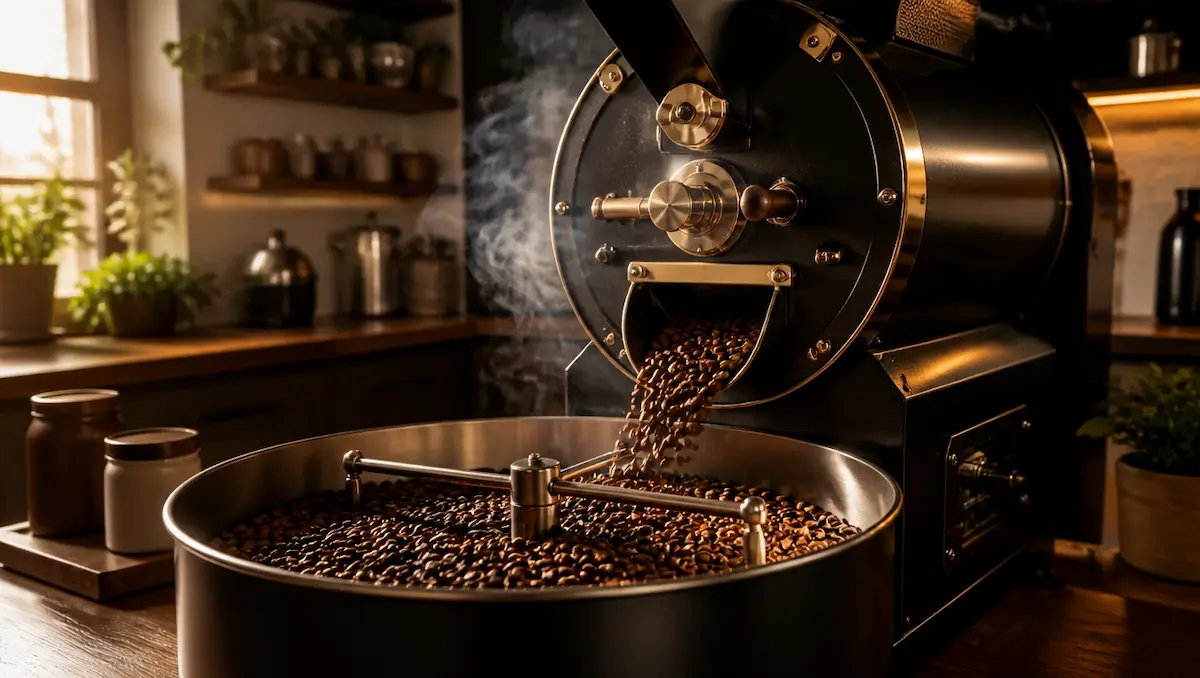
The best home coffee roaster for most beginners is a hot-air roaster in the Fresh Roast SR540 class — around $219, fast, forgiving, and small. Step up to the SR800 for bigger batches, or to a drum roaster like the Gene Cafe CBR-101 when repeatability matters more than speed. This guide picks the best machine for every budget and explains what actually separates them — because spec sheets don’t.
If you’re brand new to roasting, start with our home coffee roasting guide — you may not need a dedicated roaster at all yet.
Quick Picks
| Pick | Model | Type | Batch size |
| Best for beginners | Fresh Roast SR540 | Hot air | ~120 g |
| Best for bigger batches | Fresh Roast SR800 | Hot air | ~240 g |
| Best drum-style visibility | Gene Cafe CBR-101 | Hybrid drum | ~300 g |
| Best budget drum | JIAWANSHUN 1.1 lb Electric | Drum | up to 1.1 lb |
| Premium repeatability | Kaffelogic Nano 7 | Fluid bed | ~200 g |
| $20 entry point | Hot-air popcorn popper | Hot air | 60–90 g |
What Actually Differs Between Home Roasters
Four things, and none of them are on the front of the box:
- Batch size. A 120 g batch brews roughly 7 cups. Roast for a household and you’ll want 250 g+ — but bigger batches need more heat control, which costs more.
- Chaff control. Every bean sheds papery chaff at first crack. Hot-air machines blow it into a collector (or your kitchen); drum machines trap it where it can scorch if not cleaned. This is the #1 day-to-day difference owners report.
- Smoke management. All roasting smokes; second crack smokes a lot. Roast near a hood or outdoors regardless of machine.
- Repeatability. If you can’t reproduce Monday’s roast on Friday, you can’t learn from it. Profiling (saving a temperature/fan curve) is what separates the premium tier.
Our Picks in Detail
1. Fresh Roast SR540 — Best for Beginners
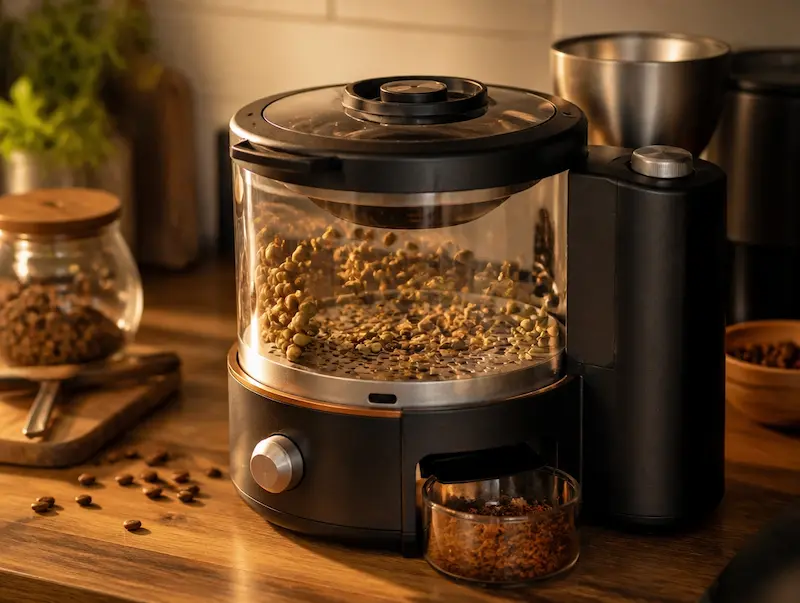
The default first “real” roaster, and the one we recommend to anyone finishing our roasting guide who wants to upgrade from a pan or popper. Hot air does the agitation for you, roasts finish in 6–10 minutes, and the see-through top puts first crack in full view — the single most useful training feature a beginner can have. Real-time heat and fan adjustment teaches you cause and effect fast.
Good for: learning, small households, single-origin experiments. Limitations: its small 4-ounce (120g) batch capacity and its fragile, loosely stacked glass components..

2. Fresh Roast SR800 — Best for Bigger Batches
The SR540’s bigger sibling: roughly double the capacity in the same countertop footprint, a heavier-duty base, and an extended tube option that improves evenness on full batches.
If you’re roasting weekly for a two-plus-person coffee household, the SR800 ends the twice-a-week roasting treadmill.

Good for: households that go through 250 g+ per week. Limitations: same manual-control philosophy as the SR540 — you are the profile.
3. Gene Cafe CBR-101 — Best Drum-Style Visibility
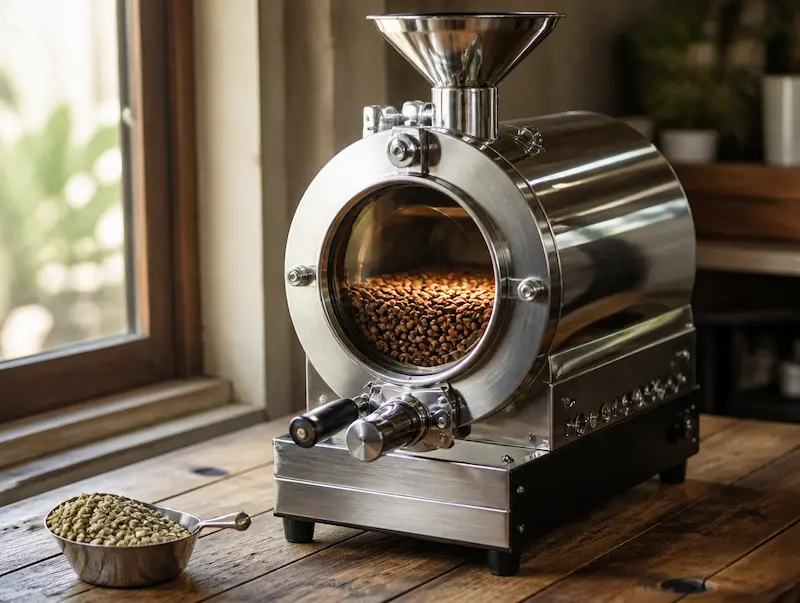
The hybrid: a rotating drum with a big glass viewing window and notably quieter operation than hot-air machines. The off-axis drum tumbling gives you drum-roast evenness while you still watch color develop — a genuine teaching machine for someone moving toward second crack and deliberate profile work.

Good for: learners who want drum-roast character without losing sight of the beans. Limitations: small batch capacity and a slow built-in cooling cycle, which can lead to roast inconsistency if beans aren’t cooled externally.
4. JIAWANSHUN 1.1 lb Electric Roaster — Best High-Capacity Budget Pick
This budget-friendly home machine is designed to handle large batches of coffee beans. It works best with 300 to 500 grams of beans per batch, making it ideal for roasting plenty of coffee at once without spending a lot of money.
A built-in stirring rod moves the beans around constantly to ensure an even roast, while a simple dial lets you adjust the heat up to 240°C.
You can easily watch your beans change color through the clear glass lid, which also has small vents to let smoke escape. When you are done, the non-stick interior wipes clean quickly with a damp cloth. Plus, this versatile machine can also roast nuts, seeds, and popcorn, adding extra value to your kitchen.
I

Good for: volume roasting on a tight budget — 500 g batches change your weekly routine.
Limitations: no glass view and no chaff collector (blow chaff off outdoors); no afterburner, so indoor roasting needs serious ventilation; build quality varies between units — buy from a listing with a solid return policy, and note it won’t teach first crack as visibly as the SR540
5. Kaffelogic Nano 7 — Premium Repeatability

The outlier: a fluid-bed roaster with connected profiling — edit a roast curve on your computer, save it, reproduce it exactly. It turns roasting from craft into science, at a price that only makes sense once roasting is a settled weekly habit (or a micro-business). If you’re not there yet, the SR540 will teach you more per dollar.
Good for: committed hobbyists and profile obsessives. Limitations: price, and smallish batches for the money.
The $20 Honorable Mention: Your Popcorn Popper
We stand by it — a classic hot-air popper is how most roasters start, and our roasting guide dedicates a full method to it. If you haven’t roasted at all yet, roast one batch with a popper before spending $300. You’ll learn what first crack sounds like in your own kitchen, and every pick above will make more sense.
How to Choose: Three Questions
- How much coffee does your household drink weekly? Under 250 g: SR540 class. Over: SR800 or Behmor.
- Do you want to watch or automate? Watch-and-learn: hot air or Gene Cafe. Save-and-repeat: Kaffelogic tier.
- Where will you roast? Indoors with a hood: Behmor’s afterburner helps. Garage/outdoor: anything.
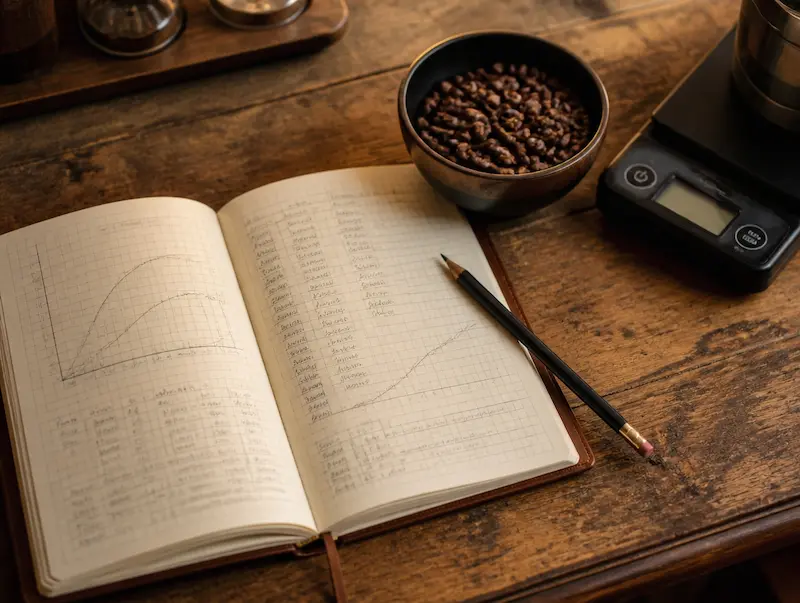
Whichever you pick, pair it with a 0.1 g coffee scale for consistent batch weights, plan your green-bean storage (green beans are forgiving, but roasted output deserves proper storage containers), and rest your roasts before pulling shots — see the french press ratio cheat sheet for brewing them well.
FAQ
Is a home coffee roaster worth it?
If you drink specialty coffee weekly, yes. Within a year, green beans cost 30–50% less per pound, and freshness beats anything on a shelf. Our roasting guide FAQ covers the math.
Hot air vs drum roaster for beginners?
Hot air: faster, cheaper, more forgiving, noisier. Drum: more even flavor development, quieter, slower, pricier. Beginners learn faster on hot air because first crack is visible and quick.
Can I roast coffee in an oven or air fryer?
An oven works in a pinch (see our guide’s FAQ); flat-bottom air fryers don’t agitate beans enough and roast unevenly. Neither teaches you first crack as well as the methods above.
How long does a home roaster last?
Hot-air machines are consumable-adjacent: motors and heating elements typically last a few years of weekly use. Drum machines are built for a decade. Budget accordingly.
What’s the best cheap coffee roaster?
The SR540 at ~$220, or a popcorn popper at $20 if you’re testing the hobby. Avoid no-name “coffee roasters” on marketplaces — most are repackaged poppers at triple the price.