
Quick Answer Box
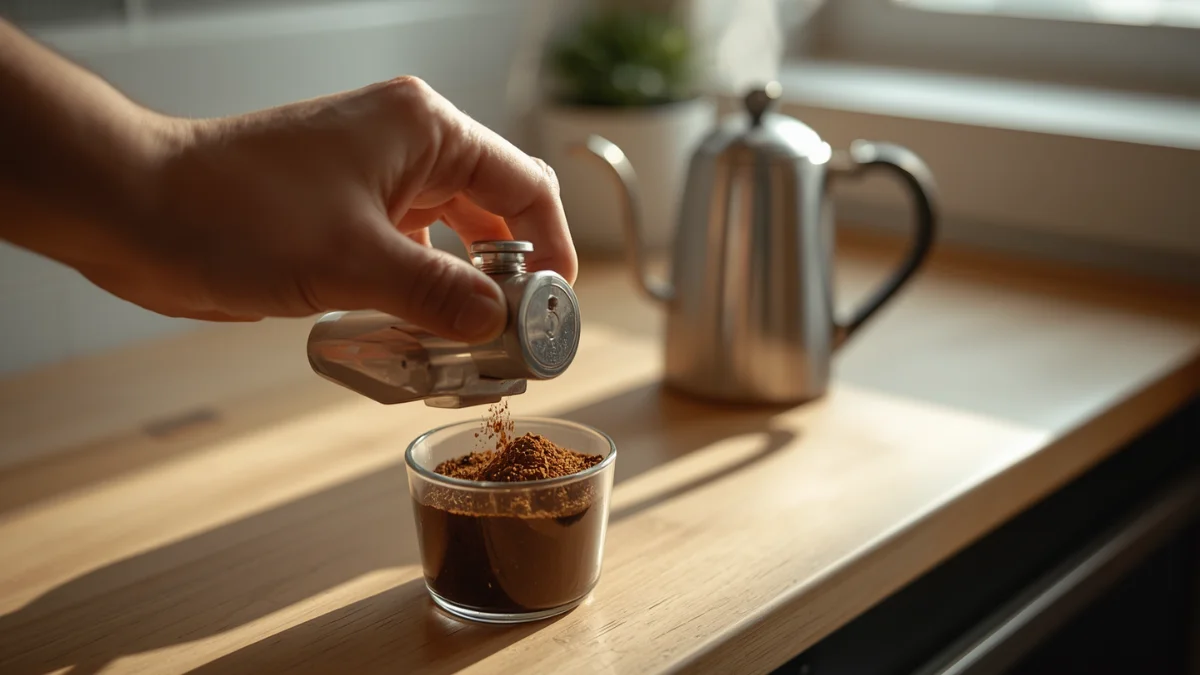
There is no single correct grinding time. How long you grind depends on your grinder type, the grind size you need, and how much coffee you’re grinding. A manual grinder takes 30–60 seconds for a single pour-over dose. A quality electric burr grinder finishes the same dose in 15–25 seconds. The goal is the right particle size — not a specific number of seconds on the clock.
Introduction
“How long should I grind?” is one of the most common questions beginners ask — and it’s the wrong question.
Grinding time isn’t a fixed target like water temperature or steep time. It’s a byproduct of other variables: your grinder type, the dose you’re grinding, the grind size your brewing method needs, and how efficiently your burrs work. A number of seconds tells you very little without knowing all of those things.
What actually matters is the result — the particle size you end up with, and whether it matches your brewing method. This guide explains why grinding time varies so much, what the typical ranges are for each method and grinder type, and how to grind consistently rather than just quickly.
Why Grind Time Matters
Grind time matters not because there’s a magic duration to hit, but because of what happens to your coffee during and after grinding.
Particle size. The longer you run a grinder at a fixed setting, the more opportunity the burrs or blade has to process the beans. On a burr grinder, grinding time is largely determined by how quickly beans feed through the burr gap — which is mostly a function of the grind setting and dose size, not how long you run it. On a blade grinder, longer grinding genuinely does produce finer grounds, which is why blade grinder timing is more variable and less predictable.
Extraction. Particle size directly controls extraction speed. If grinding time produces inconsistent particle sizes — some grounds fine, others coarse — water extracts from different particles at different rates simultaneously. The result is a cup that tastes muddled: slightly sour in some aspects and slightly bitter in others, with no clean way to fix it.
Heat generation. Grinding generates friction, which generates heat. This matters most with blade grinders and extended grinding sessions. Excessive heat during grinding can cause aromatic compounds in your coffee to begin volatilizing before you’ve even brewed it — subtly undermining the freshness you were trying to preserve by grinding at home.
Consistency. Grind time on a burr grinder is largely self-limiting — once all the beans have passed through the burrs, the grinding stops or the motor runs empty. On a blade grinder, you control when to stop, which introduces variability from session to session.
Does Grind Time Affect Taste?
Yes — but not in the way most beginners expect.
On a burr grinder, grinding time is mostly a consequence of dose size and grind setting, not a cause of flavor variation. The burrs grind everything that feeds through them to the same particle size determined by the gap. Grinding for 20 seconds versus 30 seconds doesn’t change the particle size — it just reflects how long it took the beans to pass through. Taste is controlled by the grind setting, not the clock.
On a blade grinder, time directly affects particle size because the chopping action continues as long as you run it. Shorter time produces larger, more uneven chunks. Longer time produces finer but still inconsistent grounds. The problem is that no amount of timing produces the uniform particle size a burr grinder achieves — you’re controlling an average, not a distribution.
Too coarse — regardless of grinder type — produces under-extracted coffee. Water passes through too quickly, pulling mainly acids and leaving sweetness and body behind. The cup tastes sour, thin, and hollow.
Too fine produces over-extracted coffee. Water moves slowly through densely packed fine grounds, pulling bitter and astringent compounds into the cup. The result is harsh, heavy, and unpleasant.
Uneven grinding — the signature problem of blade grinders and worn burrs — produces both simultaneously. Some fine particles over-extract while larger chunks under-extract simultaneously. The cup tastes simultaneously sour and bitter with no clean fix.
For a full breakdown of how grind size connects to extraction, see Coffee Extraction Explained and How Coffee Grind Size Affects Coffee Taste.
Grind Time by Brewing Method
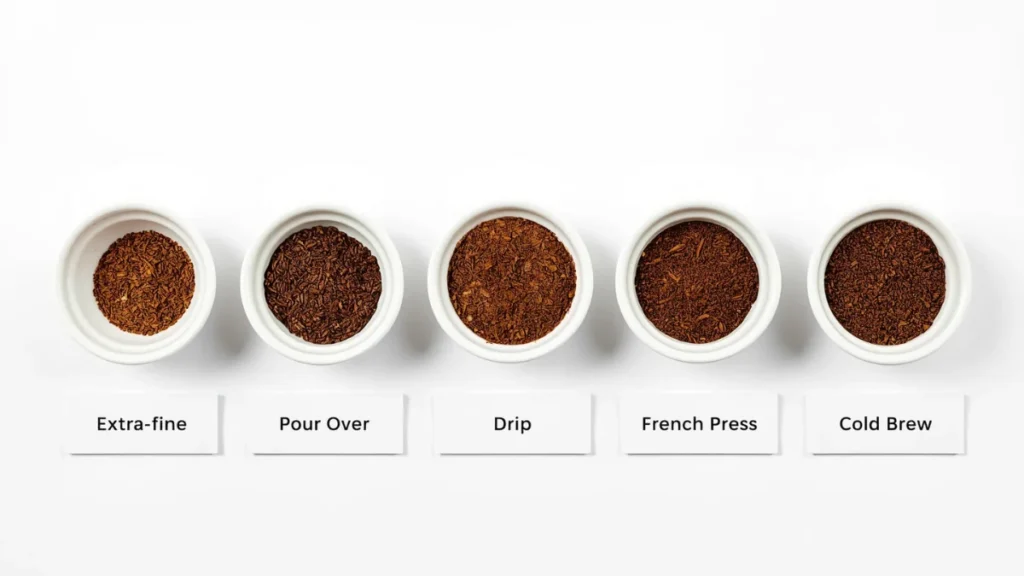
These are approximate ranges based on a standard single-serve dose (15–20g) on a typical home grinder. Times vary significantly between grinder models, burr quality, and dose size. Treat these as orientation ranges, not targets.
| Brewing Method | Grind Size Needed | Typical Electric Burr Time | Typical Manual Burr Time |
|---|---|---|---|
| Espresso | Extra-fine | 20–30 sec | 60–90 sec |
| Pour over | Medium-fine | 15–25 sec | 30–45 sec |
| Drip coffee | Medium | 15–20 sec | 25–35 sec |
| French press | Coarse | 10–18 sec | 20–35 sec |
| Cold brew | Extra-coarse | 8–15 sec | 15–25 sec |
Important note: These ranges reflect how long burr grinders typically take to process a standard dose — not how long you should grind for. Coarser settings finish faster because the burr gap is wider and beans pass through more quickly. Finer settings take longer because the gap is narrower and beans must be ground more thoroughly before exiting.
If your grinder is taking significantly longer than these ranges for a standard dose, it may need cleaning — built-up coffee oils and residue reduce grinding efficiency over time. See How to Clean a Coffee Grinder Properly for a full step-by-step cleaning guide.
Manual vs Electric Grinders: How Grind Time Differs
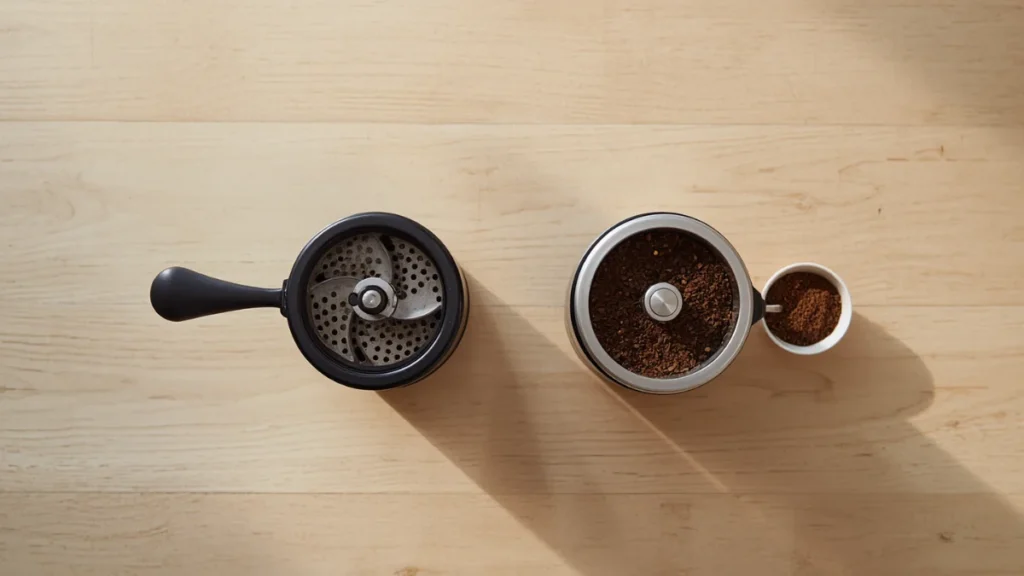
The choice between manual and electric grinding affects not just how long you grind, but how much physical effort is involved and how consistently you can replicate results.
Manual Burr Grinders
Manual grinders require you to turn a hand crank to drive the burrs. Grind time is naturally longer than electric models — typically 30–90 seconds depending on dose size, grind setting, and how fast you crank.
Advantages for timing:
- You physically feel when beans have finished grinding — the resistance noticeably drops when the chamber is empty
- Slower speed means less heat generation
- Portable — no power required
Disadvantages:
- Longer grind time per session
- Crank speed varies, which can introduce slight consistency differences between sessions
- Finer grind settings (espresso) take significantly longer and more physical effort
Typical times for a 20g pour over dose: 35–50 seconds at moderate cranking pace.
Electric Burr Grinders
Electric burr grinders automate the cranking. Once set to the right dose (by weight or timer) and grind size, they process beans quickly and consistently.
Advantages for timing:
- Faster — most finish a single pour-over dose in 15–25 seconds
- Consistent motor speed removes crank-pace variability
- Timer or dose-based grinding removes the need to watch the clock
Disadvantages:
- Higher cost than comparable manual grinders
- More components that can wear or need maintenance
- Louder operation
Typical times for a 20g pour over dose: 15–25 seconds on a quality consumer electric burr grinder.
For a full comparison of the two approaches, see Manual vs Electric Coffee Grinder and the Manual Coffee Grinder Buying Guide.
Burr vs Blade Grinder: How Grind Times Compare
| Feature | Burr Grinder | Blade Grinder |
|---|---|---|
| How it works | Crushes beans between two surfaces | Chops beans with a spinning blade |
| Grind consistency | High — uniform particle size | Low — mixed fine dust and large chunks |
| Grinding time | Self-limiting — stops when beans are processed | User-controlled — you decide when to stop |
| Heat generation | Lower — especially manual burr | Higher — blade generates significant friction |
| Grind size control | Precise — set the gap | Approximate — more time = finer (but uneven) |
| Taste impact | Predictable, adjustable | Inconsistent, hard to troubleshoot |
| Typical time (20g) | 15–50 sec depending on type | 10–20 sec (but with poor consistency) |
The blade grinder finishes faster — but the result is a mix of particle sizes that no amount of timing can reliably control. A burr grinder takes slightly longer but produces grounds that actually behave predictably in your brewing method.
For a deeper comparison, see Burr vs Blade Coffee Grinders.
Signs You’re Grinding for Too Long
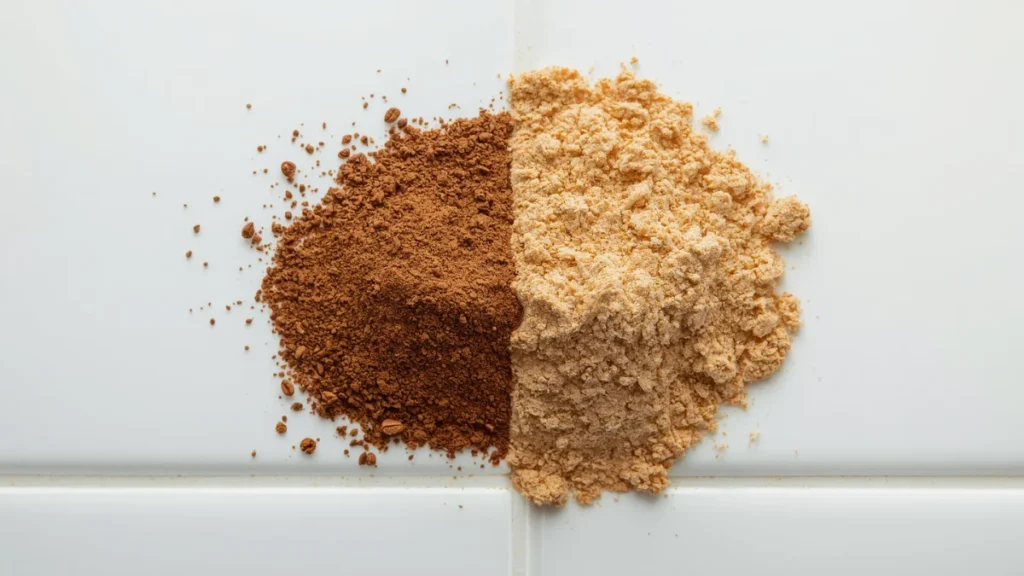
On a blade grinder, over-grinding is a real risk. On a burr grinder, it’s less of an issue — but both have warning signs worth recognizing.
Coffee grounds feel warm or hot. Some warmth from a manual grinder is normal. Noticeably hot grounds from a blade grinder or from running an electric burr grinder empty after all beans have been processed signal excessive heat. Heat damages volatile aromatic compounds before the coffee even reaches your brewer.
Dusty, powdery texture. If your grounds look like fine powder or feel like flour between your fingers when they should be medium or coarse, you’ve ground too fine — either by using the wrong setting or by running a blade grinder too long.
Grounds clumping together. Very fine grounds, especially from over-run blade grinders, tend to clump due to static and the heat generated. These clumps extract unevenly in the brewer.
A blade grinder running with no beans left. This happens when you lose track of time. Running a blade grinder empty generates unnecessary heat and can damage the motor over extended periods. Burr grinders running empty are less immediately harmful but should still be avoided.
How to Grind Consistently Every Time
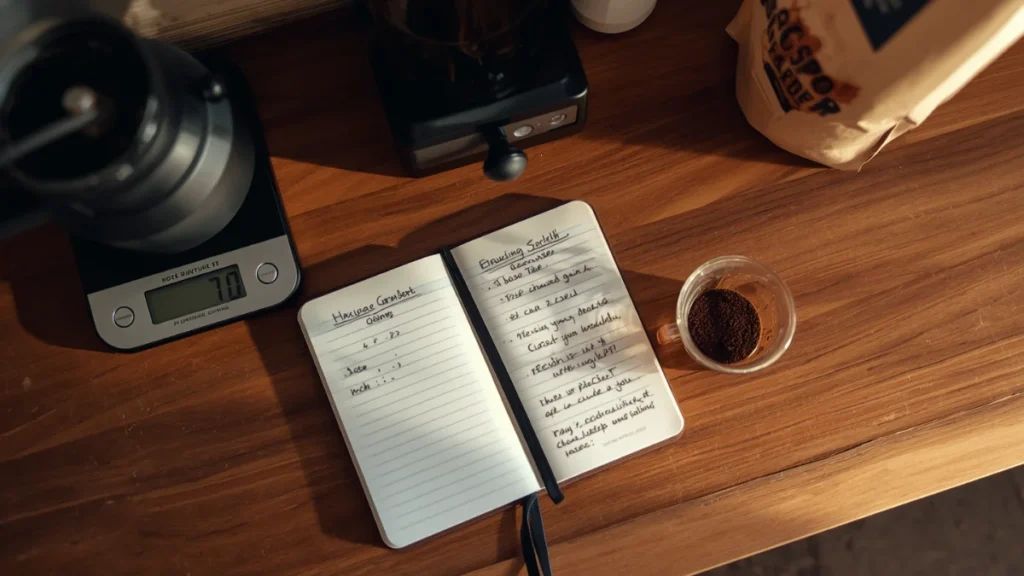
Weigh your beans before grinding. A consistent dose — measured in grams — removes one variable from every brewing session. It also helps you use your coffee scale to set an electric grinder’s dose timer accurately for your specific bean and setting.
See How to Use a Coffee Scale for the full routine.
Grind immediately before brewing. Ground coffee begins losing aromatic compounds within minutes of grinding. The difference between coffee ground ten minutes before brewing and coffee ground right before is small but real — and over weeks of daily brewing, the habit of grinding fresh adds up to a noticeably better cup.
Use the same cranking pace for manual grinding. On a manual grinder, crank speed affects how beans feed through the burrs. A consistent, moderate cranking pace produces more uniform results than varying speeds within a single session.
Keep notes on your settings. When you find a grind setting that works for a particular bean and method, write it down — the setting number or click count, the dose, and the approximate grind time. This gives you a starting point when you open a new bag of the same coffee.
Clean your grinder regularly. Coffee oils accumulate on burr surfaces and in the grinding chamber over time. This residue changes how beans feed through the grinder, slowing grinding time slightly and affecting particle consistency. A clean grinder behaves more predictably and produces better-tasting coffee.
See How to Clean a Coffee Grinder Properly for a step-by-step routine.
Common Beginner Mistakes Around Grind Time
Grinding too much at once.Grinding a week’s worth of coffee in a single session is convenient but costly for flavor. Ground coffee stales much faster than whole beans. Grind only what you need for the current brew — or at most for the next day.
Grinding days aheadPre-grinding for the week feels efficient until you notice that Monday’s coffee tastes significantly better than Friday’s from the same bag. The window for peak freshness after grinding is a matter of hours, not days.
Using time as the only blade grinder guideIf you use a blade grinder, grinding to a fixed number of seconds doesn’t guarantee consistent results — it only averages them. The amount of beans, how full the chamber is, and ambient temperature all affect the result. Checking the grounds by texture and appearance after each session is more reliable than the clock alone.
Assuming longer grinding always means finer groundsOn a burr grinder, this isn’t true at all — the grind setting determines particle size, not elapsed time. On a blade grinder, it’s partially true but with rapidly diminishing returns and increasing heat and inconsistency.
how long should you grind coffee beans: FAQs
Can coffee be over-ground?
On a blade grinder, yes — running it too long produces grounds that are too fine for most methods, often with heat damage from the friction. On a burr grinder, the grind setting determines particle size. Once all the beans have been processed, the grinder has done its job — continuing to run it empty doesn’t produce finer grounds.
Should coffee beans feel warm after grinding?
Slight warmth from a manual grinder is normal — the friction of grinding generates a small amount of heat. Coffee that feels noticeably hot after grinding, particularly from a blade grinder or from running a grinder empty, suggests excessive heat exposure that may subtly affect flavor.
Does grinding longer make coffee finer on a burr grinder?
No. On a burr grinder, fineness is determined entirely by the gap between the burrs — set by the adjustment dial. Grinding longer just means more beans are passing through the same fixed gap. The particle size is the same whether you grind 10g or 30g. To grind finer, adjust the setting, not the duration.
How do I know when to stop grinding on a manual grinder?
The resistance from the crank noticeably decreases when the chamber is empty — you’ll feel the difference clearly. A few extra turns after that won’t hurt, but there’s no benefit to continuing once the resistance drops.
Is it better to grind faster or slower on a manual grinder?
A moderate, consistent pace is better than either extreme. Very fast cranking can cause beans to bounce around the chamber rather than feed smoothly through the burrs. Very slow cranking unnecessarily extends grinding time. Find a comfortable, steady rhythm and stick to it.
Key Takeaways
- Grind time is a byproduct, not a target — focus on achieving the right particle size for your method, not hitting a specific number of seconds.
- Burr grinders are self-limiting — once the beans have been processed, they’re done regardless of how long they’ve been running.
- Blade grinders require more careful time management — but no amount of timing produces the consistency a burr grinder delivers.
- Grind immediately before brewing — freshness drops quickly after grinding.
- Clean your grinder regularly — residue buildup slows grinding and affects consistency more than most people realize.
Recommended Reading
- Coffee Grind Size Chart
- How to Clean a Coffee Grinder Properly
- Manual Coffee Grinder Buying Guide
- Burr vs Blade Coffee Grinders
- Manual vs Electric Coffee Grinder
- Coffee Extraction Explained
- How Coffee Grind Size Affects Coffee Taste
- How to Use a Coffee Scale