
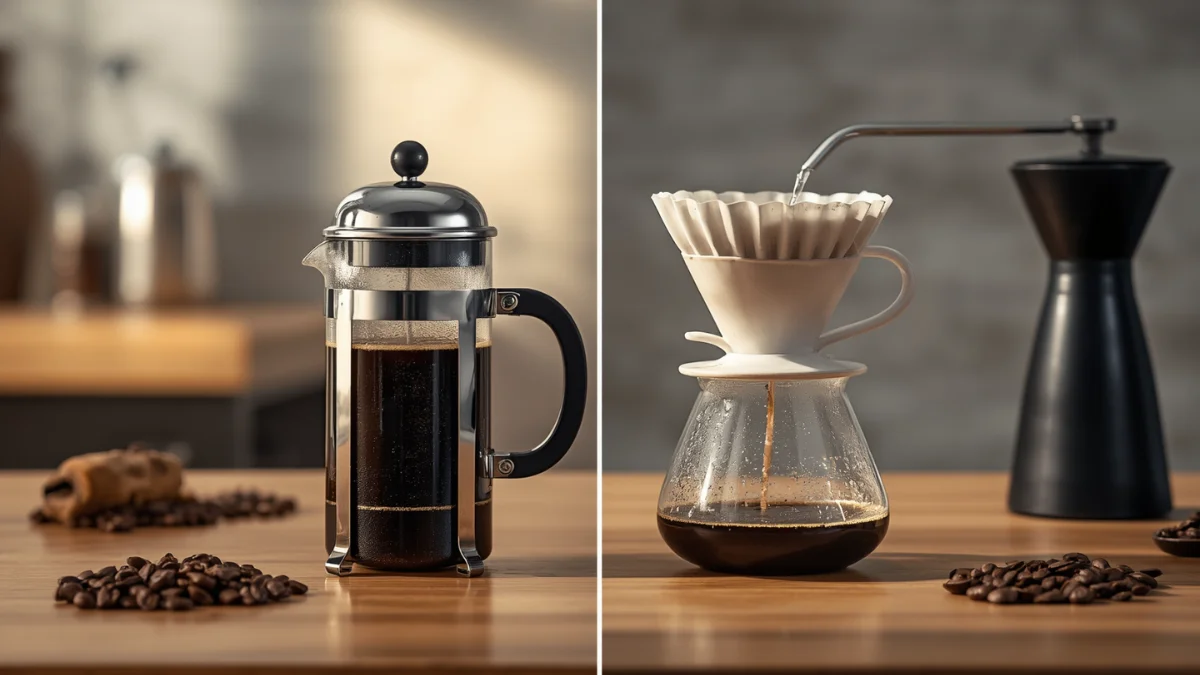
Quick Verdict Box
- Best for Beginners: Pour Over (simpler troubleshooting, forgiving recipes)
- Best for Flavor Clarity: Pour Over (paper filter produces a cleaner cup)
- Best for Convenience: French Press (no filters, fewer steps)
- Best for Budget: French Press (lower equipment cost overall)
- Best Overall: Depends on your priorities — see full breakdown below
Introduction
French press and pour-over are the two most popular manual brewing methods among home coffee enthusiasts, and they often come up in direct comparison for people deciding which to learn first.
The honest answer is that neither method is universally better. They produce genuinely different cups of coffee, suit different routines, and reward different kinds of attention. Your choice should depend on what you actually want from your coffee — body and convenience, or clarity and nuance.
This guide breaks down both methods in detail so you can decide which fits your goals.
What Is French Press Coffee?
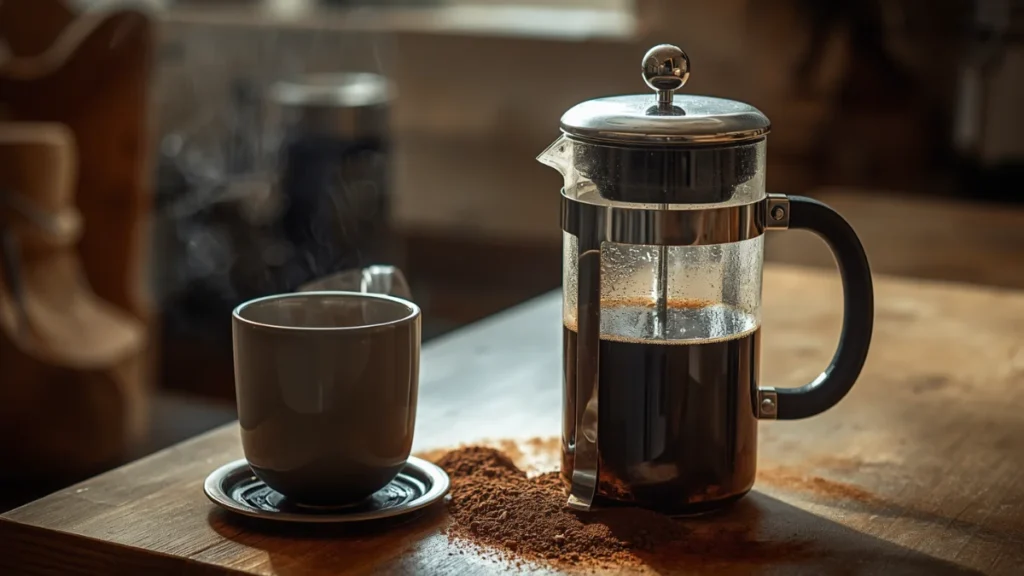
French press is a full-immersion brewing method. Coarse coffee grounds steep directly in hot water for about 4 minutes, then a metal mesh plunger separates the grounds from the brewed coffee.
Strengths
- Full body and rich texture — natural coffee oils stay in the cup since there’s no paper filter
- Minimal equipment — just the French press itself, a kettle, and a way to measure coffee
- Forgiving technique — pouring technique matters far less than with pour over
- Bold, satisfying flavor — works especially well with medium and dark roast coffee
Weaknesses
- Sediment — fine coffee particles pass through the metal filter, creating a gritty texture some drinkers dislike
- Less flavor clarity — body and oils can mask some of the subtler, more delicate flavor notes
- Requires immediate serving — coffee left in contact with grounds after the 4-minute steep continues to extract and becomes bitter
What Is Pour Over Coffee?
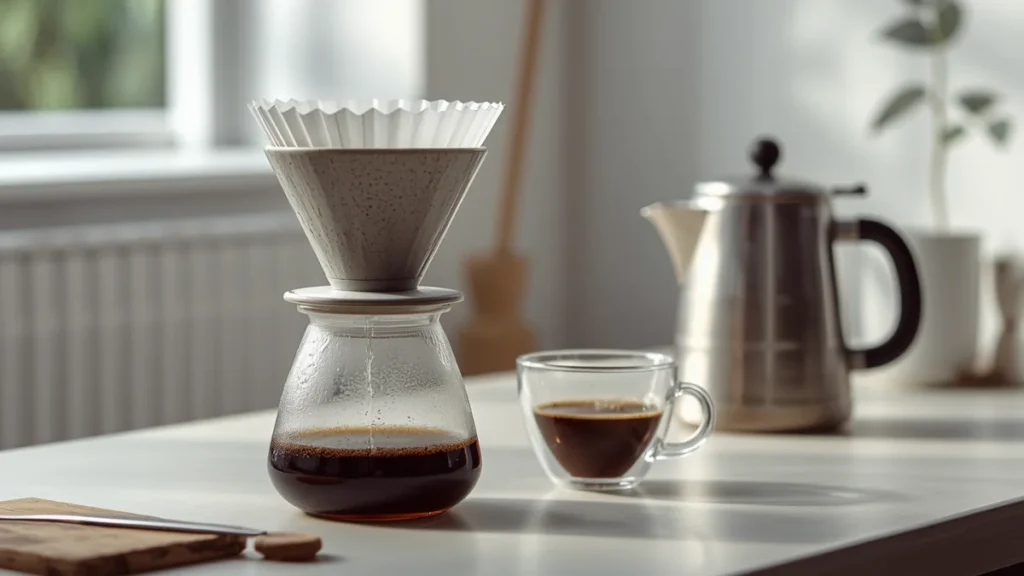
Pour-over involves manually pouring hot water over coffee grounds held in a paper filter, allowing the water to drip through into a server below.
Strengths
- Exceptional clarity — paper filtering removes oils and fine sediment, producing a clean, bright cup
- Highlights nuance — subtle origin characteristics and tasting notes come through clearly
- Customizable — pour rate, pattern, and bloom time give you precise control over the final result
Weaknesses
- More equipment needed — dripper, filters, ideally a gooseneck kettle and scale
- Steeper learning curve — pour technique directly affects extraction evenness
- Less forgiving — small mistakes (pouring too fast, skipping the bloom) have a more noticeable impact on flavor
Head-to-Head Comparison
Flavor
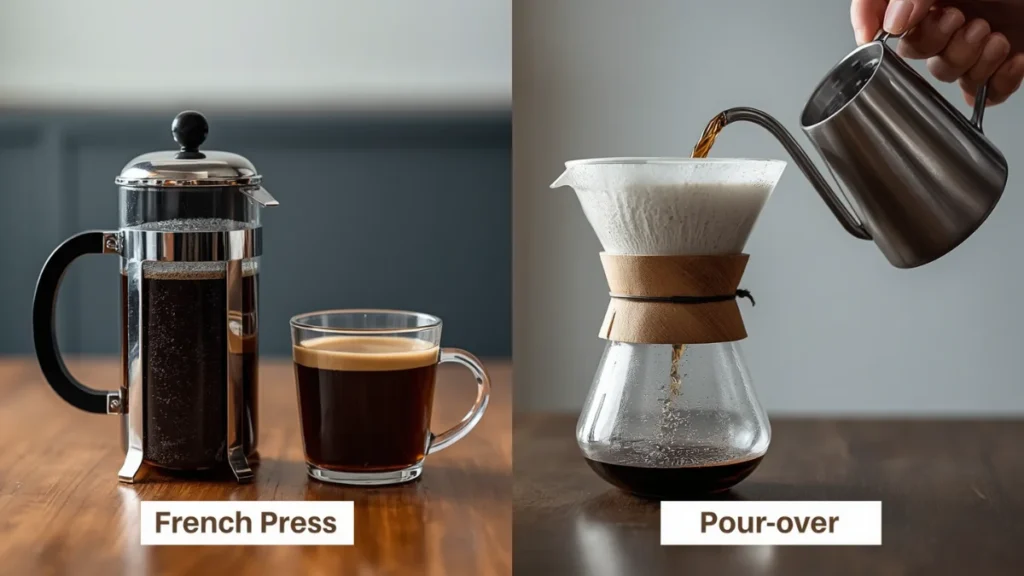
French press produces a heavier, bolder, more textured cup. Pour over produces a lighter, brighter, more nuanced cup. Neither is “more flavorful” in an absolute sense — they emphasize different qualities.
Body
French press wins clearly here. The retained oils and fine particles create a noticeably fuller mouthfeel compared to the cleaner, lighter body of pour over.
Clarity
Pour over wins clearly here. The paper filter removes nearly all sediment and most oils, letting individual flavor notes stand out distinctly.
Ease of Use
French press is easier for most beginners. There’s no pouring technique to master — you simply add water, wait, and press. Pour-over requires practicing a controlled, even pour.
Brew Time
Both methods take roughly 4 minutes total, making them comparable in speed. Pour-over’s bloom adds a brief additional step, but overall time is similar.
Cleanup
French press requires slightly more cleanup — disposing of wet grounds from the carafe and occasionally clearing grounds from the mesh filter. Pour-over cleanup is simpler: lift the filter with the grounds inside and discard.
Cost
French press setups are generally less expensive upfront. A quality French press costs less than a comparable pour-over setup that includes a dripper, gooseneck kettle, and scale.
Consistency
Pour-over offers more consistency once the technique is mastered, because variables like pour rate and bloom time can be precisely repeated. French press is naturally more forgiving, so it’s consistent even with little practice, but it has a slightly lower ceiling for precision.
Learning Curve
Pour over has a noticeably steeper learning curve. French press can produce a solid cup on your very first attempt; pour over usually takes some practice to consistently avoid sour or bitter results.
Comparison Table
| Factor | French Press | Pour Over |
|---|---|---|
| Body | Full, heavy | Light, clean |
| Clarity | Lower | High |
| Ease of Use | Easier | Moderate |
| Equipment Cost | Lower | Higher |
| Brew Time | ~4 minutes | ~3–4 minutes |
| Cleanup | Slightly more involved | Simple |
| Learning Curve | Low | Moderate to High |
| Best Roast Match | Medium to dark | Light to medium |
Which Method Is Better For…
Complete Beginners
French press is the easier starting point. It requires less equipment, less technique, and produces a satisfying cup with minimal practice.
Casual Coffee Drinkers
Either works well. If you want a quick, low-maintenance morning routine, French press is slightly more convenient. If you enjoy the ritual and want to experiment with different beans, pour over offers more to explore.
Coffee Enthusiasts
Pour over tends to appeal more here, since it rewards precision and lets you explore subtle differences between origins and roasts. That said, many enthusiasts use both methods depending on the beans and mood.
Office Use
French press is generally more practical for office settings — less equipment to manage, no pouring technique required, and quick cleanup with shared kitchen facilities.
Travel
French press again has a slight edge for travel due to fewer components (no separate filters needed), though compact pour over travel kits exist and work well for minimalist setups.
Final Recommendation
If you’re just starting out, want simplicity, or prefer bold, full-bodied coffee, French press is the better starting point.
If you want to explore the specific character of different coffee origins, enjoy a more hands-on brewing ritual, and don’t mind a slightly steeper learning curve, pour over will reward you more over time.
Many coffee enthusiasts eventually own both — French press for quick, rich, low-effort mornings and pour-over for slower mornings when they want to taste something special.
FAQs About French Press vs Pour Over
Can French press and pour-over use the same coffee beans?
Yes, but expect different results. The same beans will taste heavier and bolder in a French press, and lighter and brighter in a pour-over. Beans with bright, complex character (like washed Ethiopian coffee) tend to shine more in pour-over, while bold, low-acid beans (like Sumatran or Brazilian coffee) tend to suit French press better.
Is pour-over coffee stronger than French press?
Not necessarily in caffeine content, but French press typically tastes “stronger” due to its fuller body and retained oils. Strength of flavor and caffeine concentration are different things — both methods can be brewed to a similar caffeine strength using an appropriate coffee-to-water ratio.
Which method is healthier?
Pour-over’s paper filter removes more of the natural oils in coffee, including compounds called diterpenes that some research has associated with raised cholesterol when consumed in large quantities. French press, lacking a paper filter, retains more of these oils. The difference is generally minor for most people’s coffee consumption.
Do I need a scale for either method?
A scale isn’t strictly required for either method, but it improves consistency significantly for both. It matters slightly more for pour-over, since pour-over recipes are typically more sensitive to small changes in ratios.
Which method is better for cold mornings when I want coffee fast?
French press is generally faster to get started, since there’s no filter to prepare and no pour technique to think about. Total brew time is similar between the two methods, but French press has fewer preliminary steps.
Key Takeaways
- French press produces a fuller, heavier cup; pour over produces a cleaner, brighter cup — neither is objectively better.
- French press is easier to learn and requires less equipment, making it a strong starting point for beginners.
- Pour-over offers greater precision and highlights subtle flavor differences, rewarding practice and experimentation.
- Bean choice should follow your method — bold, low-acid beans for French press; bright, complex beans for pour-over.
- Many coffee drinkers eventually use both methods, choosing based on mood, time, and the beans on hand.
Recommended Reading
- French Press Coffee Guide (Pillar)
- Pour Over Coffee Guide (Pillar)
- Essential Coffee Brewing Tools
- Best Coffee Beans for Pour Over
- Best Coffee Beans for French Press
- Coffee Grind Size for Every Brewing Method