
Quick Answer Box
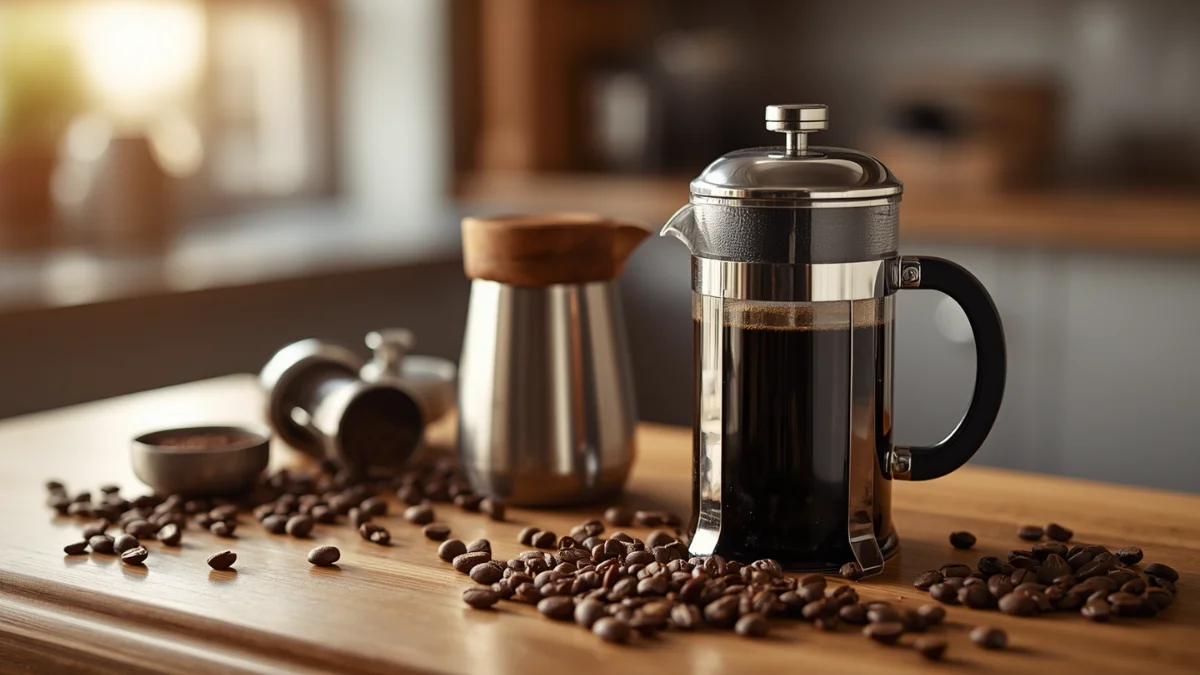
French press coffee needs a coarse grind — roughly the texture of coarse sea salt or breadcrumbs. A coarse grind prevents over-extraction during the 4-minute steep and keeps most grounds from passing through the metal mesh filter. Grind too fine, and you get bitter, muddy coffee. Grind too coarse, and you get sour, thin, weak coffee.
Introduction
French press is one of the most forgiving brewing methods for beginners. It doesn’t require a gooseneck kettle, a precise pouring technique, or a scale (though one helps). What it does require is the right grind size.
Getting grind size wrong is the most common reason a French press brew disappoints. And the fix is usually simple — once you know what “coarse” actually looks and feels like, and understand why it matters for this specific method.
What Is the Best Grind Size for French Press Coffee?
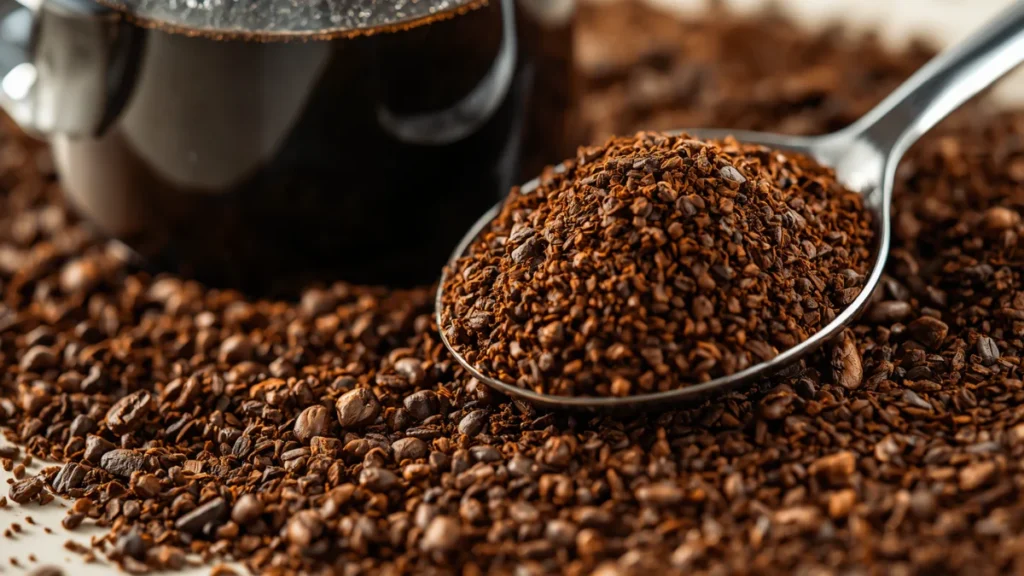
The best grind size for French press is coarse — visually similar to coarse sea salt, breadcrumbs, or coarsely ground black pepper. Individual grounds should be clearly distinct. Nothing should look fine, powdery, or sandy.
The challenge is that “coarse” describes a wide range on most grinders, and what setting that corresponds to varies significantly between brands and models. This is why texture descriptions are more useful than setting numbers for any brewing method.
If you’re unsure whether your grind is coarse enough, rub a small amount between your fingers. Coarse grounds feel gritty and scratchy, like sugar crystals — not smooth or powder-like.
For a full reference on grind sizes, see the Coffee Grind Size Chart.
Why French Press Needs a Coarse Grind
French press is a full-immersion brewing method. Ground coffee sits directly in hot water for the entire steep — typically 4 minutes. There is no paper filter to remove particles or slow extraction. The only thing separating grounds from coffee after steeping is a metal mesh plunger.
This combination of factors makes grind size critical:
Long immersion time
Because grounds sit in water for several minutes rather than the brief contact time of pour-over, finer grounds extract much more aggressively. A medium grind that works perfectly in drip coffee will over-extract in a 4-minute French press steep.
Metal mesh filter
Paper filters catch fine particles and prevent them from reaching the cup. The French press metal mesh does not. Fine grounds and coffee fines (very small particles produced by any grinder) pass straight through into the brew, adding bitterness and muddy texture.
No flow control
Unlike pour over, you can’t slow down or speed up extraction by adjusting your pour. Grind size is the primary lever for controlling extraction rate.
A coarse grind compensates for all three of these factors — slower extraction, fewer fines in the cup, and a more predictable, controllable steep.
See the French Press Coffee Guide for the complete brewing method, and How to Reduce Sediment in French Press Coffee for more on managing texture.
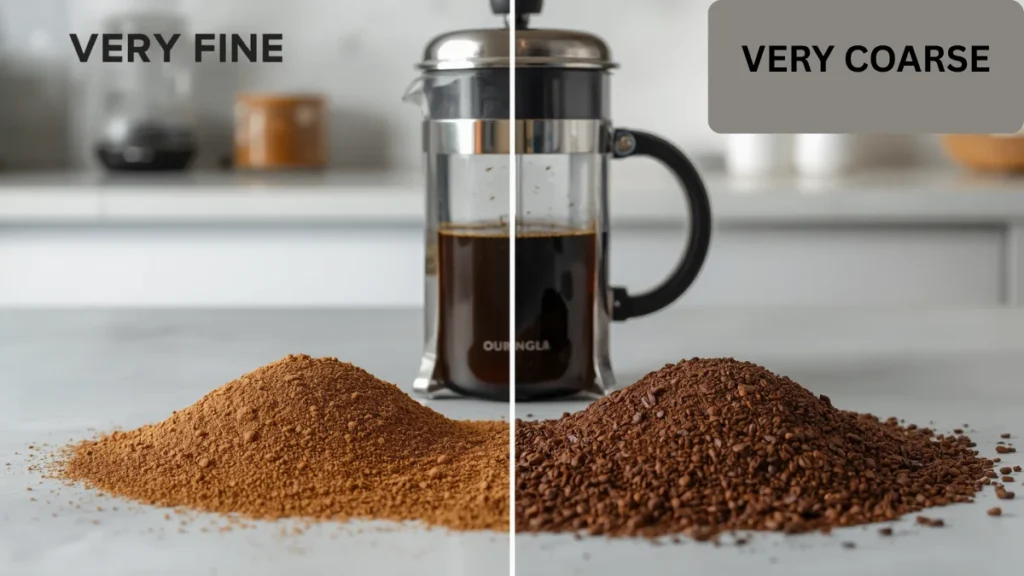
What Happens If Coffee Is Ground Too Fine for French Press?
A grind that’s too fine creates several problems simultaneously:
More sediment
Fine particles and coffee dust pass through the metal mesh filter easily, producing a thick, muddy layer at the bottom of the cup. Some ends up suspended in the coffee itself.
Bitter, harsh flavor
Fine grounds have more surface area and extract faster. A 4-minute steep with fine grounds produces significant over-extraction — pulling out bitter and astringent compounds that should have stayed behind.
Difficult plunger movement
Too many fine particles can make the plunger hard or near-impossible to press. This is a reliable sign that your grind is far too fine for French press.
Cloudy, murky appearance
A well-made French press has some natural body and slight haziness from oils, but an excessively fine grind produces visibly dark, muddy-looking coffee.
For more on the causes and fixes of bitterness, see “Why Your Coffee Tastes Bitter.”
What Happens If Coffee Is Ground Too Coarse?
Going too far the other way produces the opposite problems:
Weak or sour coffee
Very coarse grounds don’t offer enough surface area for proper extraction during the 4-minute steep. Acids extract first, and if extraction stops there, the result is sour and thin.
Under-extraction
The grounds don’t give up enough flavor. The coffee tastes hollow, one-dimensional, and flat.
Thin body
One of the appealing qualities of French press is its natural heaviness and body. Under-extracted coffee from too-coarse grounds lacks this, tasting much more like weak drip coffee.
If your French press tastes sour and thin, check your ratio first — using too little coffee produces similar symptoms. If the ratio is correct, try grinding slightly finer.
See Why Your Coffee Tastes Sour, and French Press Coffee Ratio Explained for more detail.
French Press Grind Size Compared With Other Methods
Understanding where French press sits in the broader grind size spectrum helps avoid the most common mistakes:
| Brewing Method | Typical Grind Size |
|---|---|
| Turkish coffee | Extra-fine (almost powder) |
| Espresso | Fine |
| Pour over | Medium-fine |
| Drip coffee | Medium |
| French press | Coarse |
| Cold brew | Coarse to extra-coarse |
The most common mistake with French press grinders is using a drip coffee setting — medium — which is too fine for a 4-minute immersion and produces exactly the bitterness and sediment problems described above.
How to Adjust Your French Press Grind for Better Taste
Use taste and texture as your guides. Adjust one variable at a time:
If your French press is bitter, muddy, or hard to plungeGrind coarser. Move one step at a time toward a larger particle size. Brew and taste again before making further adjustments.
If your French press is weak, sour, or thinFirst check your coffee-to-water ratio — this is often the actual cause of weak French press. If the ratio is correct (typically 1:15 to 1:17 by weight), grind slightly finer. Make one small adjustment and test again.
If your plunger is very hard to pressYour grind is too fine. This is a mechanical sign, not just a flavor one. Move to a noticeably coarser setting before brewing again.
Keep all other variables stable while testing grind changes — same dose, same water volume, same temperature, same steep time. Changing multiple things at once makes troubleshooting guesswork.
Is a Burr Grinder Better for French Press?
Yes — noticeably so, even though French press is a more forgiving method than pour over.
The key issue with blade grinders for French press is the inconsistent particle sizes they produce. Blade grinders create a mix of fine dust and coarser chunks. The fine particles extract very quickly during steeping and pass through the metal filter easily, adding bitterness and muddy texture regardless of your average grind setting.
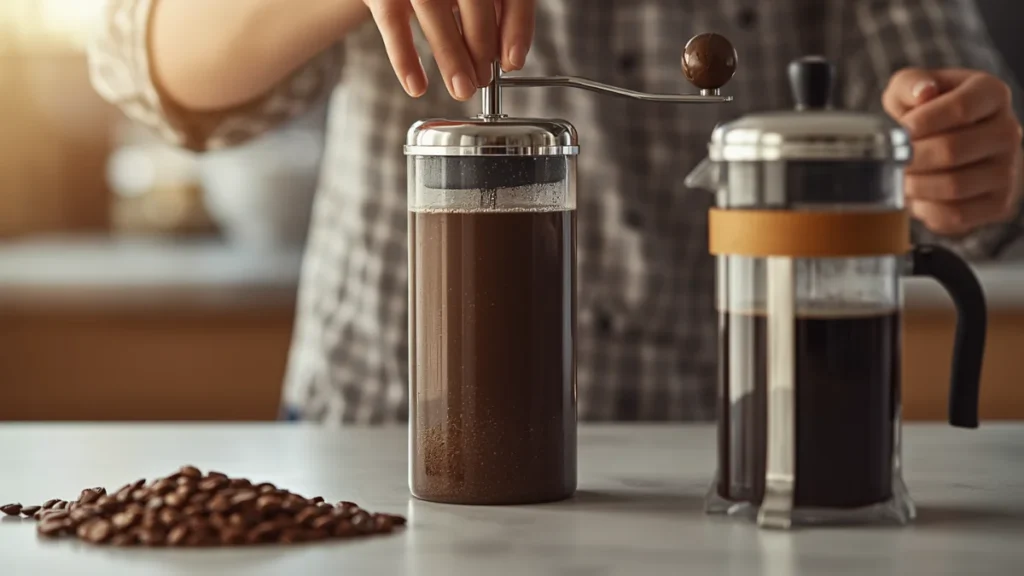
A burr grinder produces much more consistent particle sizes at a given setting. Even an entry-level manual burr grinder significantly reduces fine-particle production compared to a blade grinder, thereby improving both clarity and texture in French press.
You don’t need a high-end burr grinder for French press. A basic manual conical burr grinder is sufficient and often the most practical starting point.
See the Manual Coffee Grinder Buying Guide and Burr vs Blade Coffee Grinders for options.
If you’re deciding between a full-bodied immersion brew and a stronger stovetop coffee, read our French press vs moka pot comparison before choosing your next brewer.
Can You Use Pre-Ground Coffee in a French Press?
Yes — and it’s a perfectly reasonable choice, especially when starting out. But there are a few practical considerations:
Choose coarse ground coffee where possible
Supermarket pre-ground coffee is usually ground to a medium setting for drip machines. Using drip-ground coffee in a French press will produce a bitterer, muddier cup than properly coarse-ground coffee. Some specialty roasters offer coarse-ground options specifically for French press.
Freshness trade-off
Ground coffee loses volatile aroma compounds quickly — often within days of grinding. Pre-ground coffee from a sealed bag is fresher than pre-ground coffee that’s been sitting open, but it will always be less fresh than grinding whole beans immediately before brewing.
For best results, whole beans ground just before brewing will always outperform pre-ground coffee, regardless of the brewing method. For French press specifically, where ground coffee remains in contact with water for several minutes, freshness noticeably affects the final flavor.
FAQs
Can I use medium grind coffee in a French press?
You can, but results are usually disappointing. Medium grind extracts too quickly during a 4-minute immersion steep, producing bitter, over-extracted coffee with more sediment. Coarse grind is the correct starting point.
Is French press grind coarser than cold brew?
Generally yes. Cold brew typically benefits from an even coarser grind — closer to extra-coarse — because steep times of 12–24 hours are much longer than the 4-minute French press steep. Even at a very coarse grind, 24 hours is enough time for cold water to extract significant flavor.
Why is my French press coffee muddy?
Muddy French press usually comes from a grind that’s too fine. Fine particles and coffee dust pass through the metal mesh filter and remain suspended in the cup. Switching to a coarser grind and cleaning your grinder thoroughly will address most sediment and muddiness issues.
What should French press grounds look like?
Coarse French press grounds look like coarse sea salt or breadcrumbs. Individual particles are clearly visible and distinct. They should feel gritty between your fingers — not smooth or powdery.
Can I use espresso grind in a French press?
Not recommended. Espresso grind is extremely fine — close to powder. In a French press it would produce severely over-extracted, intensely bitter, almost undrinkable coffee, and would likely clog the plunger entirely.
Key Takeaways
- Coarse is the correct grind size for French press — similar to coarse sea salt or breadcrumbs.
- Fine grinds cause bitterness, sediment, and a difficult-to-press plunger — if any of these happen, grind coarser.
- Too-coarse grinds cause sour, thin, weak coffee — check ratio first, then grind slightly finer if needed.
- A burr grinder reduces fine particles significantly compared to blade grinders, improving both clarity and texture.
- Pre-ground coffee works in French press — but choose coarse-ground options and be aware of the freshness trade-off.
Recommended Reading
- French Press Coffee Guide
- Coffee Grind Size Chart
- French Press Coffee Ratio Explained
- How to Reduce Sediment in French Press Coffee
- Burr vs Blade Coffee Grinders
- Why Your Coffee Tastes Bitter
- Why Your Coffee Tastes Sour
- Why Is My Pour-Over Coffee Draining Too Fast? Causes and Fixes