
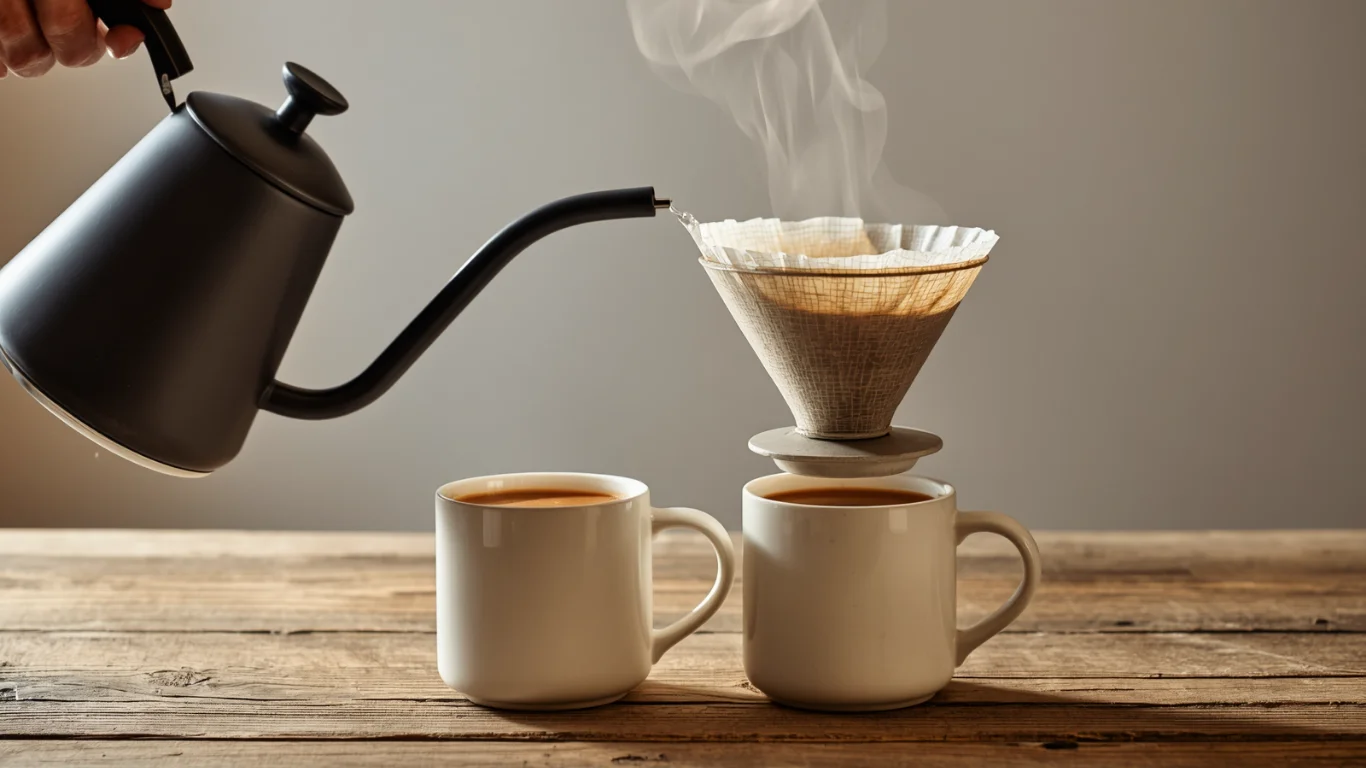
Updated for home brewers who want both cups hot, flavorful, and ready at the same time.
Quick Answer-
Brewing pour-over coffee for two without losing heat comes down to four things:
- Preheat your dripper, carafe, and mugs before you start
- Brew into a double-walled thermal carafe — not glass
- Use a 1:15–1:17 ratio with 36–40g of coffee for a 600ml brew
- Serve both cups immediately, the moment brewing finishes
The Real Problem With Brewing Pour Over for Two
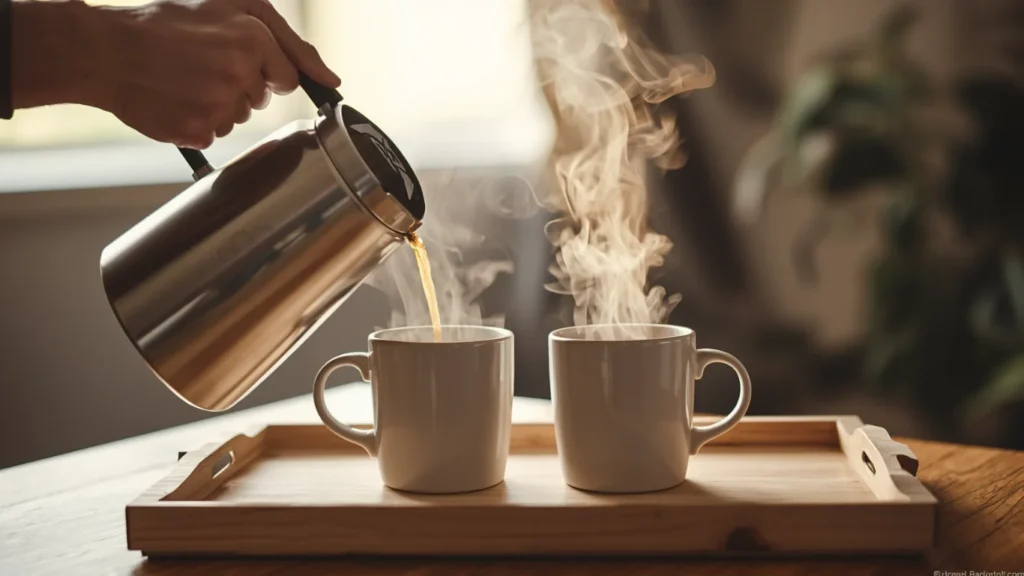
If you’ve ever handed someone a lukewarm pour over and quietly hoped they didn’t say anything — you’re not alone.
Scaling up from one cup to two introduces more surfaces, more brew time, and more chances for heat to disappear before either cup gets poured. Most brewers try to fix this by cranking up the water temperature. That’s the wrong move — it over-extracts the grounds and pushes bitter, harsh flavors out of even a quality roast.
The real fix is controlling heat loss at every stage: your equipment, your vessel, your pour, and your timing. That’s exactly what this guide covers.
Why heat matters beyond comfort: Coffee tastes fundamentally different at 185°F versus 140°F. Drop below that range and the same well-extracted cup can taste flat, harsh, or oddly bitter — not because extraction went wrong, but because heat is part of how your palate reads flavor.
Best pour-over makers for two…
Why Pour Over Loses Heat When You Scale Up..
Every surface your coffee touches absorbs thermal energy — your dripper, your filter, your carafe, even the air around it. A single-cup pour-over takes two to three minutes. A double brew stretches to four minutes or more.
That extra contact time with cool equipment adds up fast. In a typical home kitchen without preheating, you can lose 10°F to 20°F before coffee even reaches the cup.
The solution isn’t hotter water. It’s reducing heat loss at every point in the process.
The Right Equipment for a Double Pour Over
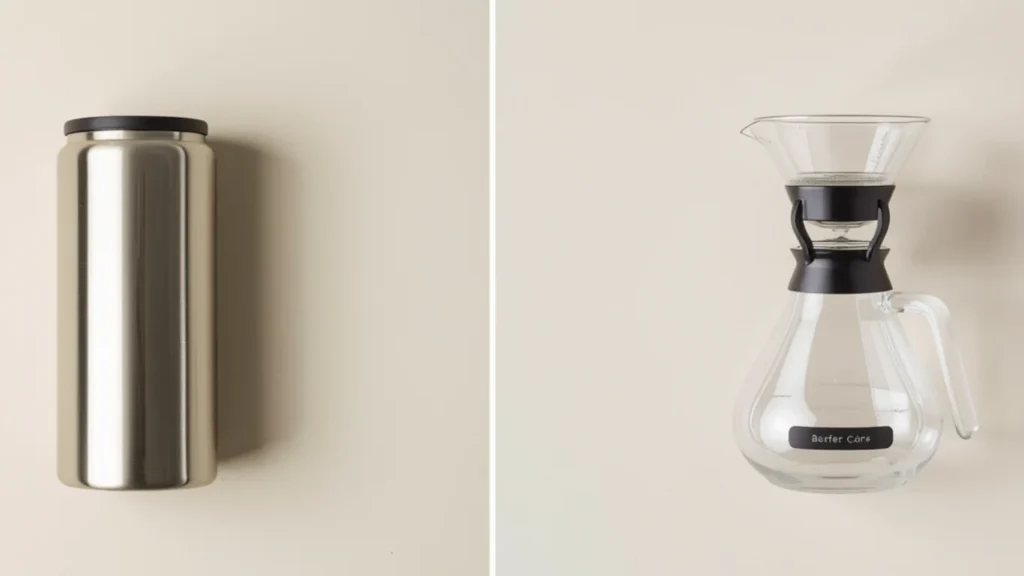
Thermal Carafe vs. Glass: Which Is Better for Two?
| Thermal Carafe | Glass Carafe | |
|---|---|---|
| Heat retention | Excellent (30+ min) | Poor (5–10 min) |
| Best for | Shared brews, relaxed serving | Single cups, immediate serving |
| Visual appeal | Less visible brew | Beautiful, clear |
| Preheating needed? | Yes, but forgiving | Yes, and critical |
| Price range | $30–$80+ | $15–$50+ |
A double-walled vacuum-insulated thermal carafe keeps coffee within a few degrees of brew temperature for up to 30 minutes. A glass carafe — even preheated — loses heat rapidly, especially in a cool kitchen.
Verdict: For two people sharing a brew, a thermal carafe is the clear practical choice. Glass works if you love the Chemex aesthetic and serve immediately — but move fast.
Choose a Dripper That Handles Batch Brewing
Not all drippers perform equally at higher volumes. Flat-bed drippers (like the Fellow Stagg) maintain a more consistent flow rate with larger doses. Cone drippers like the Hario V60 work well too, but require a more attentive pour to prevent uneven saturation as volume increases.
Whatever dripper you use, it must fit securely over your carafe and allow a steady, unobstructed flow throughout the brew.
How to Brew Pour Over for Two: Step-by-Step
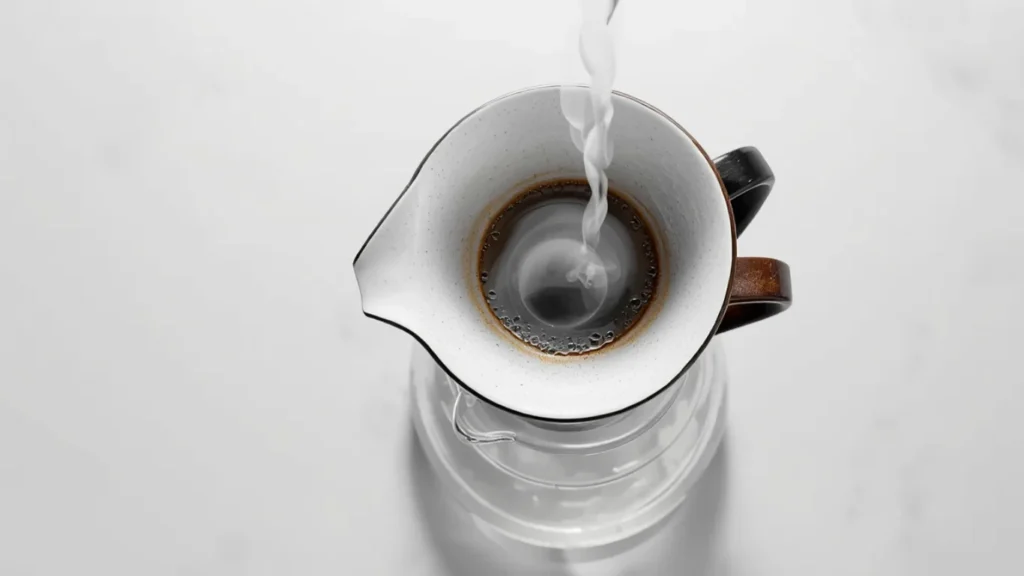
Step 1: Preheat Everything — Don’t Skip This
Preheating is the single highest-impact step, and the one most people skip entirely.
While your kettle heats up, run hot water through your dripper and filter, and fill your carafe with hot water for at least 60 seconds. Do the same for your mugs. Drain everything just before brewing begins.
A room-temperature ceramic dripper at 68°F pulls heat aggressively from your very first pour. A preheated dripper at 160°F barely takes anything. This one step alone can preserve 4°F to 6°F in your final cup.
Step 2: Dial In Your Recipe
For two generous cups (~300ml each):
- Coffee: 36–40g, ground fresh immediately before brewing
- Water: 600ml at 195°F–205°F
- Ratio: 1:15 to 1:17, depending on roast and preference
- Grind size: Slightly coarser than your single-cup setting
The coarser grind matters. A finer grind over a larger volume slows or stalls the filter mid-brew — leaving coffee sitting in cooling equipment longer, costing you temperature and causing uneven extraction.
Step 3: Bloom First, Then Pour Steadily
Start with a bloom: pour roughly twice the coffee weight in water — about 70–80ml for a 36g dose — and let it rest for 30–45 seconds. This releases CO₂ from fresh coffee and helps the grounds hydrate evenly before extraction begins.
After the bloom, pour in slow concentric circles — center outward and back — keeping your gooseneck spout low and close to the coffee bed. A low pour means less distance for hot water to travel through cool air.
For a double batch, aim for three to four larger additions rather than many small ones. This reduces total brew time and minimizes heat loss.
Step 4: Serve Both Cups Immediately
Once the brew finishes, pour both cups at the same time. If one person isn’t ready, pour their serving into a prewarmed insulated mug rather than leaving it in a glass carafe.
Don’t reheat pour over. It flattens the flavor and amplifies bitterness.
Common Mistakes That Kill Heat (and Flavor)
Skipping the preheat. Cold equipment is the fastest path to a lukewarm cup, regardless of how carefully you brew everything else.
Using hotter water to compensate. It feels logical, but over-extracts the grounds. Stay within 195°F–205°F and manage heat loss through technique.
Grinding too fine for the volume. A fine grind at double volume clogs the filter, extends brew time, and lets your coffee cool in the dripper. Go slightly coarser.
Leaving coffee in a glass vessel. Glass doesn’t insulate. The second cup will be noticeably cooler than the first if you don’t pour simultaneously.
Ignoring ambient temperature. Cold kitchens in winter require longer preheating and faster serving. Adjust accordingly.
Beginner Tips for Brewing Pour Over for Two
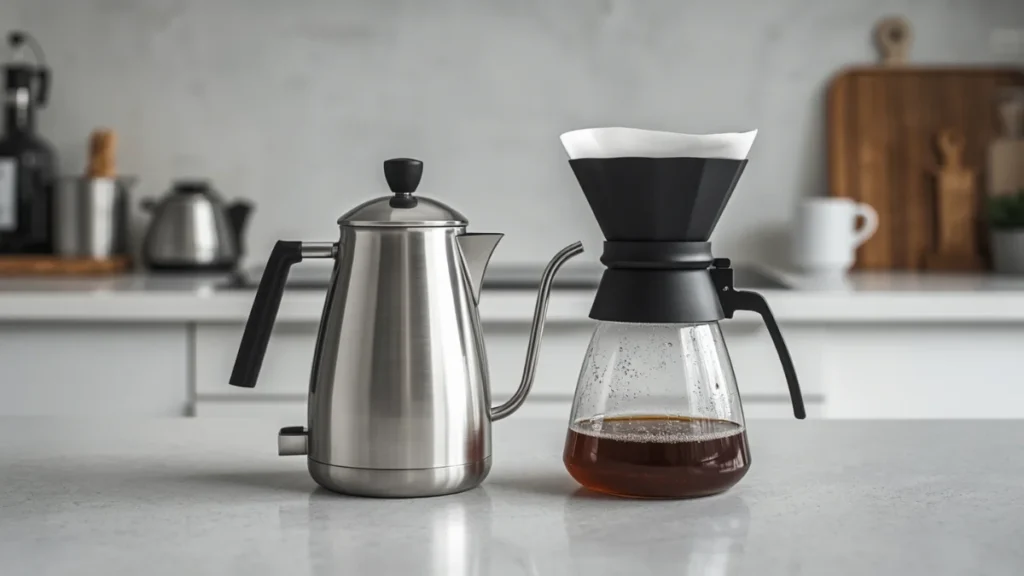
- Buy a gooseneck kettle with a built-in thermometer. Guessing water temperature is one of the most common beginner errors — and one of the easiest to eliminate.
- Warm your mugs every time. It takes 30 seconds and makes a real difference in how long your coffee stays hot in the cup.
- Grind right before brewing. Pre-ground coffee loses aromatic compounds quickly, and with a double brew, you’ve already got more variables to manage.
- Practice your pour pattern on a single batch first. The concentric circle technique is easy to rush when you’re focused on volume. Get it smooth, then scale up.
- Time your brew. A double pour over should finish in 3.5–4.5 minutes. Much longer and your grind may be too fine or your pour too slow.
Pour Over Coffee for Two: FAQs
Can I brew two separate single cups back-to-back?
You can, but the second cup will always be slightly cooler than the first if you’re using the same equipment without reheating between brews. For genuinely equal cups, a single double batch into a thermal carafe is the cleaner approach.
Does water temperature drop during the pour itself?
Yes — slightly. Water poured from a higher spout through cool air loses more heat than when poured from a low, controlled spout. This is one of the main reasons gooseneck kettles are preferred: they allow a close, slow pour that minimizes temperature loss in transit.
What’s the best pour-over ratio for two people?
Start at 1:16 — 37.5g of coffee to 600ml of water. Adjust to 1:15 for a bolder cup, or 1:17 for a cleaner, more delicate result.
Why does my second cup always taste weaker than the first?
Usually, uneven extraction during the pour. If you’re brewing into two separate mugs simultaneously, small inconsistencies in water distribution cause one cup to extract more than the other. Brew into a single carafe and pour both cups after the brew completes.
Does the type of filter affect heat loss?
Minimally. Paper filters have a slight insulating effect compared to metal, but the difference is negligible compared to preheating and vessel choice.
What grind size is best for a double-batch pour-over?
Slightly coarser than your single-cup setting. Aim for a medium-coarse grind — roughly the texture of coarse sea salt. This maintains a healthy flow rate over a larger volume and prevents the filter from slowing mid-brew.
Conclusion
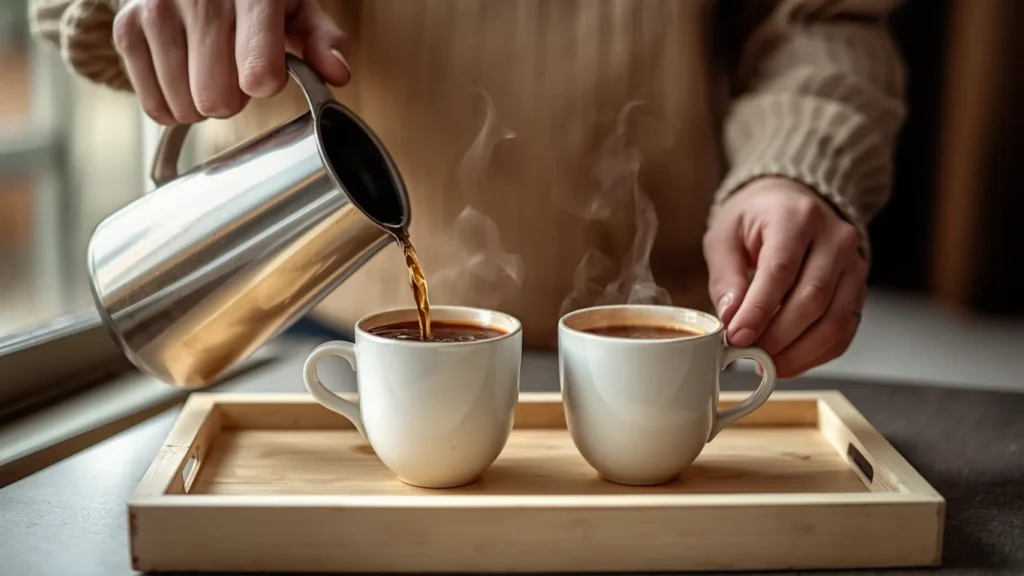
Brewing pour over for two without losing heat isn’t complicated — but it does require treating heat loss as something you actively manage, not something that just happens.
Preheat your dripper, filter, carafe, and mugs. Brew into a thermal vessel. Use a well-dialed ratio with a slightly coarser grind. Pour slowly and steadily. Serve both cups at the same time.
Do those five things consistently, and both cups will be just as hot and flavorful as a carefully brewed single serving.
Once heat retention is locked in, grind size and brew ratio become your next levers for improving flavor. Start with temperature and vessel basics — then dial in from there.
Looking to level up further? Explore our guides on :
- How to Brew Better Coffee at Home
- How to Get the Perfect Brew
- How to Pour Water for Pour-Over Coffee
- Best Water Temperature for Pour-Over Coffee
.