
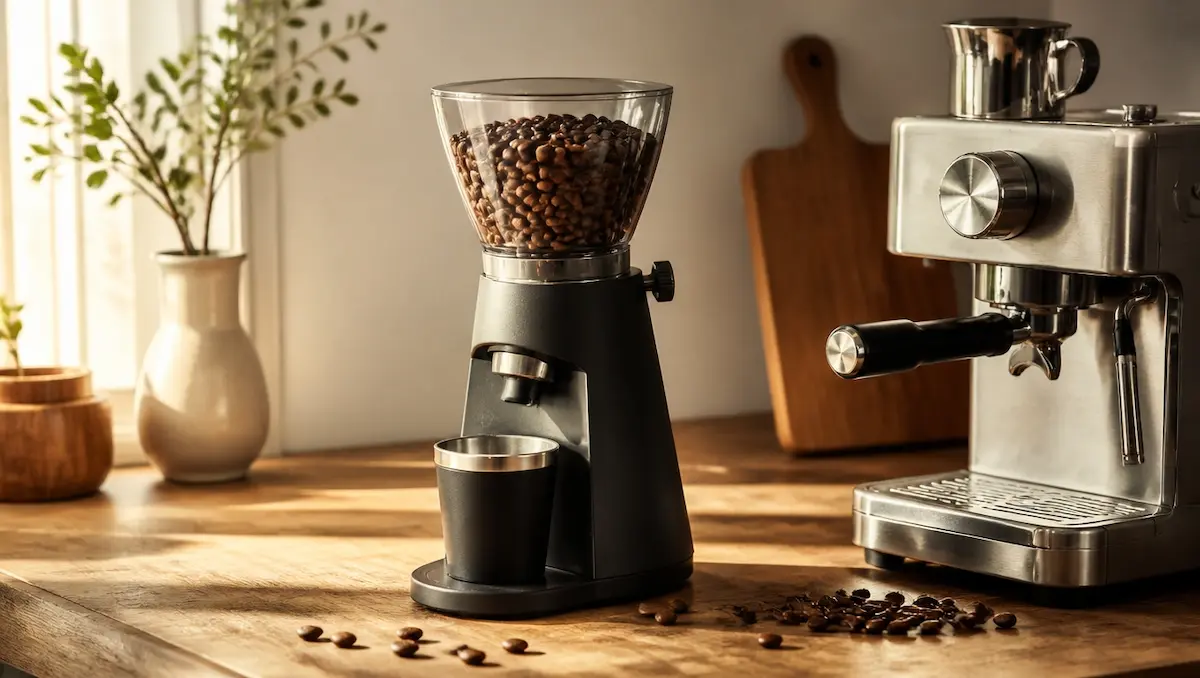
Best Espresso Grinders Under $500 (2026): What You Actually Need
Research-based comparison ·
If you are shopping for espresso gear and have about $500 to spend, the most useful thing you can do is spend most of it on the grinder, not the machine.
That is not a controversial opinion among people who make espresso daily—it is close to a consensus—and yet the market is set up to encourage the opposite.
Machines are photogenic and feature-listed. Grinders are boxes with a chute.
This guide covers 6 grinders that do genuine espresso work at or under roughly $500, and — this matters more than it should — every one of them could be bought on Amazon on the day we checked. That sounds like a low bar. It is not: several of the most-recommended espresso grinders in this price band aren’t available there, and a recommendation you cannot act on isn’t a recommendation.
The short answer. For most people buying their first serious espresso grinder, the DF64 Gen 2 is the best value in this band — 64 mm flat burrs, single-dosing design, and clarity in the cup that used to cost twice as much.
If you would rather not tinker, the Baratza Sette 270 at $399.95 is the safer purchase with the best parts support in the business. If you want to spend as little as possible and still make real espresso, the Fellow Opus 2 or the Baratza Encore ESP at $199 each will do it.
Why the grinder matters more than the machine
An espresso machine does three things: it heats water, delivers it under pressure, and holds a basket. Modern machines at almost any price do the first two well enough. What varies enormously is the third — and the third is determined by what you put in the basket.
A shot of espresso balances grind size, dose, and the puck’s resistance to water. Change the grind by a few microns and the shot time can move by five seconds. That sensitivity is the whole game, and it is why a $200 machine with a $400 grinder routinely produces better espresso than a $700 machine with a $150 grinder. The cheap grinder cannot produce two consecutive doses of the same particle size, so you are not dialling in a recipe — you are chasing a moving target.
The practical consequence: if your budget is fixed and split between machine and grinder, tilt it toward the grinder. A modest machine with a good grinder will teach you what good espresso tastes like. A good machine with a poor grinder will teach you frustration. If you already own a machine you like and you are unhappy with the shots, the grinder is the first thing to examine, not the last.
What $500 actually buys you — and what $200 does not
There are three thresholds in espresso grinding, and the $500 band lets you clear all three at once rather than trading one for another.
Adjustment resolution. Espresso lives in a narrow window. A grinder that moves 25 microns per click gives you steps so wide that a single click can swing a shot from a gusher to a choker. Grinders in this band move somewhere between 8 and 20 microns per click, which is fine enough to hold a shot steady across a bag of beans as it ages.
Retention. Retention is the coffee that stays inside the grinder after you finish grinding. If it is 3 grams, then your 18-gram dose is partly last week’s coffee, and every adjustment you make is diluted by stale grounds. Grinders designed for single dosing keep this under a gram, which is what makes a shot log meaningful.
Burr quality and size. Bigger, better-aligned burrs cut more cleanly and produce fewer fines. Fines are the tiny particles that over-extract and make a shot taste harsh and hollow at the same time. This is the least visible of the three and the hardest to fake.
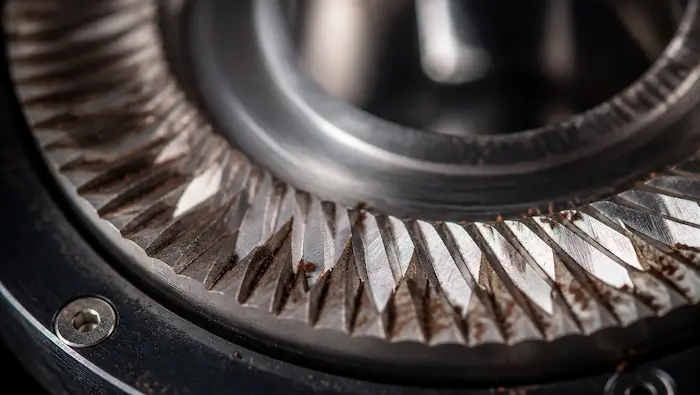
Under $500, you don’t get the flagship tier’s near-silent operation, exotic burr coatings, or a design guarantee of sub-half-gram retention. Those are refinements. They make a good grinder nicer to own; they do not make a bad one good.
How we chose these six
We start with every espresso-capable grinder sold in the US and UK that a home buyer can actually purchase, which is a longer list than most roundups suggest. Then we apply four filters, and the fourth one is new to this revision.
First, published specifications — if a manufacturer will not state burr size, type, and adjustment mechanism, we can’t assess the product fairly, and we will not guess. Second, a parts path — replacement burrs, seals and switches must be purchasable, or the grinder is a disposable appliance. Third, the adjustment range must actually support espresso, not just claim to. Fourth, and now first in practice: the grinder must be in stock and purchasable at a mainstream retailer on the day we publish.
That last gate is the one we previously got wrong. We assessed 6 grinders on merit alone, and five turned out to be unavailable on Amazon, where most of our readers buy. A shortlist you cannot buy from is worthless, no matter how well it is reasoned. The availability check now runs before the specification comparison rather than after it, and any product that fails it is dropped from the ranking and named in the section below — not quietly deleted.
Within each workflow group—single-dosing versus hopper-fed—we compare published specs against two independent sources, then look at what owners report after six to twelve months, because a grinder that grinds beautifully for a month and then develops burr wobble isn’t a good grinder.
The six picks
| # | Grinder | Price | Burrs | Best for |
|---|---|---|---|---|
| 1 | DF64 Gen 2 | $330–$400 | 64 mm flat | Best overall value |
| 2 | Baratza Sette 270 | $399.95 | 40 mm conical | Speed, low retention, repairability |
| 3 | Fellow Opus 2 | $199.95 | 48 mm conical | Budget crossover |
| 4 | 1Zpresso J-Ultra | $199.00 | 48 mm conical | Hand grinding, finest adjustment |
| 5 | Baratza Encore ESP | $199.95 | 40 mm conical | First espresso grinder |
| 6 | Breville Smart Grinder Pro | $200–$250 | Conical | One grinder for everything |
1. DF64 Gen 2 — best overall value ★★★★½
Around $330–$400 · 64 mm flat burrs · single dose · stepless

The DF64 is the grinder that broke the home espresso price structure. Before it, 64 mm flat burrs cost $900. It put them in a single-dosing body at a price that made established brands uncomfortable, and the Gen 2 revision fixed most of what irritated people about the original—the dosing cup, the declumper, the fork that holds a portafilter.
What that buys you in the cup is clarity. Flat burrs of this size separate flavours rather than blending them, which is what people mean when they say a shot tastes “articulate”. Light roasts that taste muddy and sour on a small conical grinder tend to taste coherent here. If your reference point is a café shot pulled on a big flat-burr commercial grinder, this is the closest you get for the money.
The honest caveat is alignment. Unit-to-unit variation is real on the DF64, and a minority of owners receive a grinder whose burrs are not perfectly parallel from the factory. The fix is well documented — shimming the burrs — and most units grind cleanly out of the box. But if checking burr alignment with a marker pen sounds like a bad evening, this grinder isn’t for you.
Buy it if: you single-dose, you chase light-roast clarity, and you are willing to spend twenty minutes understanding your machine.
Skip it if: you want to fill a hopper and forget it, or you want a grinder that arrives perfect with no tinkering.
2. Baratza Sette 270 — best for speed, retention and repair ★★★★½
$399.95 · 40 mm conical burrs · vertical grind path · stepless macro/micro

The Sette’s party trick is its geometry: the burrs sit vertically, and coffee falls straight through, which means retention is genuinely low and grinding is fast. It clears an 18-gram dose in a few seconds and leaves almost nothing behind. For a single-dosing espresso drinker who weighs every dose, that combination is hard to beat.
The other argument for the Sette is Baratza itself. Parts availability and customer support are the best in the grinder business — you can buy a replacement gear, burr carrier, or motor years after purchase, fit it yourself, and keep it alive in ways few kitchen appliances can. Over ten years of ownership that is worth more than a slightly nicer finish.
The cost is noise. This is loud — noticeably louder than the others here — and in a small kitchen at 6 a.m. it is a real consideration rather than a spec-sheet footnote. Some owners also find the macro/micro adjustment fiddly at first, though it becomes second nature. And the 40 mm conical burrs will not deliver the flavour separation of the DF64’s 64 mm flats: you are trading a little clarity for speed and durability.
One practical note: this listing showed low stock when we checked. It is a good grinder that periodically sells out, so if you want it, don’t plan on buying it in three weeks’ time.
Buy it if: speed and low retention matter, and you value repairability over replacement.
Skip it if: you brew before other people wake up, or you want maximum clarity from light roasts.
3. Fellow Opus 2 — best budget crossover ★★★★
$199.95 · 48 mm conical burrs · single dose · stepped with micro-adjust

The Opus has been refreshed as the Opus 2, and the change matters: the burr set is now 48 mm rather than the original 40 mm, which is a meaningful step up in cutting capacity at the same $199.95. If you have read older reviews describing a 40 mm burr, they are describing the previous generation.
The Opus 2 is the cheapest grinder here and the most versatile across brew methods, which is both its appeal and its limitation. It will grind for espresso, pour-over, and French press. If you brew one espresso a day and a filter coffee on weekends, one grinder that handles both is a reasonable answer, and at $199 it is the least expensive way into genuine espresso grinding on this list.
Where it still struggles is density. Push a light, high-grown roast through it at espresso fineness, and you will hit the limits of a conical burr driven by a modest motor—the adjustment resolution isn’t fine enough to hold a delicate shot steady, and the cup loses definition. With medium and dark roasts, which are more forgiving, it is genuinely capable.
Buy it if: your budget is the hard constraint and you brew more than one method.
Skip it if: espresso is the main event and you drink light roasts.
4. 1Zpresso J-Ultra — best hand grinder for espresso ★★★★½
$199.00 · 48 mm conical · hand crank · 8 microns per click

If you are willing to turn a handle, the J-Ultra is the strongest value in this entire article. It offers 8 microns of adjustment per click — finer than anything else here, including grinders costing twice as much — in a body that will outlast most of them because it has no motor, no electronics, and no plastic gear train to fail.
The trade is obvious and physical: grinding 18 grams for espresso takes about a minute of real effort, and on dense light roasts it feels more like a workout than a ritual. That is fine once a day. It is tedious three times a day. It is also the ideal second grinder for someone who wants a reference to check an electric against, or who travels.
We cover the J-Ultra’s more expensive sibling in detail in our 1Zpresso K-Ultra review. The short version: the K-Ultra costs more and is built for filter; for espresso, the J-Ultra is the better buy, which is why it’s on this list.
Buy it if: you make one or two shots a day, you want maximum adjustment for minimum money, and you travel.
Skip it if: you make several milk drinks daily, or hand strength is a concern.
5. Baratza Encore ESP — best first espresso grinder ★★★★
$199.95 · 40 mm conical burrs · stepped with micro-adjust

The ESP is Baratza’s espresso-focused version of the Encore, and it is the grinder we would hand someone buying their first machine. It is not the finest-adjusting grinder here, and it will not flatter a delicate light roast, but it is competent, repairable, well supported, and costs $199.95—leaving budget for the machine, which is the right way to spend it.
Its adjustment is stepped with micro steps rather than stepless, so dialling in means finding the nearest usable notch rather than chasing a precise point. For medium and dark roasts, and for milk drinks, that is entirely sufficient. For a light-roast single origin pulled as espresso, it will frustrate you.
We cover it in full in our Baratza Encore ESP review, including where it stops and what replaces it.
Buy it if: this is your first espresso grinder and you want a safe, repairable, inexpensive one.
Skip it if: you already know you want light-roast espresso, in which case go to the DF64 or the J-Ultra.
6. Breville Smart Grinder Pro — best one-grinder solution ★★★½
Around $200–$250 · conical burrs · 60 settings · hopper-fed

The Smart Grinder Pro is the pragmatic choice for a household that wants one appliance to do everything. It has the widest adjustment range in terms of named settings, is hopper-fed so there is no weighing ritual, and handles espresso through to French press without complaint. It is also the grinder most likely to already be sitting next to a Breville machine, which is not a coincidence — the two are designed as a pair.
Its limitation is the same as any jack-of-all-trades: the burr set isn’t in the same class as the DF64’s, and at espresso fineness the stepped adjustment is coarse enough that some beans simply will not dial in. Retention is also higher than the single-dosers, so if you weigh your dose you will find the output weight drifting.
We rate it lower than the others not because it is bad but because it is compromised in both directions. If you want filter coffee and occasional espresso from one machine and value convenience above the last increment of quality, it earns its place.
Buy it if: you want one grinder for every method and a hopper workflow.
Skip it if: espresso is the priority, or you single-dose.
What we left out, and why
The Eureka Mignon Specialita is one of the most-recommended espresso grinders in this price band, and it was in the first draft of this article. It is not here because we couldn’t buy it on Amazon.com when we checked—the Eureka brand store showed its items as currently unavailable, and availability varied by model. It remains an excellent grinder and the right purchase if you are happy buying from a specialist coffee retailer instead of Amazon; it is simply not available on Amazon right now, and this page is built around what you can actually click and buy.
The DF54 sat in the original shortlist as a compact alternative to the DF64. Its Amazon availability was inconsistent in our checks, and since it is functionally a smaller DF64 with the same alignment caveat, we would rather send you to a reliably stocked version than to a listing that may be a dead end.
The original Fellow Opus has been superseded by the Opus 2, which has a larger 48 mm burr at the same price. We list the current model.
This is worth stating plainly, because it is the kind of thing that quietly makes a roundup useless: a grinder can be genuinely excellent and still be the wrong thing to recommend. If the reader cannot buy it, the recommendation produces nothing but frustration, and the affiliate link produces nothing either. Availability is now the first filter, not an afterthought.
Flat versus conical at this price
The flat-versus-conical debate gets more heated than it deserves, but at this price it has a practical consequence.
Flat burrs — the DF64 — tend to produce a narrower particle distribution, which reads as clarity and separation. They reward light roasts and make it easier to taste distinct flavours in a single origin. They also tend to cost more per millimetre and are less forgiving of a poorly aligned burr carrier.
Conical burrs — everything else here — produce a slightly wider distribution, which reads as body and sweetness. They are more forgiving, cheaper to make well, and generally quieter. They are the better choice for medium and dark roasts, and for milk drinks where subtlety is not the point.
Notice that five of our six picks are conical. That is not an editorial preference; it is what the under-$500 market actually offers once you filter for availability. If you want flat burrs in this band, the DF64 is close to the only serious answer, which is precisely why it wins the top spot. Our fuller explanation is in conical versus flat burr grinders.
Single dosing versus hopper feeding
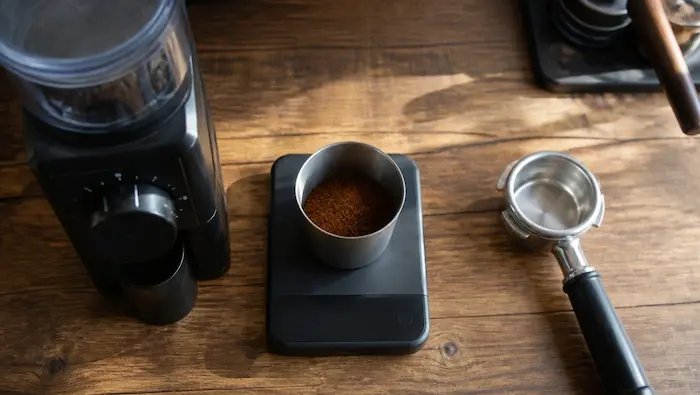
This decision shapes your daily routine more than anything else on this page.
Single dosing means you weigh beans into the grinder for each shot and grind the whole dose. Nothing sits in a hopper going stale; every dose is exactly what you weighed, and switching beans takes thirty seconds. It is the workflow of anyone who rotates coffee, and it is why the DF64 and the Opus 2 are designed the way they are. The cost is an extra step every time, and the need for a grinder with genuinely low retention — otherwise the “single dose” still contains yesterday’s coffee.
Hopper feeding means filling a hopper and grinding by time. It is faster in the morning and requires no scale if your grinder’s timer is consistent. The costs are staleness and the need to empty the hopper when switching beans. The Sette and the Smart Grinder Pro are built for this.
If you drink one bag at a time and value convenience, hopper. If you keep two or three bags open, go with a single dose. There is no universally correct answer, which is why our picks take opposite positions.
What to check before you buy
- Is it actually in stock? Our first filter, and the one most roundups skip. Two of the six above were low on stock the day we checked.
- Does it publish burr size and type? If a manufacturer will not state the burr diameter, that is a signal about how seriously they take the product.
- Is the adjustment stepless or stepped? For espresso, stepless or very fine steps are close to mandatory. For filter, stepped is fine.
- What is the retention figure? If nobody will say, assume it is high.
- Can you buy replacement burrs? Burrs wear out. A grinder you cannot re-burr is a disposable grinder.
- Does it fit under your cabinets? Unglamorous, and the reason a surprising number of grinders get returned. Measure the height with the hopper off and on.
Three mistakes worth avoiding
Buying the machine first and the grinder later. This is the most common and most expensive sequencing error in home espresso. The grinder determines what is possible; the machine determines how convenient it is. Buy in that order.
Assuming a more expensive grinder will fix technique. A $900 grinder will not make an unchanneled puck. If your shots are inconsistent, weigh your dose, level the bed, and note what changed. The grinder gives you the resolution to make small corrections; it does not make them for you.
Judging a new grinder in week one. Fresh burrs change measurably over the first pound or two of coffee as manufacturing edges wear in. Your dial-in setting will drift during that period. This is normal, and it is why a grinder you disliked on day three can be excellent by week three.
Who should skip this band entirely?
If you drink one flat white a week and otherwise drink filter coffee, spending $400 on an espresso grinder is not a good use of money. The Encore ESP at $199.95 handles occasional espresso competently, and the extra $200 is better spent on a year’s worth of beans.
Equally, if you already own a grinder in this band and are happy with your shots, nothing here is worth upgrading to. The next meaningful step is the $800-plus tier, and the improvements there are refinements rather than transformations. Spend the money on a better machine, or on coffee.
Our verdict. The DF64 Gen 2 is the best espresso grinder under $500 for most people because it delivers the burr quality and adjustment resolution that matter at a price that doesn’t. If you would rather not think about alignment or workflow, the Baratza Sette 270 at $399.95 is the better purchase, with the best repairability in the category. If $200 is your ceiling, the Fellow Opus 2 and the Encore ESP both make real espresso at that price — and if you will turn a handle, the 1Zpresso J-Ultra at $199 out-adjusts everything here.
How we research and review grinders
Every product guide on this site follows the same process. We build a candidate pool from manufacturer catalogues, specialist retailers and owner communities, then screen out anything without published specifications, a parts path or a verifiable owner base. Every product that reaches the ranking must also be in stock and purchasable at a mainstream retailer on the date of checking — a filter that now runs before the specification comparison, because a shortlist you cannot buy from is not a service to the reader.
Rankings are set from a fixed scoring framework — performance and consistency 30%, build quality 20%, ease of use and cleaning 20%, value 20%, support and warranty 10% — and affiliate commission is never an input. This page is research-based rather than hands-on: we have not run these six grinders against each other on a bench, and we say so on every article that carries the label. A small research team gathers the source material and drafts the comparisons; the editor checks every performance claim against its source before publication. The full process, including what disqualifies a product outright, is on our review methodology page.
Sources
- Specialty Coffee Association — SCA Standards
- Coffee Chronicler — independent grinder testing and model comparison
Prices and stock were checked on Amazon.com on 10 November 2026 and will change. As an Amazon Associate, we earn from qualifying purchases — see our affiliate disclosure.