
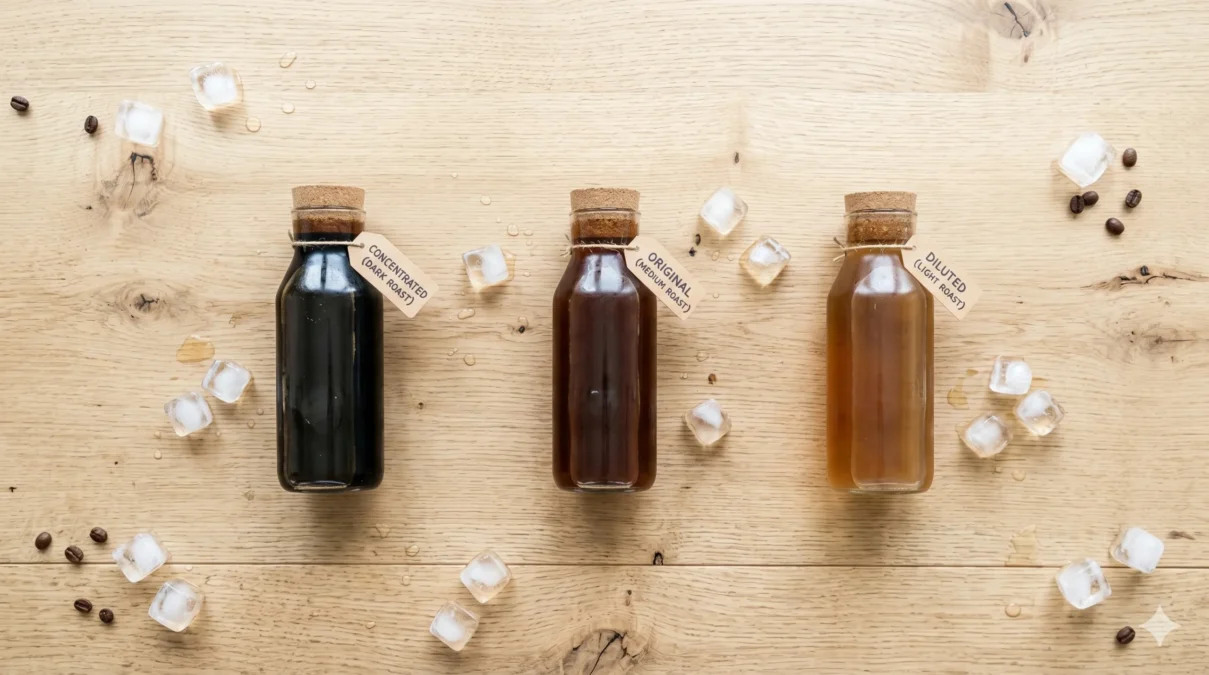
How much coffee and water to use for Cold brew coffee:
Quick Answer
| Strength | Coffee | Water |
|---|---|---|
| Ready-to-Drink | 1:8 | 1 part coffee to 8 parts water |
| Medium Concentrate | 1:5 | 1 part coffee to 5 parts water |
| Strong Concentrate | 1:4 | 1 part coffee to 4 parts water |
Introduction
Cold brew recipes online vary wildly — some call for a ratio of 1:4, others for 1:8, and the difference between them is enormous in terms of final strength. That variation isn’t a mistake. It reflects two genuinely different approaches: brewing a concentrate meant to be diluted, versus brewing coffee that’s ready to drink as-is.
This guide breaks down exactly what each ratio produces, when to use which one, and how to avoid the most common ratio mistakes.
Why Ratios Matter
Coffee-to-water ratio is the single biggest factor determining how strong your cold brew tastes — more influential than bean choice, roast level, or steep time. Get the ratio wrong, and even great beans will taste either watery and weak, or overwhelmingly strong and muddy.
Because cold brew is almost always made in a batch and stored for later, ratio also determines how much dilution flexibility you have. A concentrate gives you room to adjust strength cup by cup; a ready-to-drink ratio commits you to one strength for the whole batch.
Understanding Cold Brew Ratios
What Is a Coffee-to-Water Ratio?
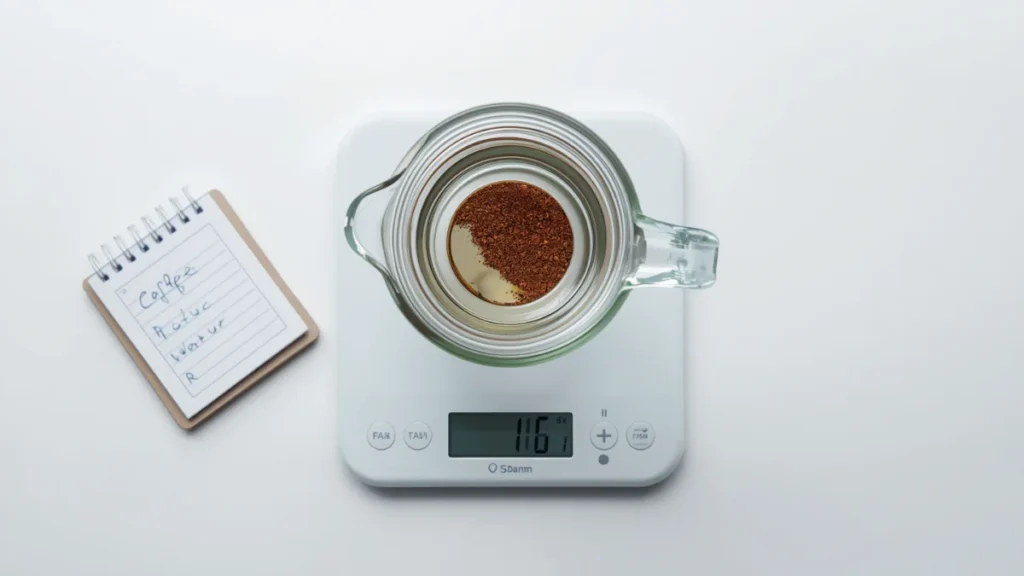
A coffee-to-water ratio describes the relationship between the weight (or volume) of dry coffee grounds and the amount of water used to brew them. It’s typically written as coffee-to-water, so a 1:5 ratio means 1 part coffee for every 5 parts water.
For cold brew specifically, these ratios are usually measured by weight (grams) for accuracy, though volume measurements (cups) work as a rough approximation if you don’t have a scale.
Concentrate vs Ready-to-Drink

This is the most important distinction in cold brew recipes.
Concentrate is brewed at a strong ratio (1:4 to 1:5) specifically so it can be diluted with water, milk, or ice before drinking. Most cold brew recipes you’ll find — including most cold brew coffee makers sold for home use — are designed to produce concentrate.
Ready-to-drink cold brew is brewed at a weaker ratio (around 1:8) so it can be poured straight over ice without further dilution. This skips a step but offers less flexibility — you can’t adjust the strength after the fact.
If a recipe doesn’t specify which it’s making, check the ratio: anything below 1:6 is almost certainly a concentrate meant to be diluted.
Cold Brew Ratio Chart
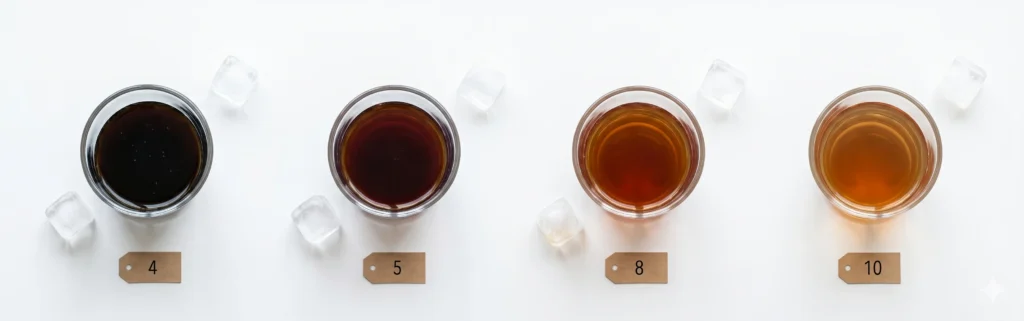
1:4 Ratio (Very Strong Concentrate)
Extremely concentrated. Typically diluted by half or more before drinking — for example, mixed 1:1 with water or milk. This ratio is popular for cold brew intended for milk-based drinks, where the milk itself provides significant dilution.
1:5 Ratio (Standard Concentrate)
The most common ratio for home cold-brew makers and for widely used commercial cold-brew concentrates. Designed to be diluted roughly 1:1 with water or milk before drinking. This is a reliable, well-balanced starting point if you’re not sure which ratio to use.
1:8 Ratio (Ready-to-Drink)
Brewed weak enough to drink immediately over ice, without dilution. This ratio is convenient but offers no flexibility — if it turns out too weak or too strong for your taste, your only adjustment option is to brew a new batch at a different ratio next time.
1:10 Ratio (Very Light, Ready-to-Drink)
An even lighter ready-to-drink option, sometimes used for large-batch entertaining or for drinkers who prefer a milder, more sessionable cold brew. Some flavor complexity is lost at this dilution level compared to a properly diluted concentrate.
Recommended Ratios for Different Situations
Strong Concentrate (1:4)
Best for milk-based drinks like cold brew lattes, where milk provides substantial additional dilution. Also useful if you want maximum flexibility to dilute to taste later.
Everyday Drinking (1:5)
The most versatile, widely recommended ratio. Brew once, dilute roughly 1:1 with water or milk depending on preference, and adjust slightly from there.
Milk-Based Drinks (1:4 to 1:5)
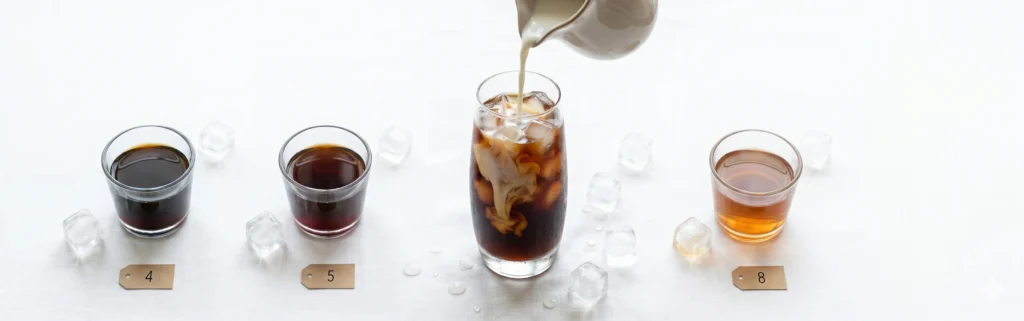
Stronger concentrates work better here because milk itself dilutes the coffee significantly. A 1:8 ready-to-drink cold brew mixed with milk would likely taste too weak.
Large Batch Brewing (1:5, scaled up)
For batch brewing (such as a full pitcher for guests), keep the 1:5 ratio and scale both coffee and water proportionally. This preserves flexibility — guests can dilute to their own taste with ice or water.
Common Ratio Mistakes
Too Strong
Using a concentrate ratio (1:4 or 1:5) without diluting it before drinking produces an overwhelmingly strong, often muddy-tasting cup. If your cold brew tastes intensely bitter or syrupy straight from the fridge, it’s very likely a concentrate that needs dilution, not a brewing mistake.
Too Weak
Using a ready-to-drink ratio (1:8 or weaker) but expecting concentrate-level strength will leave you disappointed. If you find your cold brew consistently weak, check whether you’re accidentally using a much higher water ratio than intended.
Over-Dilution
Diluting a concentrate too aggressively — for example, mixing 1:5 concentrate at a 1:1 ratio with water when 1:1 was meant for a 1:4 concentrate — results in coffee that tastes thin despite starting from a strong base. Always match your dilution amount to the strength of your original concentrate.
FAQs
What’s the best cold brew ratio for beginners?
1:5 ratio is the most reliable starting point. It produces a versatile concentrate that can be diluted roughly 1:1 with water or milk, and it’s forgiving enough to adjust to taste without much risk of an unusable batch.
Can I make ready-to-drink cold brew without diluting it later?
Yes — use a 1:8 ratio for cold brew you intend to drink directly over ice without dilution. Just be aware this approach offers no flexibility to adjust strength after brewing.
How do I properly dilute cold brew concentrate?
Start with roughly equal parts concentrate and water (a 1:1 dilution) for a 1:5 concentrate, then adjust to taste. Stronger concentrates (1:4) can often handle slightly more dilution. See for a complete guide.
Does the ratio affect caffeine content?
Yes, directly. A stronger ratio (more coffee relative to water) produces a more caffeine-concentrated brew. However, once a concentrate is diluted to drinking strength, the final caffeine content depends on both the original ratio and the amount of dilution added.
Why does my cold brew taste weak even though I used a strong ratio?
This usually points to over-dilution or an overly coarse grind. Double-check how much water or milk you’re adding when diluting, and make sure your grind is genuinely coarse rather than medium — a grind that’s too fine can also produce a surprisingly thin-tasting result due to clogging and uneven extraction.
Key Takeaways
- 1:5 is the most versatile starting ratio for home cold brew, designed to be diluted roughly 1:1.
- Concentrate (1:4 to 1:5) and ready-to-drink (1:8 or weaker) are different approaches — know which one your recipe is making.
- Stronger concentrates work best for milk-based drinks, since milk provides significant additional dilution.
- Most “too strong” or “too weak” cold brew problems come down to dilution mistakes, not brewing mistakes.
- Match your dilution amount to your original ratio — over-diluting a strong concentrate produces thin, disappointing coffee.
Recommended Reading
- Cold Brew Coffee Guide
- How to Dilute Cold Brew Coffee Properly
- Why Is My Cold Brew Coffee Weak?
- Best Coffee Beans for Cold Brew
- Coffee Brewing Ratio Guide