
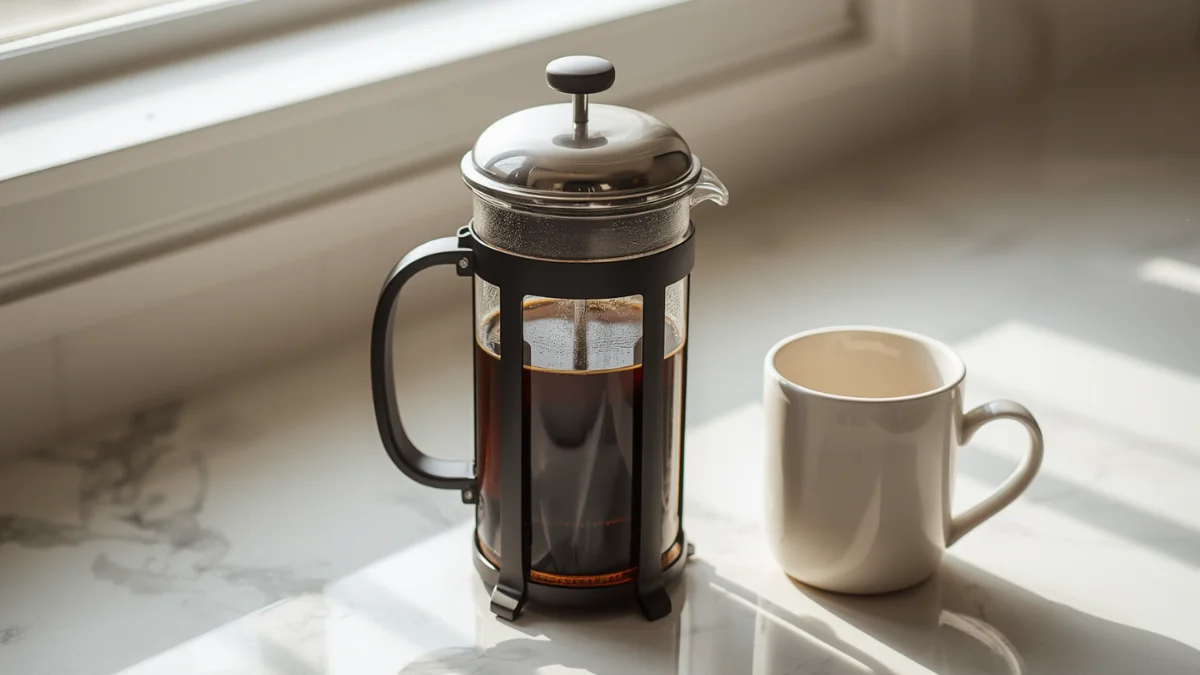
Quick Verdict
Best for: Home brewers who dislike sediment, anyone switching from drip or pour-over to French press, beginners who want clean results from day one.
Not ideal for: Those who want maximum heat retention, need a large-capacity press, or prefer a fully glass-and-metal aesthetic.
Rating: 4.5 / 5
Bottom line: The ESPRO P3 is the most intelligent French press at its price point. Its patented double micro-filter eliminates nearly all sediment from the cup — a problem every single-filter press leaves unsolved.
Selected as the best French press by the New York Times Wirecutter in 2024, it has held that position because it genuinely solves the main complaint most people have about French press coffee.
Introduction
Most French press complaints come down to one thing: sediment. That gritty layer at the bottom of the cup, the occasional fine particle mid-sip — for many coffee drinkers, it’s the reason they never stick with French press brewing.
The ESPRO P3 was built specifically to address this. It uses a patented double micro-filter system that catches the fine coffee particles a standard single-mesh press lets through. The result is a cup with the body and richness of French press coffee, but with significantly less grittiness.
At approximately $40, it sits at the same price point as the Bodum Chambord — making the comparison between them an important one for anyone choosing their first (or next) French press.
Our Review & Research Disclaimer
At RoastVista, our product reviews are based on detailed research and analysis rather than hands-on physical testing. We study manufacturer information, product specifications, independent sources, and feedback from real users to understand a product’s performance, quality, features, strengths, and limitations. We also compare products with similar alternatives to provide a broader perspective.
Our goal is to give prospective buyers a clear, balanced, and well-researched picture of each product so they can make a more informed purchasing decision.

Specifications
| Feature | Details |
|---|---|
| Capacity | 32oz (brews 24oz of coffee) |
| Material | Borosilicate glass carafe, polypropylene plastic cage |
| Filter type | Patented double micro-filter with silicone seal |
| Dishwasher safe | Yes — all components |
| Sizes available | 18oz, 32oz |
| Glass thickness | 40% thicker than standard French press glass |
| Price range | ~$35–$45 on Amazon |
| Safety features | Twist-lock safety latch secures carafe |
Build Quality
The P3’s build is practical rather than premium-looking. The carafe sits inside a polypropylene plastic cage — not stainless steel like the Chambord. This is the most visible trade-off at this price point. The P3 is lighter and less visually striking than the Chambord, but it doesn’t feel flimsy.
The glass is 40% thicker than most standard presses, and a built-in safety lock keeps everything secure while pouring. That safety latch is a genuinely useful detail — it secures the glass to the plastic cage before pouring, which prevents the carafe from slipping out during service.
The double micro-filter is the star of the construction. Like other ESPRO French presses, the P3 uses an innovative two-filter system to strain out coffee grounds, with a silicone seal to help prevent over-brewing. The silicone seal around the filter edge creates a barrier between the pressed grounds and the coffee above — stopping extraction and preventing fines from migrating upward after pressing.
The Double Micro-Filter: Why It Matters
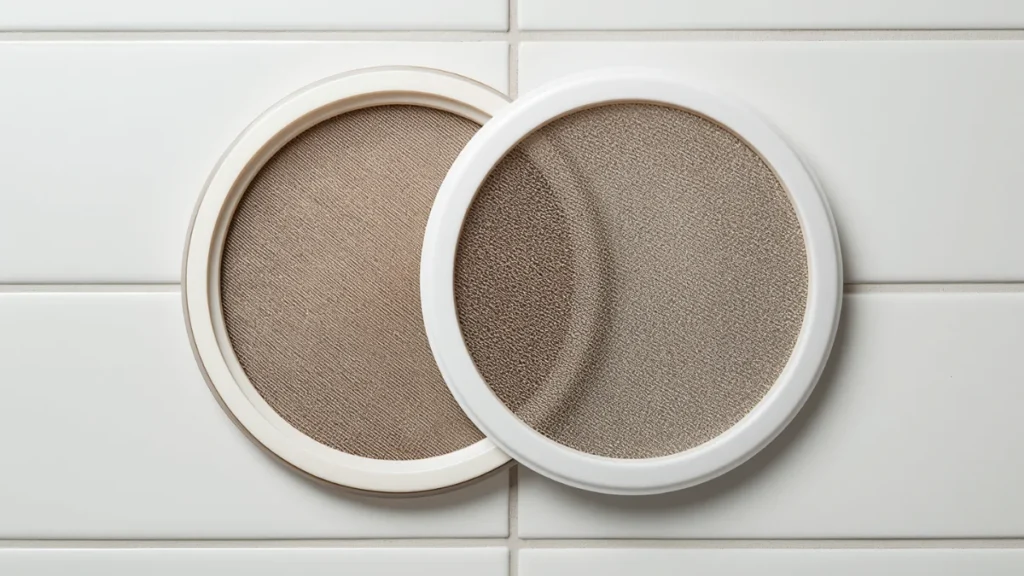
Standard French presses use a single metal mesh filter. It catches large grounds but allows fine particles — called fines — to pass through into the cup. These fines continue to extract after pressing, contributing to both sediment and the bitterness that develops in French press coffee left in the carafe.
The P3 uses a patented double micro-filter — two ultra-fine mesh filters stacked together with a silicone seal around the edge. This does two things no standard French press does: it keeps almost all sediment out of your cup, and the double silicone seal forms a barrier that traps several ounces of over-brewed, bitter coffee and grounds at the bottom after pressing.
The practical result is a cup that tastes cleaner and stays cleaner longer. If you brew 32oz and pour two mugs over 15 minutes, the second mug tastes much closer to the first than it would from a single-filter press, because extraction genuinely stops at the point of pressing.
Brewing Performance
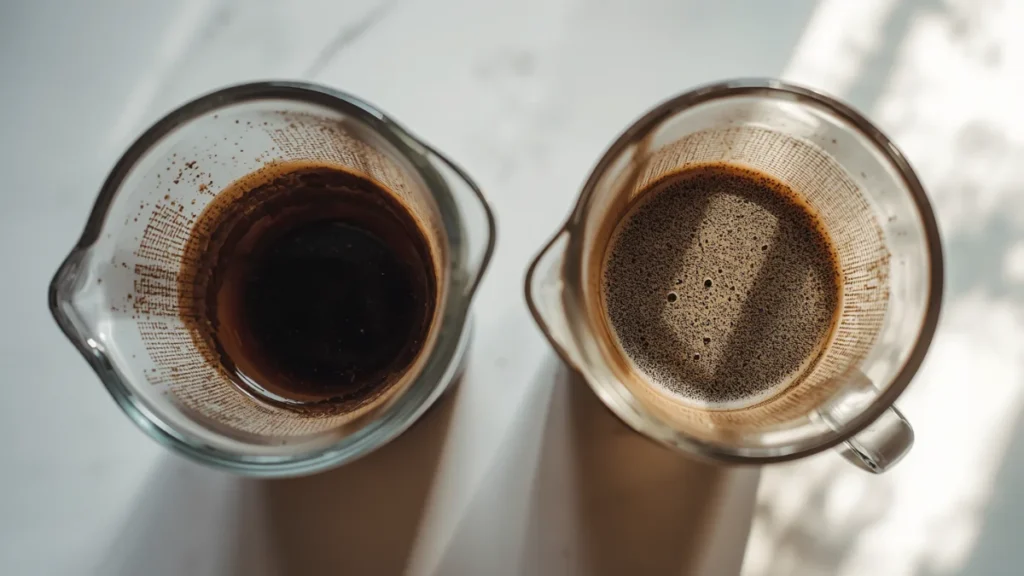
The P3 brews with the same basic method as any French press — coarse grounds, hot water, 4-minute steep, press, pour. What changes is the result.
The dual-filter system produces cleaner, less bitter coffee with far less sediment than traditional French presses — a claim verified by independent testing.
The flavor profile leans slightly cleaner and lighter than a standard French press. Some of the heavier oils and body that make French press distinctive are caught by the more aggressive filtration. This is a genuine trade-off: if you love the heavy, almost syrupy body of classic French press coffee, the P3 may feel slightly lighter than you expect. If you’ve always found French press too gritty or muddy, the P3 is transformative.
Heat retention is average for a glass press — coffee stays warm for about 20–30 minutes. <cite The P7 is the premium stainless steel version that keeps coffee hot for much longer, worth knowing if heat retention is a priority.
Ease of Use
The P3 is compatible with paper filters for an even cleaner cup, with a texture closer to pour-over. This flexibility is unusual for a French press and makes it genuinely versatile for households with different drinkers who prefer different cup styles.
The safety latch adds one small extra step — twist to lock before pouring — but it’s intuitive and quick. The plunger presses smoothly when the grind is correct.
Cleaning
All components are dishwasher-safe. The double micro-filter disassembles for thorough cleaning — important for preventing oil buildup on the fine mesh over time. A weekly soak and soft-brush cleaning of the filter maintains performance.
Pros and Cons
| Pros | Cons |
|---|---|
| Patented double micro-filter — dramatically less sediment | Plastic cage less visually premium than stainless steel |
| Extraction stops after pressing — no over-brewing | Glass heat retention — coffee cools in 20–30 minutes |
| 40% thicker glass than standard presses | Only two size options (18oz and 32oz) |
| Safety latch prevents carafe slipping | Slightly lighter body than single-filter presses |
| Dishwasher safe throughout | — |
| Wirecutter’s top pick since 2024 | — |
Who Should Buy the ESPRO P3
Buy it if:
- Sediment is your main objection to French press coffee
- You’re coming from drip or pour-over and want a cleaner cup
- You want extraction to genuinely stop after pressing
- You brew and pour over 15–20 minutes and want the second mug to taste like the first
Skip it if:
- You love the heavy, traditional French press body — the P3 is slightly lighter
- Heat retention is important — upgrade to the ESPRO P7 (stainless double-wall)
- You prefer an all-metal and glass aesthetic
How It Compares
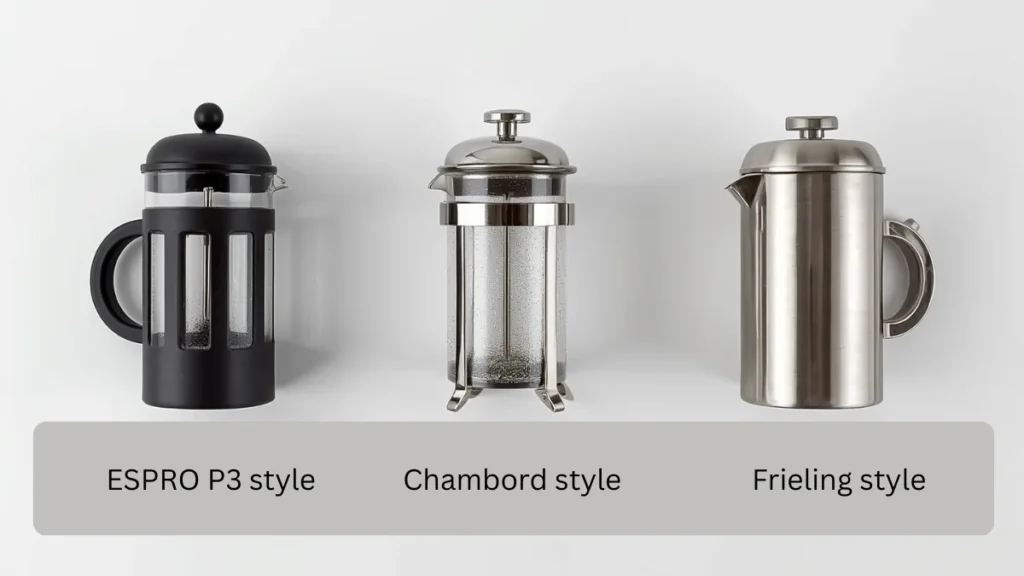
vs Bodum Chambord (~$40): Same price, very different cups. The Chambord produces a heavier, more traditional French press cup with normal sediment levels. The P3 produces a cleaner cup with minimal sediment. Choose based on your preference.
vs ESPRO P7 (~$100+): The P7 is the premium upgrade — double-wall stainless steel for extended heat retention, same double micro-filter system. Worth the extra cost if heat retention matters. The P3 delivers the same filtration performance for less.
vs Bodum Brazil (~$20): The Brazil is cheaper and produces a heavier, more traditional cup with more sediment. If budget is the priority and sediment doesn’t bother you, the Brazil is capable. If you want a genuinely cleaner cup, the P3 is worth the extra $15–20.
Common Complaints
“The plastic frame feels cheap.” It’s lighter than stainless steel but not fragile. The trade-off is that the P3 directs its engineering budget into the filter system rather than the frame material.
“The cup is less rich than my old French press.” True — the double micro-filter removes more oils than a single mesh, which slightly reduces body. This is by design.
Pro Tips
Use a coarser grind than usual. The double micro-filter is effective enough that you can use a slightly coarser grind than you would with a standard French press — which further reduces sediment and produces a cleaner cup.
Try the paper filter option. For an almost pour-over-clean cup with French press body, ESPRO’s compatible paper filters are worth experimenting with on occasion.
Pour immediately after pressing. The silicone seal stops extraction after pressing, but pouring promptly still produces the freshest, best-tasting result.
ESPRO P3 French Press review: FAQs
Is the ESPRO P3 really grit-free?
Nearly. The double micro-filter removes the vast majority of sediment that passes through a standard single-filter press. A very small amount of fine sediment may occasionally appear — but it’s significantly less than any standard French press produces, and most users don’t notice it.
How do you clean the ESPRO P3?
All components are dishwasher safe. For the double micro-filter specifically, disassemble and rinse after each use, and give it a thorough soak weekly to prevent oil buildup in the fine mesh.
What size should I buy?
The 32oz is the right choice for most people — enough for two generous mugs and the most popular size. The 18oz suits someone who only ever brews a single small cup.
Can I use the ESPRO P3 for tea?
Yes — the double micro-filter works well for loose-leaf tea, catching small leaf particles that pass through standard mesh filters.
Does the ESPRO P3 keep coffee hot?
Heat retention is average for a glass press — 20–30 minutes before noticeable cooling. For extended heat retention, the ESPRO P7 (stainless double-wall) is the upgrade path.
Final Verdict
The ESPRO P3 earns its Wirecutter recommendation. It solves the main problem most people have with French press coffee — sediment — without sacrificing the body and richness that makes the method worth using in the first place. At approximately $40, it’s the same price as the Bodum Chambord but serves a different preference: drinkers who want a cleaner, less gritty cup.
If sediment has kept you from enjoying French press, the P3 is the press that changes that.
Recommended Reading
- French Press Coffee Guide
- How to Reduce Sediment in French Press Coffee
- French Press Coffee Ratio Explained
- Best Coffee Beans for French Press
- Burr vs Blade Coffee Grinders
- Bodum Chambord French Press Review (2026): The Iconic Design — Still Worth It?