
Quick Answer Box
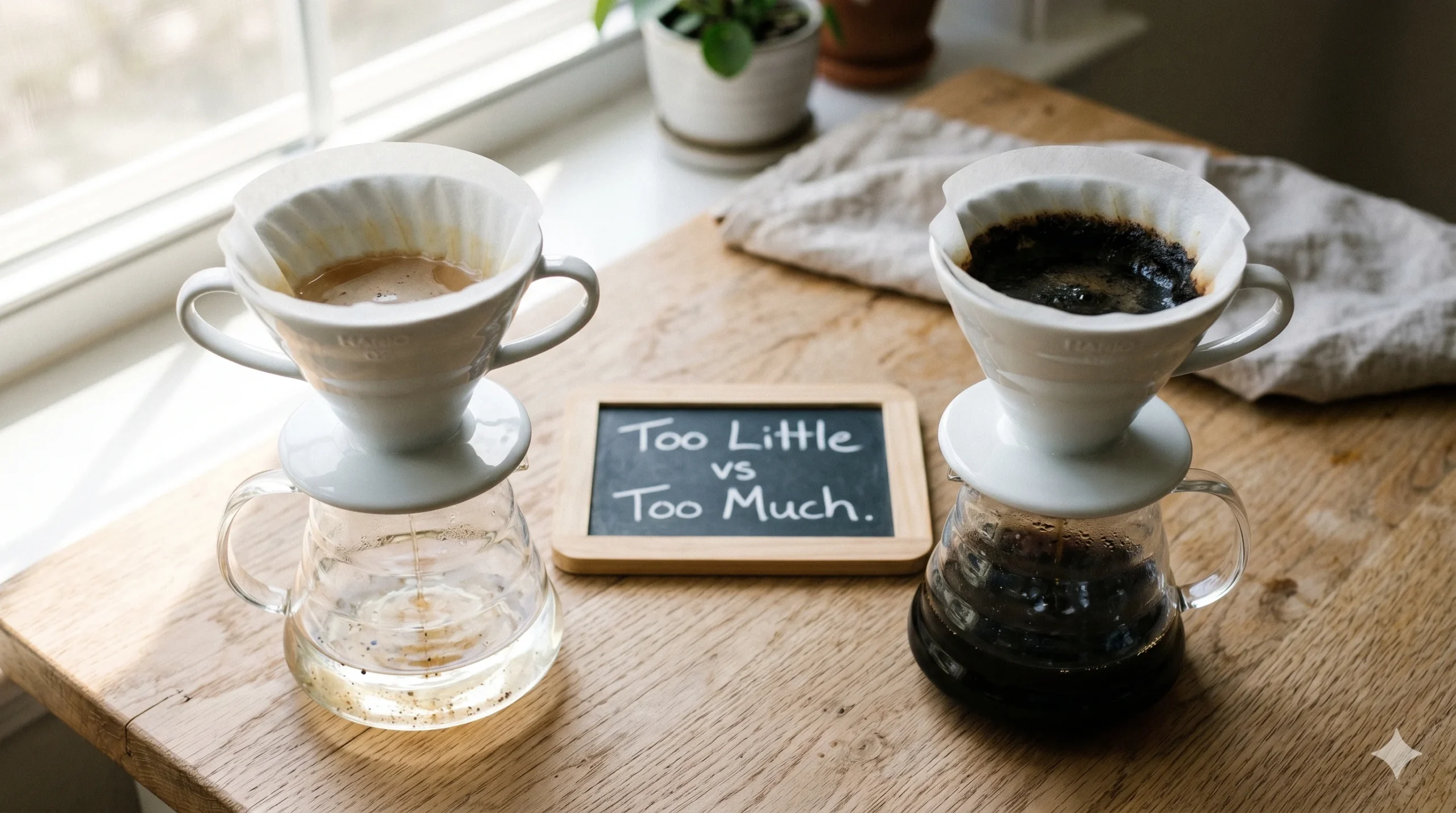
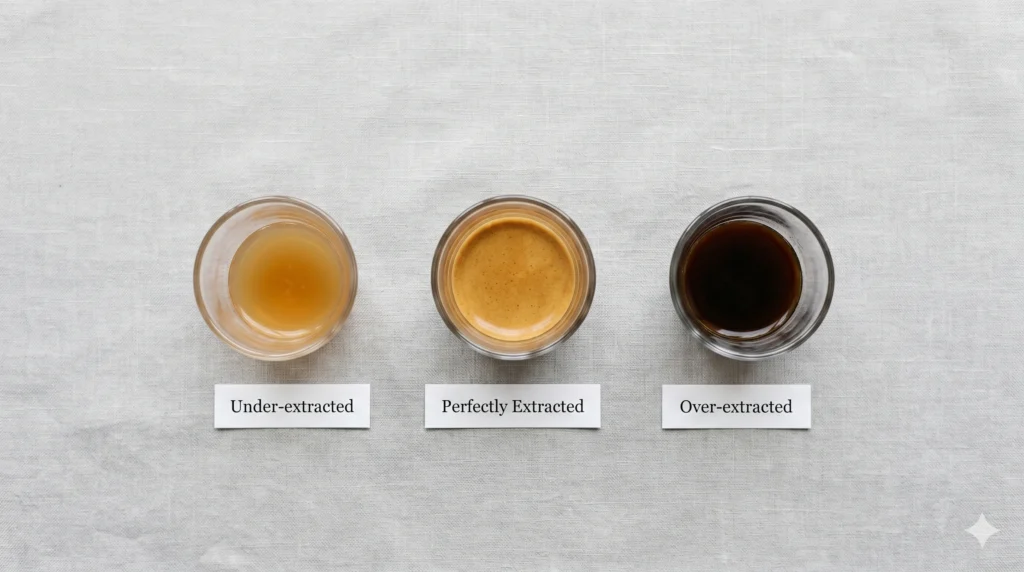
Under-extracted coffee tastes sour, sharp, or weak because water didn’t pull enough flavor from the grounds. Over-extracted coffee tastes bitter, harsh, or hollow because water pulled too much. Both problems have simple fixes — usually grind size, brew time, or water temperature.
Introduction
You brewed a cup this morning, and something was off. Maybe it tasted weirdly sour, almost like fruit gone bad. Or maybe it was so bitter it made you wince. Either way, the coffee didn’t taste as coffee should.
Both problems have a name: extraction. Specifically, too little of it or too much of it.
Once you understand what extraction actually means, you’ll be able to diagnose your cup in seconds — and fix it without guessing.
What Is Coffee Extraction?
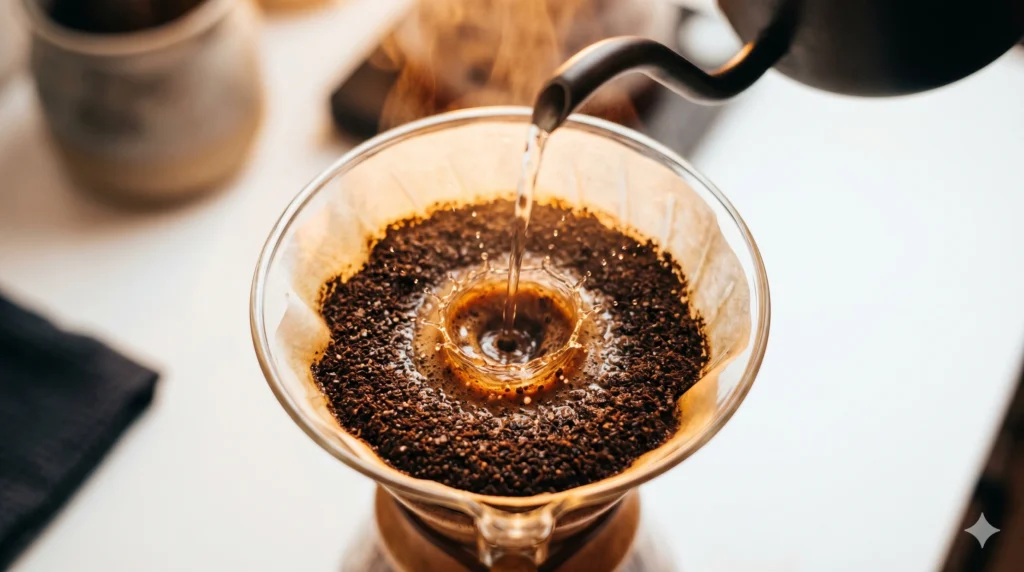
Extraction is what happens when hot water passes through ground coffee. Water is a solvent, and as it moves through your grounds, it dissolves and pulls out compounds locked inside the coffee bean.
Those compounds include:
- Acids — extracted first, responsible for brightness and fruit notes
- Sugars — extracted next, responsible for sweetness and body
- Bitter compounds — extracted last, responsible for depth but also harshness
The order matters. A well-extracted cup captures the acids and sugars in balance. A poorly extracted cup captures too few or too many of these compounds, throwing the flavor off.
Extraction percentage is the technical way to measure this — it refers to how much of the dry coffee weight actually dissolved into your brew. The sweet spot for most brewing methods sits between 18% and 22%. Below that, you’re under-extracted. Above it, you’re over-extracted.
You don’t need to measure this at home. Your taste buds are a perfectly good extraction meter once you know what to look for.
What Is Under-Extraction?
Under-extraction means water didn’t pull enough flavor from your coffee grounds. The brew ended too early, or the conditions weren’t right for full extraction.
What Under-Extracted Coffee Tastes Like
- Sour or sharp — like biting into an unripe fruit
- Thin or watery — lacks body and substance
- Salty — sometimes accompanied by a strange saline edge
- One-dimensional — no depth or complexity
- Weak, even if the coffee looks dark — color doesn’t always reflect flavor
The sourness is a telltale sign. Remember that acids extract first. If the brew time is too short or the water temperature is too low, you mainly capture acidic compounds, while the sugars and sweetness never make it into the cup.
Common Causes of Under-Extraction
Grind too coarse. Large particles have less surface area exposed to water. Less surface area means slower, less thorough extraction. If you’re grinding on a coarser setting than your method requires, the water flows through too quickly and doesn’t pick up enough flavor.
Water temperature too low. Water below 195°F (90°C) struggles to dissolve coffee compounds efficiently. Cold or lukewarm water extracts the acidic compounds but leaves the sweeter ones behind.
Brew time too short. This applies especially to French press and cold brew. If you don’t give water enough time to soak into the ground, it leaves before the job is done.
Not enough coffee. Using too little coffee relative to water dilutes the brew regardless of extraction. This is a ratio problem more than an extraction problem, but the result tastes similar — weak and flat.
Skipping the bloom. For pour over especially, dry coffee grounds trap CO2 gas. If you don’t bloom first, that gas creates a barrier between the water and the coffee, leading to uneven and incomplete extraction.
What Is Over-Extraction?
Over-extraction means water pulled too many compounds from your grounds — including the harsh, bitter ones that should have stayed behind.
What Over-Extracted Coffee Tastes Like
- Bitter — not the pleasant dark-chocolate kind, but sharp and unpleasant
- Astringent — a dry, mouth-coating sensation, like over-steeped tea
- Hollow — flavor seems to drop off after the first sip
- Drying — your mouth feels parched after drinking it
- Heavy and overpowering — nothing light or bright about it
Over-extracted coffee can smell fine but taste harsh. The bitterness often arrives in the back of the mouth rather than the front, which helps distinguish it from naturally bitter dark roasts.
Common Causes of Over-Extraction
Grind too fine. Finer grounds have more surface area, which means water extracts from them much faster. Combined with a normal brew time, this quickly leads to over-extraction.
Water temperature too high. Water above 205°F (96°C) extracts aggressively. The bitter compounds that normally stay behind start dissolving rapidly.
Brew time too long. Leaving coffee to steep longer than recommended — particularly in French press — gives water time to pull out the compounds you don’t want.
Too much coffee. Using more coffee than your ratio calls for doesn’t directly cause over-extraction, but it creates a very dense brew that can taste harsh and bitter.
Dirty equipment. Old coffee residue left in your brewer, grinder, or carafe contributes bitter flavors to every new brew, even when your extraction is technically correct.
How to Tell Which Problem You Have
Taste your coffee and ask these two questions:
Does it taste sour, sharp, or thin? → Under-extracted. Does it taste bitter, harsh, or astringent? → Over-extracted.
If it tastes both sour and bitter at the same time, you likely have uneven extraction — some grounds are over-extracted while others are under-extracted. This usually points to an inconsistent grind (blade grinders are a common culprit) or an uneven pour during pour over.
How to Fix Under-Extraction
Make one change at a time. Changing multiple variables at once makes it impossible to know what actually fixed the problem.
- Grind finer. This is usually the most effective first step. A finer grind slows water flow and increases surface contact.
- Raise your water temperature. Aim for 195–205°F (90–96°C). If you don’t have a thermometer, let boiling water sit for 30–45 seconds before brewing.
- Extend brew time. For French press, steep for 4 minutes instead of 3. For pour over, slow down your pour.
- Bloom your coffee. Pour a small amount of hot water over the grounds first, let it sit for 30–45 seconds, then continue brewing.
- Check your coffee-to-water ratio. The general starting point is 1:15 (1 gram of coffee per 15 grams of water). If you’re going lighter than that, add more coffee.
How to Fix Over-Extraction
Again, one change at a time:
- Grind coarser. This is the most common fix. A coarser grind slows extraction and gives water less surface to work with.
- Lower your water temperature. Drop to around 195°F (90°C). Even 5°F can make a noticeable difference.
- Shorten brew time. For French press, try pressing at 3 minutes 30 seconds instead of 4. For pour over, aim for a faster, more consistent pour.
- Clean your equipment. Give your brewer, carafe, and grinder a thorough clean. Residue builds up faster than most people realize.
- Try a lighter roast. Dark roasts have more developed bitter compounds by nature. If you’re consistently getting over-extracted results with a dark roast, try a medium roast and see if the harshness decreases.
The Grind Size Connection
Grind size is the single most powerful extraction variable you control. Understanding why makes the whole system click into place.
Smaller coffee grounds expose more surface area to water, which is why they extract flavor faster than coarse grounds. This is also why espresso uses an extremely fine grind (short contact time) while cold brew uses a very coarse grind (very long contact time). Each method is calibrated to extract the right amount of flavor in the time available.
When your extraction goes wrong, grind size is almost always the first place to look — before you change brew time or water temperature.
For a full breakdown of which grind works best with which method, see the Coffee Grind Size Chart.
Extraction and Roast Level
Roast level affects how easy your coffee is to extract — and how forgiving it is when something goes slightly wrong.
Light roasts are denser and harder to extract. They need hotter water, a finer grind, or longer contact time to reach a balanced cup. Under-extraction is a more common problem with light roasts.
Dark roasts are more porous and extract very quickly. They’re more prone to over-extraction. Slightly cooler water and a coarser grind help avoid bitterness.
Medium roasts are the most forgiving. They sit midway between density and solubility, which is why most brewing guides use them as the default.
Troubleshooting Quick Reference
| Flavor Problem | Likely Cause | First Fix |
|---|---|---|
| Sour / sharp | Under-extracted | Grind finer |
| Thin / watery | Under-extracted or weak ratio | Grind finer or add more coffee |
| Bitter / harsh | Over-extracted | Grind coarser |
| Astringent / drying | Over-extracted | Grind coarser + lower temp |
| Sour AND bitter | Uneven extraction | Upgrade grinder |
| Flat / hollow | Over-extracted | Grind coarser + shorten brew time |
FAQs
Can coffee be both under-extracted and over-extracted at the same time?
Yes — this is called uneven extraction. It happens when your grind is inconsistent. Some fine particles over-extract while coarse ones under-extract simultaneously. The result is a muddled cup that tastes both sour and bitter. A burr grinder produces a much more consistent grind than a blade grinder, which solves this problem.
Does darker coffee mean more extraction?
No. Roast level and extraction are separate things. You can under-extract a dark roast and over-extract a light roast. Roast level affects the flavor compounds available for extraction, not whether your brewing technique is correct.
Why does my pour over taste sour even though I use hot water?
A sour pour-over usually points to a grind that’s too coarse, a pour that’s too fast, or skipping the bloom. Water rushes through coarse ground quickly and doesn’t have time to be properly extracted. Try grinding finer first, and make sure you’re blooming for 30–45 seconds before your main pour.
Is a sour espresso under-extracted?
Yes. Sour espresso is a classic sign of under-extraction — usually caused by a grind that’s too coarse, a shot time that’s too short, or water that isn’t hot enough. The fix is usually to grind finer.
How does water quality affect extraction?
Water that’s too soft (lacking minerals) doesn’t extract coffee compounds efficiently, which can lead to under-extraction even with proper technique. Water that’s too hard can block extraction or add unpleasant flavors. Filtered water with moderate mineral content generally produces the best results. See the Best Water for Coffee Brewing guide for more detail.
Key Takeaways
- Under-extracted coffee tastes sour, sharp, or thin — water didn’t pull enough flavor from the grounds.
- Over-extracted coffee tastes bitter, harsh, or astringent — water pulled too many compounds, including unpleasant ones.
- Grind size is your most powerful tool — finer grinds extract more, coarser grinds extract less.
- Change one variable at a time — adjust the grind first, then the temperature, then the brew time.
- Uneven extraction (sour and bitter together) usually means an inconsistent grind — a burr grinder solves this.
Recommended Reading
- Coffee Extraction Explained: How to Brew Better Coffee at Home
- Coffee Grind Size Chart: A Complete Guide for Every Brewing Method
- How Coffee Grind Size Affects Coffee Taste
- Why Your Coffee Tastes Sour (And How to Fix It Fast)
- Why Your Coffee Tastes Bitter — And How to Fix It Fast
- Coffee Brewing Ratio Explained