
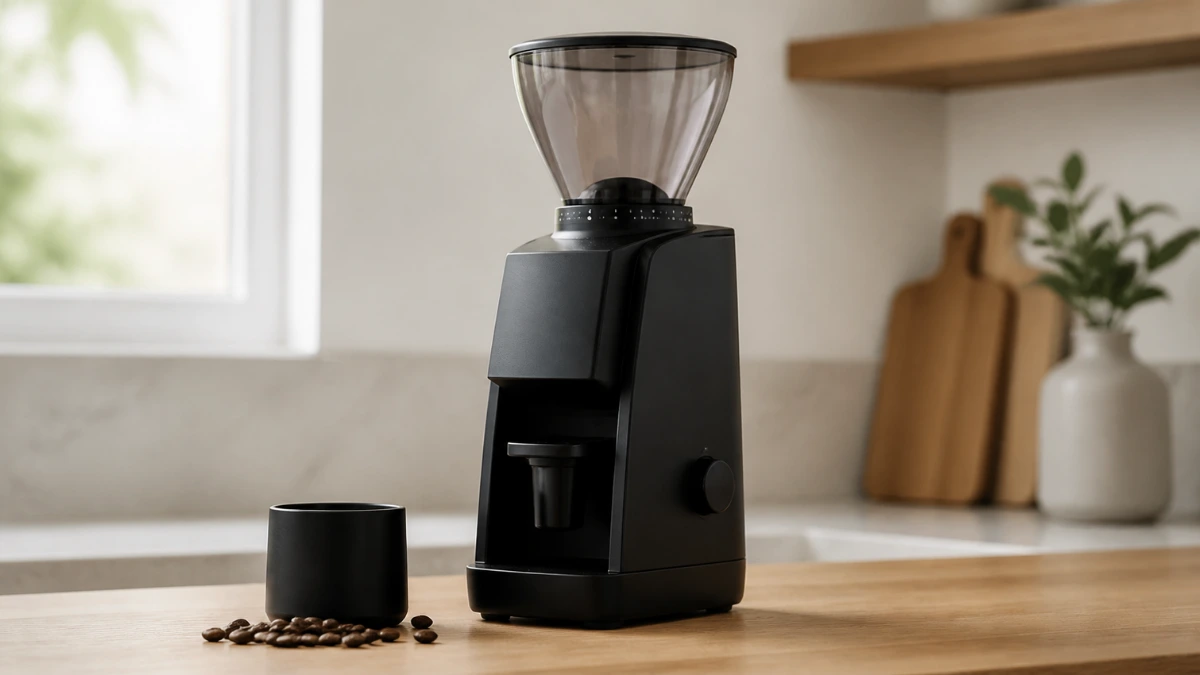
Quick Verdict
Best for: home brewers who want one electric grinder for pour-over, drip, French press, and occasional espresso — without spending $400.
Not ideal for: espresso purists chasing light roasts on precision baskets, single-dosers who demand near-zero retention, or anyone who wants a metal-bodied grinder.
Rating: 4.2 / 5
Bottom line: The Encore ESP fixes the original Encore’s biggest weakness — it can finally grind for espresso — while keeping the simple workflow and parts support that made the original a default recommendation. It is the best sub-$200 all-rounder for most home brewers, provided you accept plastic construction, about a gram of retention, and a grind range that suits medium and dark roasts better than the lightest ones.
ASIN: B0BW272XCV · Typical price: $199.95
Introduction
For more than a decade, the Baratza Encore answered the question, “What grinder should I buy first?” It was simple, repairable, and good enough for filter coffee. It also couldn’t grind fine enough for espresso, so anyone who wanted both filter and espresso eventually bought twice.
The Encore ESP is Baratza’s answer. It keeps the same footprint and front-mounted pulse button but adds a new burr set, a dual-range adjustment collar, and a dosing cup. The question is whether those changes make it a genuine all-rounder or just a filter grinder with a technically existing espresso setting.
Short version: it is a genuine all-rounder for beginners and medium-roast drinkers, and a compromised one for people who push light roasts.Our Review & Research Disclaimer
At RoastVista, we base our product reviews on detailed research and analysis rather than hands-on physical testing. We review manufacturer information, product specifications, independent sources, and real-user feedback to understand a product’s performance, quality, features, strengths, and limitations. We also compare products with similar alternatives to provide a broader perspective.
Our goal is to give prospective buyers a clear, balanced, and well-researched picture of each product so they can make a more informed purchasing decision.
Specifications
| Feature | Detail |
| Burrs | 40 mm conical steel, M2 geometry (Etzinger) |
| Grind settings | 40 steps: 1–20 espresso, 21–40 filter |
| Adjustment | Stepped collar, roughly 18.8 microns per step in espresso range |
| Motor speed | 550 RPM |
| Retention | Approximately 1.1 g (measured in independent testing) |
| Noise | Approximately 92 dB |
| Included | Dosing cup (fits 54 mm and 58 mm baskets), grounds bin, brush, shims |
| Build | Plastic body and bean hopper |
| Price | $199.95 |
| Best for | Filter coffee plus entry-level espresso |
What’s New Compared With the Original Encore
The M2 burr set
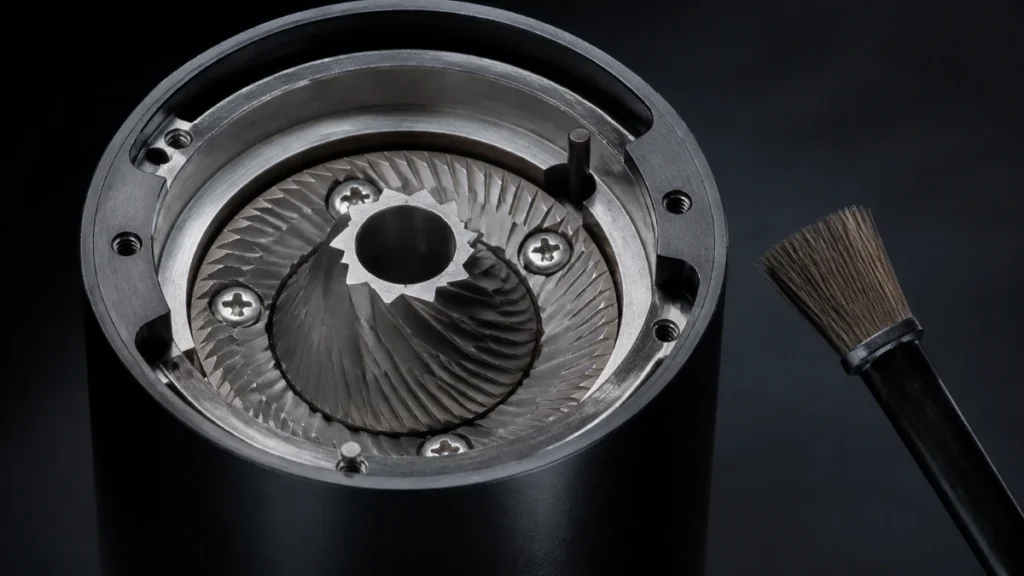
The standard Encore used Baratza’s M3 burr. The ESP uses the M2 burr, a 40 mm conical set made by Etzinger — the same geometry that was previously an upgrade in the Virtuoso. In practice, the M2 produces a more uniform particle distribution, which shows up as better clarity in pour-over and fewer muddled notes in the cup.
This is the single biggest reason the ESP brews better filter coffee than the original, not just espresso.
A dual-range adjustment collar
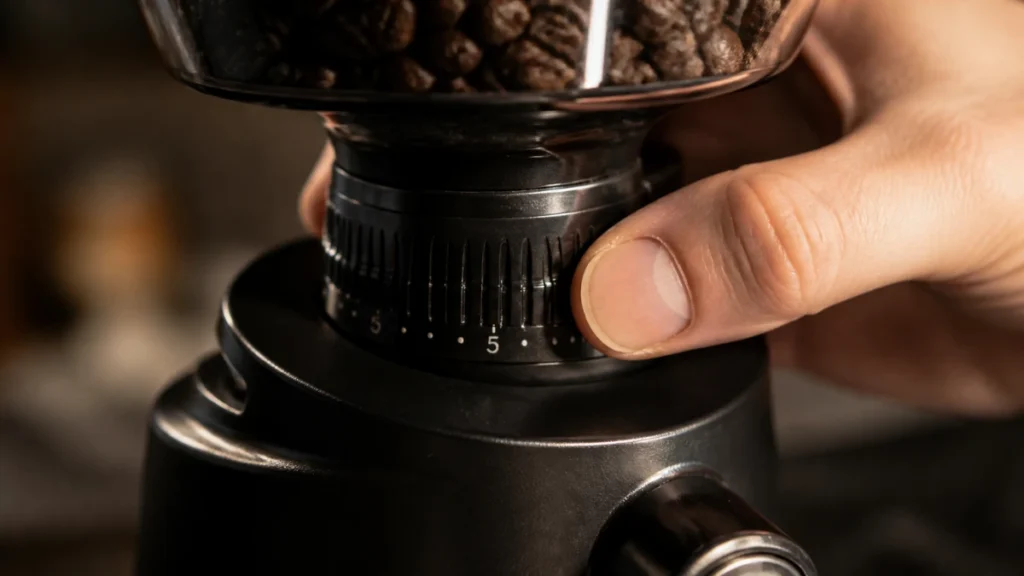
The ESP has 40 steps, but they are not evenly spaced. Clicks 1–20 are marked in black and dedicated to espresso, with each click changing the grind by about 18.8 microns. Clicks 21–40 cover filter brewing with larger jumps.
That design is clever: you get fine control where you need it for dialing in a shot, and you do not have to count through forty clicks to move from espresso to French press. The downside is that the collar has no printed numbers, so you have to remember your settings by position rather than by number.
A dosing cup, brush, and shims
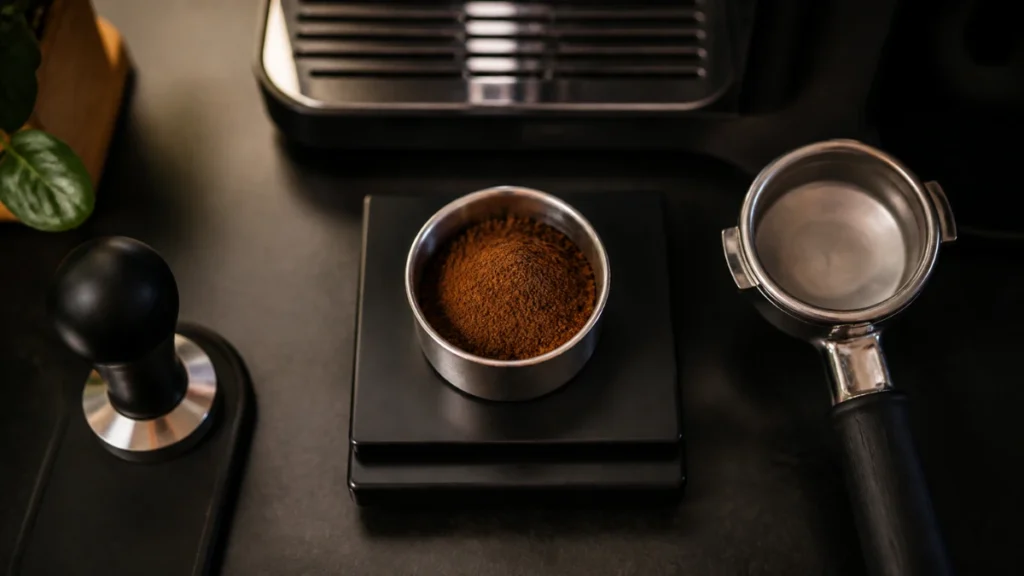
The ESP ships with a stainless dosing cup sized for 54 mm and 58 mm baskets, plus the original plastic grounds bin. The cup is a real improvement for espresso workflows and reduces the static mess that plastic bins create. Baratza also includes shims you can install under the cone burr to reach finer settings if your unit cannot quite choke a shot.
The shims are a useful safety valve, not a feature you should plan to use. Installing them increases retention and heat at the finest settings.
Build Quality and Design
The ESP is almost entirely plastic, and it feels like it. The body is light, the on/off switch has a hollow click, and the dosing cup sits a little loosely in its cradle. At 92 dB, it is also one of the louder grinders in its class — a rattly, appliance-like sound rather than the low growl of a metal-bodied flat burr.
That said, “plastic” is not the same as “fragile.” The original Encore earned its reputation on years of service, and the ESP keeps the same simple motor-and-burr layout with easily replaceable parts. Baratza’s parts availability is genuinely better than most competitors at this price, which matters more over five years than the finish does on day one.
The trade-off is honest: you are buying grind quality and repairability, not premium materials.
Grind Quality for Filter Coffee
For pour-over, drip, and French press, the ESP is a clear step up from the original Encore. The M2 burrs produce fewer boulders and less dust, and the cup tastes cleaner and more defined—especially with medium roasts, where the difference is easiest to detect.
It is not a flat-burr grinder. Compared with a well-aligned flat burr grinder at a similar price, the ESP sacrifices some flavor separation and aftertaste length—our comparison of conical vs. flat burr grinders explains why the two geometries separate flavors differently, which matters when you are choosing. In a side-by-side blind tasting, the difference appears as the cup cools: flatter burrs tend to hold a longer, more continuous finish, while the ESP’s flavor drops off more abruptly.
For most home brewers, that difference is small. For someone chasing the last 10% of clarity in a light Ethiopian pour-over, it is noticeable.
Espresso Performance
This is the headline feature, so it deserves a direct answer: yes, the ESP can grind for espresso — with caveats.
With medium and dark roasts, it grinds fine enough for a standard basket and produces shots with good body and no harsh acidity. It behaves like an entry-level espresso grinder should: repeatable enough to dial in, and forgiving enough that small distribution mistakes don’t ruin the shot.
With very light roasts and high-flow precision baskets, it runs out of range. The finest setting may not be fine enough without shims, and shims add retention, clumping, and heat at the burrs. That’s where a dedicated espresso grinder earns its price.
Buy the ESP if espresso is a weekend experiment or you drink medium-roast milk drinks. Do not buy it if espresso is the main event and you plan to chase light roasts.
Retention and Static
Independent testing measured about 1.1 g of retention when the grinder was opened and cleaned out. That is acceptable at this price but higher than single-dose competitors, and it becomes more noticeable when you switch between brew methods.
Two practical consequences:
- Purge when switching. Going from espresso to filter, grind and discard a few grams to clear the old setting.
- Use RDT. A single spray of water on the beans reduces static and makes the dosing cup cleaner. Our guide to coffee grinder static covers the technique, the correct dose, and the grinder-safety caveats.
The plastic impeller and chute are the weak points here. They work, but they are the parts most likely to hold onto stale grounds.
Ease of Use and Cleaning
The ESP is refreshingly simple. Fill the hopper or weigh beans directly into it, select a setting, press the front button. No touchscreen, no presets, and no app.
Cleaning is easier than on the original Encore. The burr can be removed without dismantling most of the grinder, which makes a monthly brush-out realistic rather than a project — our guide to cleaning a coffee grinder covers the routine step by step for anyone who has never opened one. Baratza sells replacement burrs, impellers, and gaskets, and the manual is clear.
The main usability annoyance is the lack of numbered markings on the collar. If you switch between two brew methods often, note the click positions or mark your preferred settings with a small sticker.

Pros and Cons
| Pros | Cons |
| M2 burrs improve filter coffee clarity | Plastic body feels inexpensive |
| Genuine espresso range for under $200 | Not fine enough for some light-roast espresso |
| 40 steps with fine control at the espresso end | No numbers on the adjustment collar |
| Dosing cup, brush, and shims included | About 1.1 g retention |
| Easy burr access for cleaning | Loud at roughly 92 dB |
| Excellent parts availability and repairability | Dosing cup fits loosely |
Who Should Buy the Baratza Encore ESP
Buy it if:
- You brew filter coffee most days and want to try espresso without buying a second grinder.
- You drink medium or dark roasts.
- You value repairability and parts availability over metal construction.
- You want a simple grinder with no app, screen, or presets.
- Your budget is around $200, and you are upgrading from a blade grinder or pre-ground coffee.
Skip it if:
- Espresso is your primary method, especially with light roasts.
- You single-dose and want retention under 0.5 g.
- You want a quiet grinder.
- You already own a Fellow Ode or a DF64 and only need to grind for filter.
How It Compares
| Grinder | Price | Burrs | Best at | Trade-off |
| Baratza Encore ESP | $199.95 | 40 mm conical (M2) | Filter + entry espresso | Plastic build, 1.1 g retention |
| Baratza Virtuoso+ | ~$250 | 40 mm conical | Filter, nicer build | No real espresso range |
| Fellow Ode Gen 2 | ~$389 | 64 mm flat | Filter clarity | Not for espresso |
| DF64 Gen 2 | ~$399 | 64 mm flat | Single-dose filter and espresso | Higher price, more setup |
| OXO Brew Conical | ~$99 | Conical | Budget filter | Limited range, plasticky |
The ESP’s closest competitor isn’t another Baratza—it’s whether you need espresso at all. If you only brew filter, the Virtuoso+ or a flat-burr grinder gives you more clarity for the money. If you need one grinder to do everything reasonably well, the ESP is the value pick. For the wider field — flat burrs, single-dosers, and what you get for another $200 — see our roundup of the best electric coffee grinders.
Common Complaints
“It feels cheap for $200.” It does. The money went into the burrs, the adjustment mechanism, and the parts network.
“It can’t grind fine enough for my light-roast espresso.” This is the most consistent criticism, and it is fair. Use the shims only if you accept the retention trade-off.
“The dial has no numbers.” True. Mark your settings.
“It’s loud.” Measured around 92 dB. It is not a quiet grinder.
“There’s static and clumping at espresso settings.” Normal for this class. RDT and WDT solve most of it.
Pro Tips
- Start at 22–24 for pour-over and adjust by drawdown time, not by the number on the dial. Our coffee grind size chart maps ESP settings to each brew method if you want a reference point. If you haven’t dialed a stepped collar before, our guide to adjusting grind size on a burr grinder walks you through the sequence.
- Use the dosing cup for espresso — it fits 54 mm and 58 mm baskets and cuts the mess.
- Purge after changing settings if you switch between espresso and filter.
- Clean the chute monthly. A few grams of old grounds will affect the next dose more than you expect.
- Do not install shims unless you must. They fix the finest settings but worsen retention and heat.
Frequently Asked Questions
Is the Baratza Encore ESP good for espresso? Yes, for entry-level espresso with medium and dark roasts. It struggles with very light roasts and high-flow precision baskets, where it may not grind fine enough without shims.
What is the difference between the Encore and the Encore ESP? The ESP adds the M2 burr set, a 40-step dual-range adjustment collar with a dedicated espresso range, a dosing cup, and shims. The original Encore is filter-focused and cannot grind fine enough for most espresso.
How many grind settings does the Encore ESP have? Forty. Settings 1–20 are for espresso and 21–40 for filter coffee, with finer steps in the espresso range.
Is the Baratza Encore ESP worth $200? For a home brewer who wants one grinder for filter and occasional espresso, yes. If you only brew filter, a flat-burr grinder gives more clarity for a similar or slightly higher price.
What is the retention on the Encore ESP? About 1.1 g in independent testing. Purge a few grams when switching between espresso and filter.
Can the Encore ESP grind for pour-over? Yes. Start around setting 22–24 and adjust based on brew time and taste.
Does the Encore ESP come with a warranty? Baratza’s standard warranty applies—confirm the current terms with your regional retailer.
Final Verdict
4.2 / 5 — The Encore ESP is the grinder most beginners should buy if they want to explore both filter coffee and espresso without committing to two machines. The M2 burrs make a real difference in the cup, the dual-range collar is thoughtfully designed, and Baratza’s parts support gives it a longer practical life than its plastic finish suggests.
It isn’t the grinder for a light-roast espresso obsessive, and it isn’t the quietest or cleanest single-doser. But at $199.95, it occupies a useful middle ground that very few competitors match.
If you already know you only brew filter, spend the money on burr quality instead. If you are still deciding, this is the safe, repairable choice.