
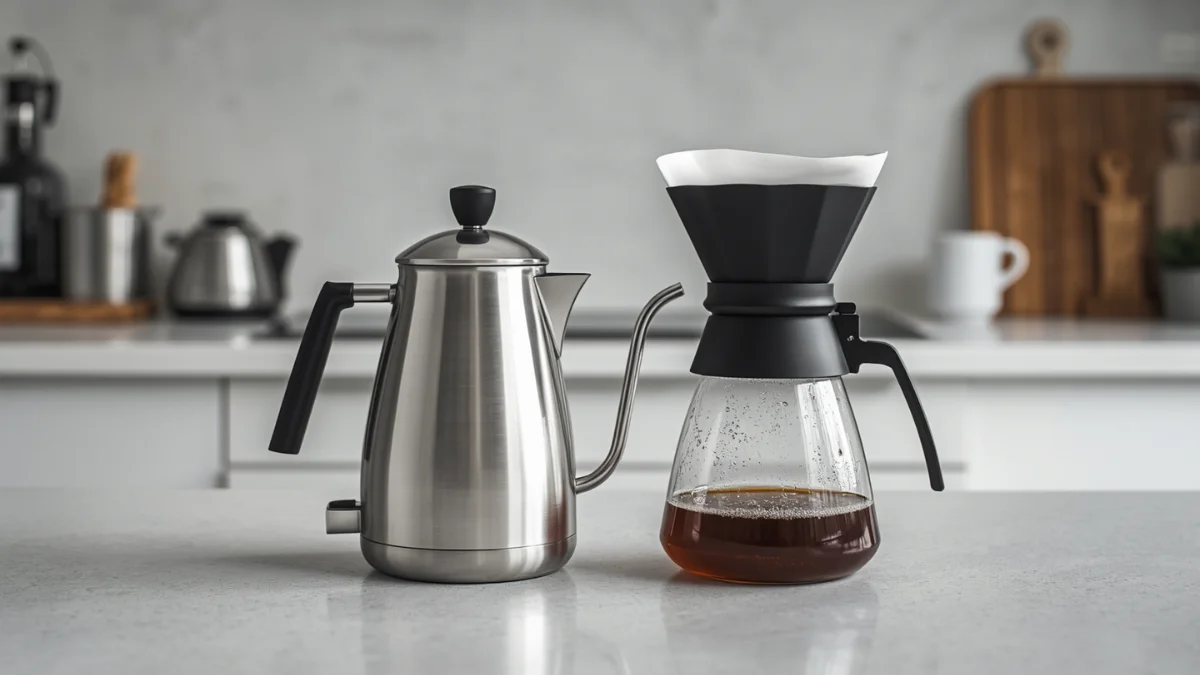
Introduction: Why Learning to Use a Gooseneck Kettle Matters
If you’ve started exploring pour-over coffee, you’ve probably seen a gooseneck kettle recommended everywhere. But many beginners quickly realize something important: just owning one doesn’t automatically improve your coffee.
The real difference comes from how you use it.
A gooseneck kettle gives you precise control over water flow, which directly impacts how evenly your coffee extracts. And in pour-over brewing, even small inconsistencies in pouring can lead to bitter, sour, or weak coffee.
In this beginner-friendly guide, you’ll learn exactly how to use a gooseneck kettle step by step, along with simple techniques to improve your pouring control and overall coffee quality.
Quick Answer: How to Use a Gooseneck Kettle (Featured Snippet Ready)
👉 To use a gooseneck kettle for pour-over coffee:
- Start with a bloom pour (2–3× the coffee weight)
- Pour slowly in circular motions from the center outward
- Maintain a steady, controlled flow
- Pour in stages (pulse pouring)
- Avoid pouring too fast or onto the filter edges
👉 Key tip: Controlled pouring ensures even extraction and better-tasting coffee.
Now that you have the quick version, let’s understand why this technique matters so much.
Why a Gooseneck Kettle Is Important for Pour Over
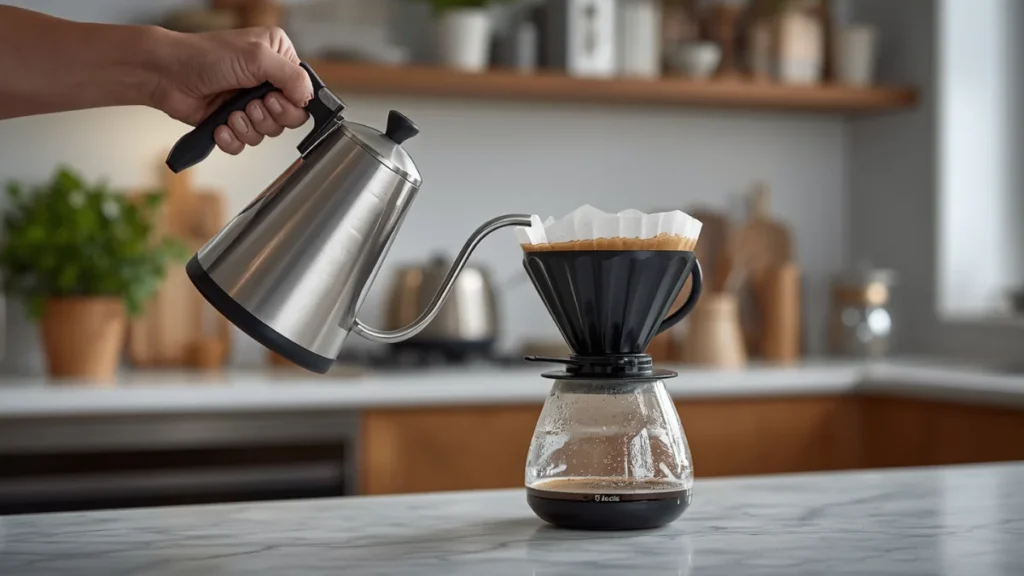
Pour-over coffee is unique because you control the brewing process manually—especially the water flow.
Benefits of a Gooseneck Kettle
- Precise control over pour speed and direction
- Even saturation of coffee grounds
- Reduced risk of channeling (uneven extraction)
- More consistent and repeatable results
In short, a gooseneck kettle turns guesswork into control.
If you are a beginner, read our Pour Over Coffee Guide for better insights into the Pour Over method
To make the most of that control, let’s walk through the exact steps you should follow.
Step-by-Step: How to Use a Gooseneck Kettle Properly

1. Heat Water to the Right Temperature
👉 Ideal range: 90–96°C (195–205°F)
- Avoid pouring boiling water immediately
- Let water sit for 30–60 seconds after boiling
👉 Proper temperature helps extract balanced flavors—not too bitter, not too sour.
Before pouring, bloom the coffee bed.
2. Start with the Bloom Pour
👉 Pour 2–3× the weight of your coffee
- Example: 20g coffee → 40–60g water
- Wait 30–45 seconds
👉 This step releases trapped gases (CO₂), allowing better extraction later.
Once blooming is complete, you’re ready for the main pouring technique.
3. Pour in Controlled Circular Motions
👉 Technique:
- Start pouring from the center
- Move outward in slow circles
- Avoid pouring directly on filter edges
👉 This ensures all grounds are evenly saturated.
Now that your motion is correct, consistency becomes the next priority.
4. Maintain a Steady, Controlled Flow
👉 Focus on:
- Slow, gentle pouring
- Consistent stream (not stopping abruptly)
- Avoiding aggressive or heavy pours
👉 A steady flow prevents uneven extraction and improves clarity in flavor.
To further refine your brew, divide your pouring into stages.
5. Use Pulse Pouring (Pour in Stages)
👉 Break your pour into phases:
- Bloom
- Main pour
- Final pour
👉 This helps control extraction and prevents over- or under-brewing.
With the fundamentals covered, let’s look at common mistakes beginners often make.
Common Gooseneck Kettle Mistakes (And How to Fix Them)
Pouring Too Fast
❌ Leads to uneven extraction
✅ Fix: Slow down and control your flow
Pouring on Filter Edges
❌ Water bypasses coffee grounds
✅ Fix: Keep pours within the coffee bed
Inconsistent Flow
❌ Causes uneven saturation
✅ Fix: Practice steady hand control
Ignoring Water Temperature
❌ Results in poor flavor extraction
✅ Fix: Stay within the ideal temperature range
Read our Pour Over Coffee Ratio Guide to get the perfect brew every Time
Avoiding these mistakes can immediately improve your results—but what difference does it actually make in taste?
How Pouring Technique Affects Coffee Taste
Without Proper Control:
- Uneven extraction
- Bitter or sour flavors
- Weak or muddy taste
With Proper Gooseneck Technique:
- Balanced extraction
- Clean and smooth flavor
- Better aroma and clarity
👉 Your pouring technique directly shapes the final cup.
How to Pour Water for Pour-Over Coffee? Read our related Guide explaining the Step-by-Step Technique for Perfect Flavor
At this point, you might be wondering whether a gooseneck kettle is truly necessary.
Do You Really Need a Gooseneck Kettle?

👉 You should consider one if:
- You brew pour-over coffee regularly
- You want consistent, repeatable results
- You care about improving flavor quality
👉 While not mandatory, it’s one of the most impactful upgrades for beginners.
If you already have one, a few simple habits can help you master it faster.
Tips to Improve Your Pouring Control
- Hold the kettle with a relaxed, steady grip
- Keep your wrist stable, not stiff
- Practice pouring with just water first
- Aim for a thin, consistent stream
👉 Like any skill, pouring improves quickly with practice.
Frequently Asked Questions (FAQ)
Is a gooseneck kettle necessary for pour-over coffee?
No, but it’s highly recommended. It gives you better control, leading to more consistent and better-tasting coffee.
Can I use a regular kettle instead?
Yes, but it’s harder to control water flow, which can lead to uneven extraction.
How fast should I pour over coffee?
Pour slowly and steadily. Avoid fast or aggressive pouring, which can disrupt the coffee bed.
Does pouring technique really matter?
Yes. It directly affects extraction, which determines whether your coffee tastes balanced, bitter, or sour.
What is the best pouring pattern for beginners?
Start from the center and move outward in slow circles while maintaining a steady flow.
To improve your coffee-making setup, see our Coffee Brewing Tools guide.
Final Thoughts: Mastering Your Gooseneck Kettle
Learning how to use a gooseneck kettle properly is one of the fastest ways to improve your pour-over coffee. While the tool itself is simple, the control it offers can transform your brewing results.
Start with the basics—slow pouring, steady flow, and proper blooming—and build consistency over time. With just a bit of practice, you’ll notice smoother, more balanced, and more enjoyable coffee in every cup.
In the end, great pour-over coffee isn’t about expensive gear—it’s about control, technique, and consistency.
Related Posts
- Common Pour Over Coffee Mistakes (And How to Fix Every One)
- Best Coffee Beans for Pour Over: A Beginner's Guide to Choosing the Right
- Best Water Temperature for Pour Over Coffee (Complete Brewing Guide for Perfect Flavor)
- How to Brew Pour Over Coffee for Two Without Losing Heat (Step-by-Step Guide)
- Best Pour-Over Coffee Makers (2026): 6 Drippers Compared