
QUICK ANSWER BOX
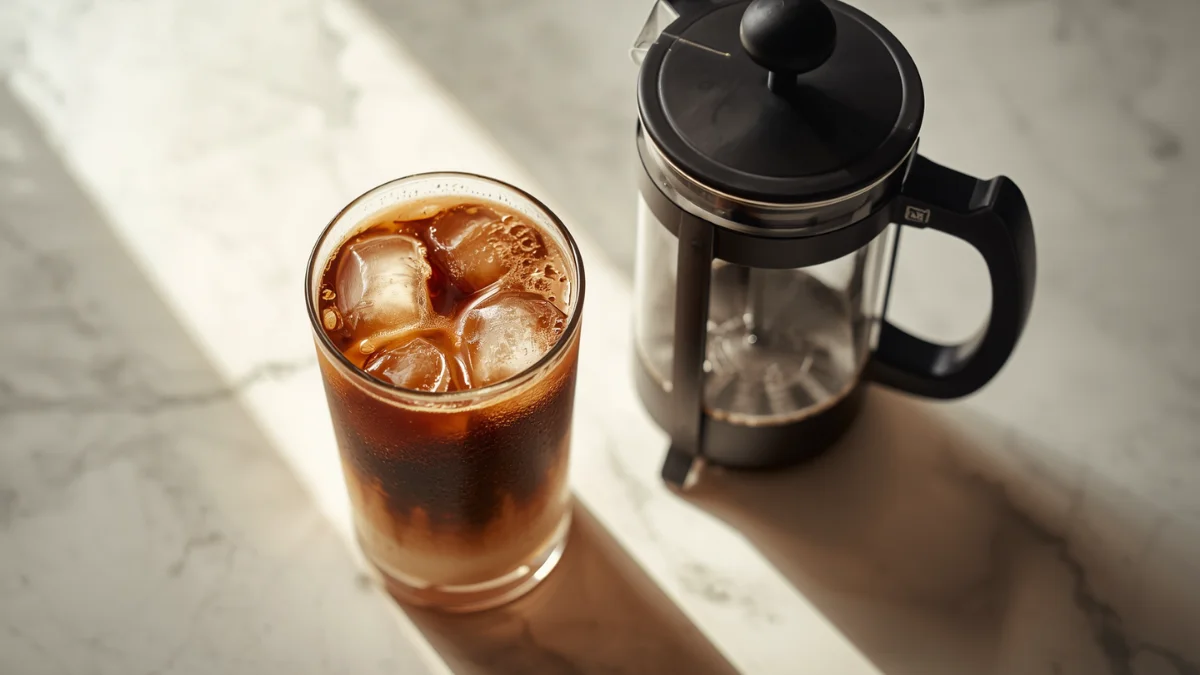
Yes, absolutely. A French press actually makes excellent iced coffee. You have two options: brew hot (standard method) and pour over ice, or brew cold using the same French press overnight. The cold-brew method takes 12–16 hours but produces smoother, less acidic coffee. The hot-then-ice method is faster but tastes brighter and more acidic. Both work; choose based on how much time you have and the flavor you want.
Why French Press Works So Well for Iced Coffee
Most people think of pour-over or cold-brew towers when they imagine iced coffee, but a French press is one of the easiest, most forgiving ways to make it.
Here’s why: the immersion brewing process (letting grounds steep in water) is nearly identical whether your water is hot or cold. The main difference is time and temperature.
A French press brews coffee by full immersion — all the grounds are in contact with water the entire time. This means you get a consistent, full-bodied brew every single time.
When you chill it or start with cold water, you’re just adjusting the extraction speed, not changing the fundamental method.
The result? Smooth, balanced iced coffee with body and clarity.
Method 1: Hot Brew Over Ice (Fast Route)

This method takes about 5 minutes and is perfect if you want cold coffee right now.
What You Need:
- French press (8 oz, 12 oz, or 34 oz, depending on how much coffee you want)
- Coarsely ground coffee
- Hot water (195–205°F)
- Ice
- A cup or glass
Steps:
- Fill your French press halfway with ice. This matters. The ice is your “buffer” — it cools the hot coffee gradually so it doesn’t taste watered down.
- Brew your coffee as normal. Measure your coffee: a standard ratio is 1:15 (1g coffee to 15g water). If you’re brewing a full 34 oz French press, use about 30g of coarsely ground coffee and 450g of hot water.
- Pour slowly into the French press with ice. Don’t dump it all at once. A slow pour lets the ice melt evenly and cools your coffee without shocking it (which can affect flavor).
- Let it sit for 30 seconds. This allows the ice to melt and the coffee to reach a drinking temperature.
- Stir gently and pour into your cup. You can pour the whole thing (coffee + remaining ice) into a glass, or pour just the coffee and top with fresh ice.
Why this works: The ice acts as a heat sink. It pulls temperature down without over-diluting because you started with a normal brew ratio. As the ice melts, it becomes part of your drink, but it happens gradually.
Pro tip: Chill your glass ahead of time with ice. Remove the ice right before pouring. A cold glass keeps your iced coffee cold longer.
Method 2: Cold Brew in a French Press (Slow Route)
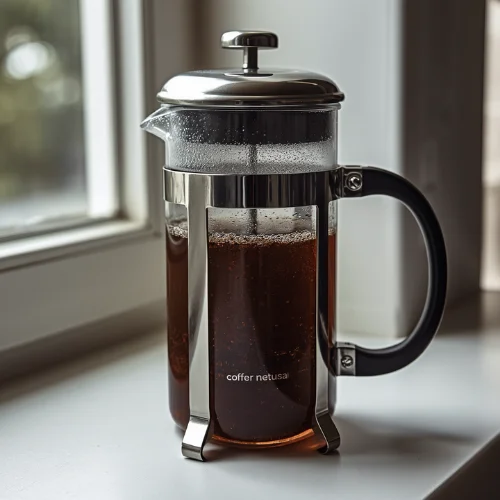
This method takes overnight but produces the smoothest, least acidic iced coffee possible.
What You Need:
- French press
- Coarsely ground coffee
- Cold water (room temperature or from the fridge)
- 12–16 hours of time
- A cup or glass
Steps:
- Fill your French press with coarsely ground coffee. Use a 1:5 ratio (1g coffee to 5g water) for a concentrate, or 1:8 if you want it ready-to-drink. The concentrate method gives you more control; ready-to-drink is simpler.
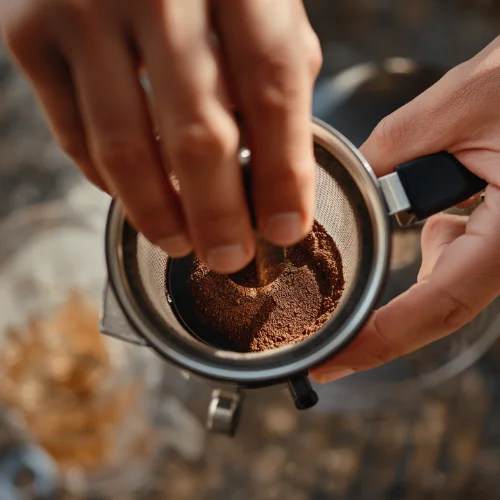
- Add cold water slowly. Stir as you pour to make sure all the grounds are submerged. You want every ground in contact with water.
- Cap the French press loosely. Don’t seal it tight; you just want to keep dust out. Leave it on your counter or in the fridge.
- Wait 12–16 hours. Overnight is ideal. The longer it sits, the more slowly the coffee extracts, which is exactly what we want for cold brewing. Room temperature vs. fridge doesn’t make a huge difference, but cold water does extract slightly slower.
- Press down the plunger slowly. This separates the grounds from the liquid. Go gently — rushing this can push fine particles into your brew.
- Pour into a cup and add ice. If you made a concentrate, add water or milk to dilute. If you made ready-to-drink, pour straight over ice.
Why this works: Cold water extracts coffee much more slowly than hot water. This means fewer harsh compounds and sour notes make it into your cup. What you get is a smooth, sweet, full-bodied concentrate that’s actually less acidic than hot-brewed coffee.
Comparing the Two Methods
| Aspect | Hot Brew Over Ice | Cold Brew |
|---|---|---|
| Time | 5 minutes | 12–16 hours |
| Flavor | Bright, complex, acidic (in a good way) | Smooth, sweet, low acid |
| Body | Medium to full | Full and creamy |
| Caffeine | Standard (about 95–200mg per 8oz) | Slightly higher if using concentrate |
| Best For | People in a hurry; bright coffee lovers | Batch brewing; acid-sensitive stomachs |
| Equipment | Just a French press | French press + time |
Real talk: If you have time, cold brew tastes noticeably smoother. If you’re making coffee right now, hot brew over ice tastes like real coffee — complex and alive. Neither is “better.” Pick based on your schedule and mood.
Common Mistakes to Avoid
Using a fine grind. Cold brewing with fine grounds creates sediment and muddy coffee. Stick with a coarse grind (similar to what you’d use for a standard hot French press brew).
Forgetting to chill your glass. A cold glass keeps your drink cold longer and improves the experience.
Over-diluting with ice. If you start with regular coffee (1:15 ratio) and then dump it over a ton of ice, you’re watering it down. Use a 1:10 ratio if you know you’re going over ice, or fill your glass only halfway with ice.
Pressing the plunger too fast during cold brew. This pushes fine particles through the mesh, making your coffee cloudy or gritty. Slow, steady pressure takes 30–60 seconds and is worth the wait.
Waiting longer than 16 hours for cold brew. After 16 hours, extraction plateaus. Waiting 24 hours doesn’t make it better — it just takes up fridge space.
Level Up: Flavored Iced Coffee
Once you’ve mastered the basic methods, try adding flavor during brewing:
- Cold brew concentrate with vanilla: Add 1/2 teaspoon of vanilla extract to a batch of cold brew concentrate. Stir and store in the fridge.
- Hot brew with cinnamon: Add a cinnamon stick to your French press during the hot brew. Remove before pressing, then pour over ice.
- Cold brew with cardamom: Crush a few cardamom pods and add them to your French press during cold brewing. The result is warm, slightly spiced, and unexpected.
None of these require special syrups or additives. Just spices and extracts you probably have at home.
Troubleshooting

Coffee tastes watered down? Your ice is melting too much. Start with less ice, or chill your glass first and use it as a cooling vessel instead of relying on ice to do all the work.
Cold brew tastes weak or sour? You’re either not waiting long enough (minimum 12 hours) or your grind is too fine. Try a coarser grind and wait the full 16 hours.
Iced coffee tastes bitter? Your water was too hot (over 205°F) during hot brewing. Let boiling water cool for 30 seconds before pouring. Or, if using cold brew, your grounds have been steeping too long beyond 16 hours.
Too many fine particles in the cup? You’re pressing the plunger too quickly during cold brew, or you’re using a fine grind. Slow down your press and use coarse grounds.
Key Takeaways
- French press is ideal for iced coffee. Immersion brewing works just as well with cold water as it does with hot.
- Hot brew over ice is fast. Brew normally, pour over ice in a half-filled press or cup. Takes about 5 minutes.
- Cold brew is smooth and low-acid. Steep overnight, press gently, dilute if needed. Tastes sweet and full-bodied.
- Grind matters. Always use coarse grounds for a French press, whether you’re brewing hot or cold.
- Ice management is key. Pre-chill your glass, use the right ratio, and don’t rely on ice alone to cool your coffee without diluting it.
FAQ
Can you make iced coffee in a French press?
Yes, you can make excellent iced coffee in a French press two ways. Brew it hot (5 minutes) and pour over ice, or make cold brew by steeping the grounds overnight in cold water. Both methods work well and produce different flavor profiles.
What’s the difference between hot brew and cold brew in a French press?
Hot brew over ice is fast (about 5 minutes) and produces bright, complex coffee. Cold brew takes 12–16 hours but produces smoother, less acidic coffee with a fuller body. Choose hot brew if you’re in a hurry, and cold brew if you want to batch-brew or prefer lower acidity.
What grind size should I use for French press iced coffee?
Always use a coarse grind for a French press, whether you’re brewing hot or cold. A coarse grind prevents fine particles from passing through the mesh filter and keeps your iced coffee smooth and sediment-free.
How much ice should I use for hot brew iced coffee?
Fill your glass or cup about halfway with ice before pouring hot French press coffee over it. This gives the ice enough surface area to cool the coffee without fully melting and over-diluting it. Pre-chill your glass for even better results.
How long does cold brew take in a French press?
Cold brew in a French press takes 12–16 hours, usually overnight. You add coarsely ground coffee and cold water to the French press, let it sit at room temperature or in the fridge, then press down the plunger gently to separate the grounds from the liquid.
Is cold brew coffee less acidic than hot brew?
Yes, cold brew is noticeably less acidic than hot-brewed coffee because cold water extracts more slowly, pulling fewer acidic compounds from the grounds. This makes cold brew a good choice for people with acid-sensitive stomachs.
Recommended Reading
Related guides on our site for iced coffee and French press brewing:
- French Press vs. Pour-Over: Which Brewing Method Is Better for You? — comparing two popular methods side by side
- Complete Guide to Cold Brew Coffee: Concentrate vs. Ready-to-Drink — deep dive into cold brewing ratios and timing
- The Best Coffee Beans for Iced Coffee — choosing coffee that tastes great cold