
Quick Verdict
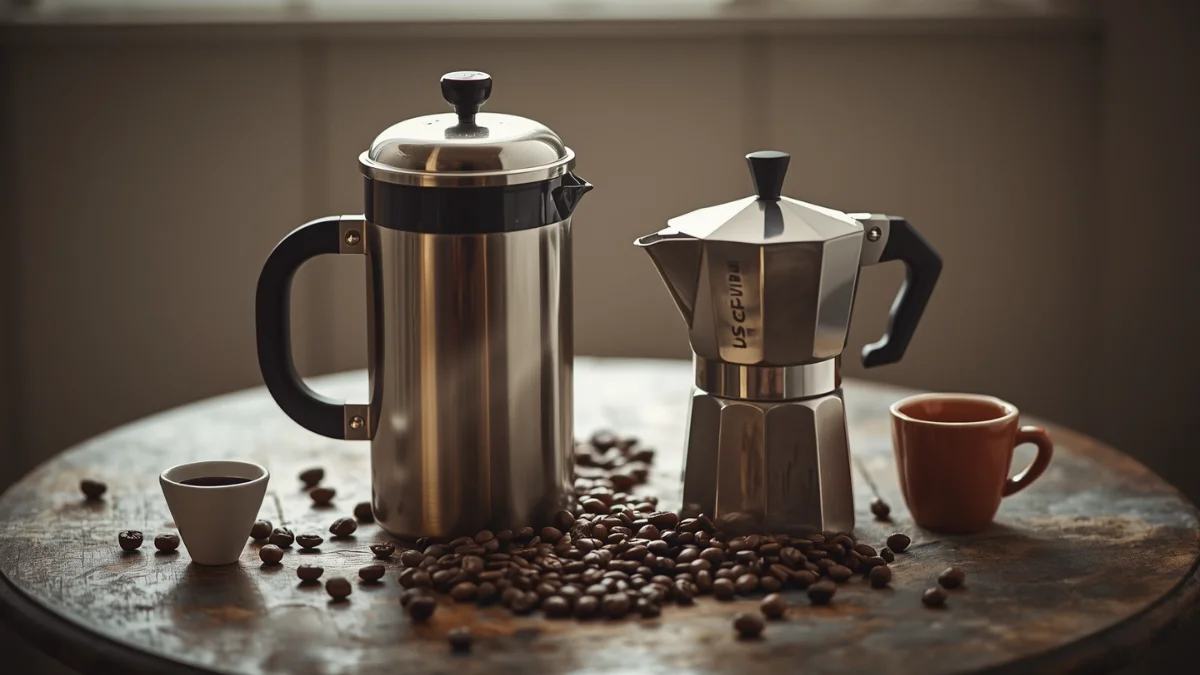
Best for most coffee drinkers: a French press. Immersion brewing is more forgiving, scalable, and controllable — and it works with the coarse grind your grinder already does well.
Best for anyone who wants intensity and something closer to espresso: a moka pot. It brews a concentrated, syrupy cup at roughly 1–2 atmospheres of steam pressure, and it’s the better pick for milk drinks, tiny kitchens, and travel — as long as you accept a more finicky brew.
Choose a French press if: you drink 2–4 cups at a time, like a full-bodied but clean cup, want to adjust strength easily, or mainly brew for more than one person.
Choose a moka pot if: you drink small, strong servings, make milk-based drinks, want something compact and nearly unbreakable, or you’re chasing that dense, espresso-adjacent shot.
The 30-second answer
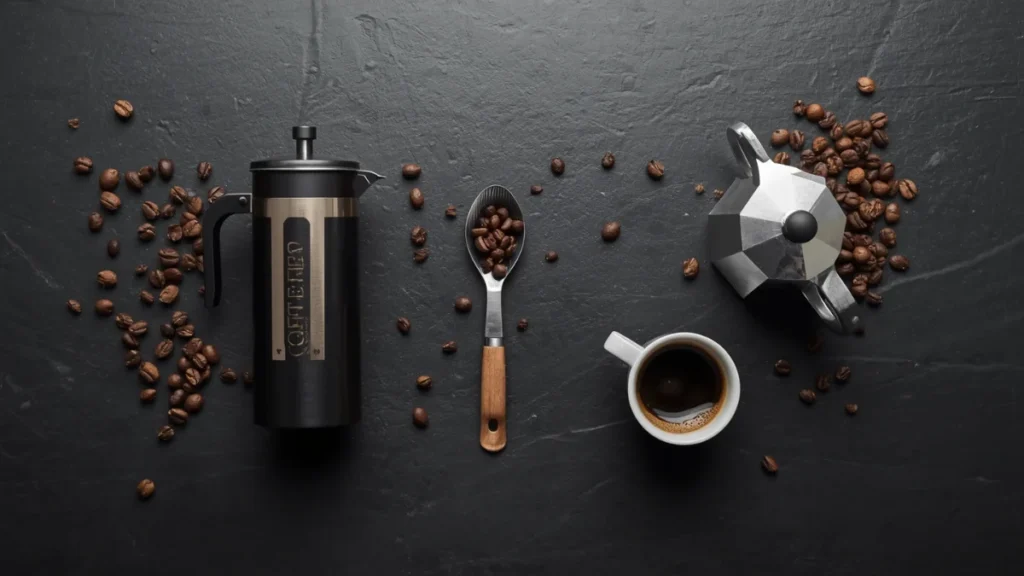
A French press is an immersion brewing method with no pressure: coarse grounds steep fully in water for about four minutes, then a metal mesh filter pushes them down. You get a rounded, full-bodied cup with oils intact — and a little sediment.
A moka pot is a pressure brewer on a stove: water in the base is pushed up through a bed of fine-to-medium grounds by steam pressure, producing a short, concentrated, noticeably stronger cup with a heavier, darker flavor and far less water in the brew.
They aren’t so much competitors as two different tools for two different drinks. This comparison covers all nine factors that actually matter — including grind size, strength, cleaning and cost — plus the specific models worth buying in each camp.
How We Compared Them
This comparison is based on the mechanics of each brewing method and the equipment involved, not on lab testing:
- Brewing principle — immersion vs steam pressure, and what that does at the particle level
- Flavor profile — body, clarity, oils, sediment
- Strength and concentration — coffee-to-water ratio and what lands in the cup
- Grind size requirements — and how forgiving each brewer is
- Ease of use — learning curve, timing, and repeatability
- Cleaning and maintenance — daily effort and long-term care
- Capacity and serving size — one drinker or four
- Durability and price — what each costs and how long it lasts
- Versatility — iced coffee, milk drinks, camping, travel, induction hobs
Our Review & Research Disclaimer
At RoastVista, our product reviews are based on detailed research and analysis rather than hands-on physical testing. We study manufacturer information, product specifications, independent sources, and feedback from real users to understand a product’s performance, quality, features, strengths, and limitations. We also compare products with similar alternatives to provide a broader perspective.
Our goal is to give prospective buyers a clear, balanced, and well-researched picture of each product so they can make a more informed purchasing decision.
At-a-Glance Comparison
| Factor | French Press | Moka Pot |
|---|---|---|
| Brewing principle | Immersion, no pressure | Steam pressure, roughly 1–2 bar |
| Cup strength | Moderate — you control it with the ratio | Strong and concentrated |
| Body / texture | Full-bodied, oils retained, some sediment | Dense, syrupy, dark |
| Clarity | Lower (metal filter lets fines through) | Moderate |
| Grind size | Coarse | Fine-medium (table salt) |
| Brew time | ~4 minutes steep | ~5 minutes on the stove |
| Typical capacity | 3–8 cups (12–34 oz) | 1–6 “cups” (2–10 oz) |
| Best for | 2–4 mug batches, iced coffee base | Milk drinks, small strong servings |
| Forgiving? | Very | Moderately — heat control matters |
| Cleaning | Easy — rinse, occasional deep clean | Moderate — 3 parts, gasket care |
| Durability | Glass models can break; stainless lasts | Very durable; aluminum dents, rarely breaks |
| Induction hobs | N/A (electric or stainless versions) | Needs a steel/induction-rated model |
| Typical price | $25–$130 | $25–$120 |
| Evenness / repeatability | High if you weigh and time | Medium — stove heat varies |
Head-to-Head: The Factors That Matter
1. Brewing method: immersion vs pressure
The French press is the oldest simple method. Coarse grounds and hot water sit together for a full four minutes, so extraction happens evenly and the water does all the work. Nothing about the process is aggressive — which is exactly why it’s hard to ruin.
The moka pot is a different animal. Water in the lower chamber boils, steam builds up, and the pressure pushes water up through the coffee bed and out of the central column. Because that happens quickly and under pressure, the brew lands much more concentrated, and the extraction sits closer to the bitter/roasty end of the spectrum.
Verdict: French press wins on consistency; the moka pot wins on intensity.
2. Flavor profile
A French press keeps coffee’s oils and fine particles in the cup — which is why it tastes rounder and heavier than filter coffee. A mesh filter lets some fines through, so you get body with a little grit at the bottom of the mug (our guide to reducing sediment in French press coffee fixes that).
A moka pot produces a darker, denser flavor: less volume, more intensity, with a slightly metallic edge that some drinkers love and others find harsh. Temperature control on the stove decides whether you land on “rich” or “scorched” — too much heat and the coffee cooks.
Verdict: French press for a smooth, rounded cup; moka pot for a punchy, espresso-adjacent one.
3. Strength and caffeine
This is where the moka pot wins decisively — but not for the reason most people assume. A moka pot uses a much tighter coffee-to-water ratio, so each ounce is more concentrated. The total caffeine in a full moka pot is broadly comparable to a large French press serving; it’s the per-sip strength that is dramatically higher.
If you want one small, powerful serving rather than a large mug, the moka pot is the tool. If caffeine per mug is your metric, a French press with a strong ratio gets you there with far more forgiving brewing. Our French press coffee ratio guide shows exactly how to brew from mellow to strong.
Verdict: moka pot for intensity; French press for a big, strong but gentler mug.
4. Grind size and how forgiving each is
Moka pots want a fine-medium grind — finer than drip, coarser than espresso, roughly the consistency of fine table salt. Get it too fine and the brew stalls or turns bitter; too coarse and it’s weak and watery. Our coffee grind size chart covers where moka sits on the dial.
French presses want a coarse grind, and they’re far more tolerant of variation. That matters if your grinder isn’t great: coarse grinds are easier to produce consistently, so a budget grinder performs better with a press than with a moka pot. If your grinder needs attention, our grinder cleaning guide and the French press grind size guide both help.
Verdict: French press is the easier, more forgiving brew.
5. Ease of use on a weekday morning
French press: boil water, add coarse grounds, steep for 4 minutes, plunge, pour. There’s nothing to master.
Moka pot: fill the base to the valve, add grounds without tamping, screw on the top, place it on medium heat with the lid open, and pull it off the moment the flow turns pale and sputters. Move too slowly and the coffee scorches; pre-heat your water and it’s smoother still.
Verdict: French press, clearly, for hands-off mornings.
6. Cleaning and care
A French press is a rinse, a plunge, and a wash of the mesh. A moka pot is three components — and it doesn’t want a dishwasher. You rinse it with hot water, dry it well, and replace the gasket and filter every year or so. Never scrub aluminum models with abrasives. Coffee oils build up in the upper chamber, so a periodic vinegar or espresso machine cleaner soak keeps the flavor clean.
Verdict: French press is easier; the moka pot asks for 30 seconds more care.
7. Capacity: one drinker or four
Moka pots are sold by nominal “cups” that are really shots — a 6-cup pot yields roughly 8–10 oz of coffee total. That’s two real servings, not six. French presses are sold in 12, 17, 34, and 51 oz sizes and genuinely serve a table; a 34 oz press makes about four mugs.
Verdict: French press for households and batch brewing; moka pot for one or two people.
8. Durability, price and versatility
Entry prices are similar — $25–$40 buys a decent version of either. At the top end, a double-walled insulated stainless press and a premium steel moka pot both land in the $70–$130 range.
Glass presses break; stainless presses are effectively indestructible. Moka pots in aluminum are light and cheap but dent and can’t go on an induction hob — you need a stainless or induction-rated model. Both travel well; the moka pot is the more packable of the two and works on a gas camp stove or a hotel hotplate.
Verdict: a tie on price; the moka pot wins on travel toughness, the French press on serving size.
9. What each one is genuinely good at
Beyond the daily cup: both make excellent iced coffee (brew strong, pour over ice — see our cold brew coffee guide for the concentrate method), and both can serve as a base for milk drinks. But a moka pot is far better at making something thick enough to hold its own under steamed milk, which is why it’s the classic home cappuccino workhorse.
The Picks: What We’d Actually Buy
Moka pots
1. Bialetti Moka Express — best overall moka pot.
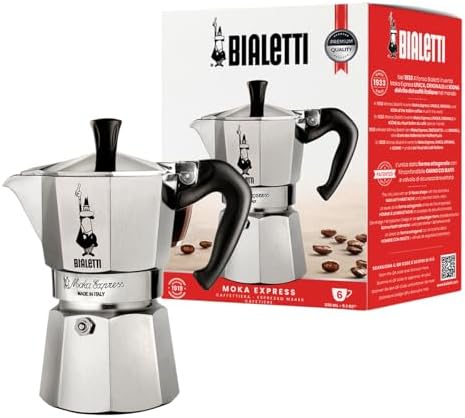
Classic Italian stovetop coffee maker, first introduced in 1933.
Makes up to 3 espresso-style cups, with a 4.3 oz capacity.
Made in Italy from durable aluminium.
Features a patented safety valve and comfortable ergonomic handle.
Suitable for gas and electric stoves; use a Bialetti adapter for induction cooktops.
The original 1933 design, still the benchmark, and the one most widely reviewed. Its aluminum body heats fast, the classic octagonal shape spreads heat evenly, and replacement gaskets and filters are cheap and easy to find.
2. Bialetti Brikka — best for a thicker, crema-style cup.

Designed to produce rich, crema-style stovetop coffee.
Prepares up to 2 espresso-style cups, with a 3.4 oz capacity.
Includes a measuring cup for easier water and coffee preparation.
Simple brewing process with a helpful gurgling cue when the coffee is ready.
Works with gas, electric, and propane stoves; requires an adapter for induction.
A different valve design that delivers a noticeably denser, more crema-like result. Choose it if you’re chasing espresso-adjacent texture rather than classic moka clarity.
3. Bialetti Venus — best stainless steel pick.
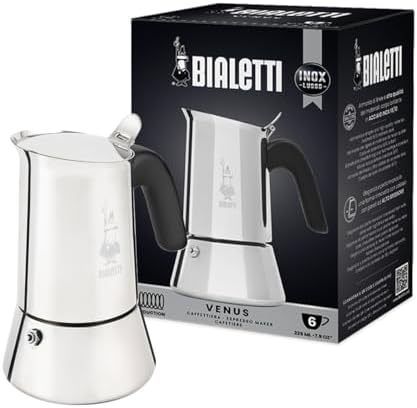
Modern stainless-steel coffee maker combining classic moka brewing with induction compatibility.
Made from durable 18/10 stainless steel for long-term use.
Produces up to 6 espresso-style cups, with a 7.9 oz capacity.
Suitable for gas, electric, ceramic, and induction hobs.
Easy to use: add water and coffee, heat until it begins to gurgle, then remove from the stove.
Stainless construction means no aluminum aftertaste, better dishwasher tolerance, and compatibility with induction hobs. It’s the pick if you have an induction cooktop or want a low-maintenance pot.
4. Alessi 9090 — premium design option.

Stylish stovetop espresso maker designed by Richard Sapper.
Crafted from mirror-polished 18/10 stainless steel.
Magnetic base makes it suitable for induction cooktops.
Holds up to 10.1 fl oz of coffee.
Available in 1-, 3-, 6-, and 10-cup sizes.
A design-museum piece with a cast-stainless body and excellent thermal properties. You’re paying as much for design as for brewing, and that’s a legitimate reason to buy it. (ASIN to confirm in SiteStripe.)
French presses
Rather than repeat our full reviews here, start with the model that matches your priority:
- Bodum Chambord French Press Review — the classic glass-and-chrome press, our default budget-friendly recommendation
- ESPRO P3 French Press Review — the best choice if sediment is what puts you off French press coffee
- Frieling Double-Wall Stainless Steel French Press Review — the premium heat-retention workhorse for larger batches
- Best Insulated Stainless Steel French Presses — the full roundup if durability and heat retention come first
- MuellerLiving French Press Review — the value pick
Whichever you choose, the beans matter as much as the hardware — our best coffee beans for French press guide covers which roasts suit a coarse grind and full immersion.
Common Mistakes With Each Brewer
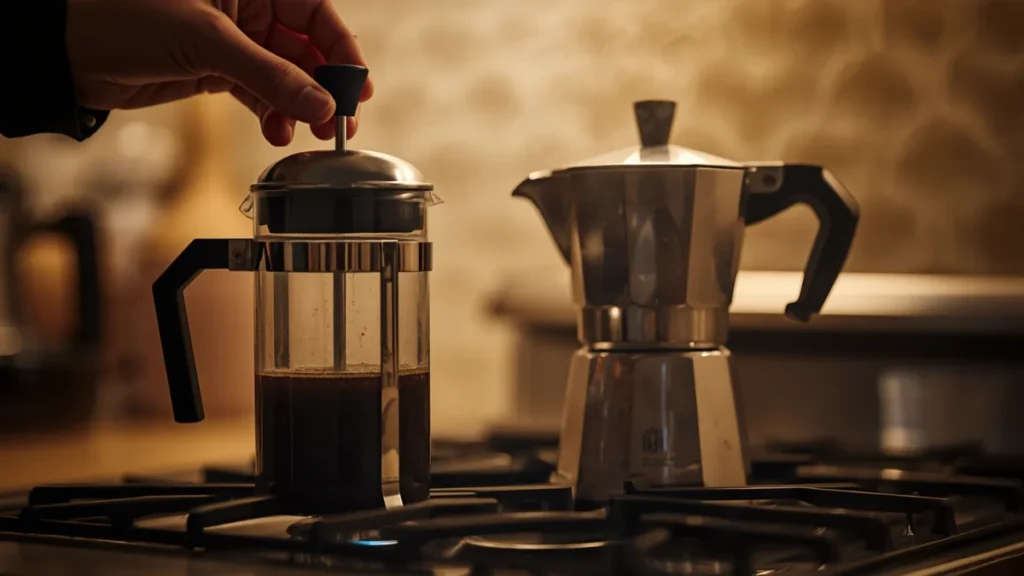
French press: grinding too fine (sludge and a stalled plunge), steeping too long (bitterness), plunging aggressively (fines in the cup), and leaving the coffee sitting on the grounds after plunging. Fix the last one by decanting into a second carafe or a thermal mug.
Moka pot: tamping the grounds (never do this — it blocks the flow), using an espresso-fine grind, blasting it on high heat, filling past the safety valve, and walking away while it brews. Also: don’t press down hard when packing the basket — level it and move on.
If either brew comes out harsh, our guide to why your coffee tastes sour and how to fix it fast covers adjustments to grind, temperature, and ratio.
Frequently Asked Questions
Is a moka pot stronger than a French press?
Yes, in the cup. A moka pot uses a much tighter coffee-to-water ratio and brews under pressure, so each ounce is considerably more concentrated. The total caffeine in a full moka pot is roughly comparable to a large French press, but the per-sip strength is much higher.
Does a moka pot make real espresso?
No. Espresso is brewed at around 9 bar of pressure; a moka pot generates roughly 1–2 bar. The result is a strong, dense, espresso-adjacent coffee — but it isn’t espresso, and it shouldn’t be treated as a substitute in recipes that depend on true espresso extraction.
Can I make a latte or cappuccino with a moka pot?
Yes, and it’s the classic home method in Italy. Brew a full moka pot, heat and froth your milk, and use the strong moka coffee as the base. The concentrated brew stands up to milk far better than a French press cup does.
Which is better for camping or travel?
A moka pot, especially a stainless model. It’s compact, has no glass to break, and works on a gas camp stove, hotplate, or open flame (with a suitable trivet). A stainless French press is a reasonable second option, and doubles as a mug in a pinch.
Can I use a moka pot on an induction hob?
Only if it’s induction-rated. Aluminum moka pots won’t work on induction — use a stainless steel model such as a Bialetti Venus, or place the pot on an induction adapter plate.
Which brewer is cheaper to run day-to-day?
Both use similar amounts of coffee per serving. Moka pots cost less upfront on average ($25–$40 for a good aluminum model) and need only occasional gasket replacement. French presses cost a little more for a durable insulated model but have almost no consumable parts.
Which is better for iced coffee?
Both work. Brew strong, cool quickly, and pour over ice. A French press gives you more volume for the same effort, while a moka pot produces a concentrate you dilute to taste. See our cold brew coffee guide for ratio guidance on how to dilute cold brew coffee properly.
Final Thoughts
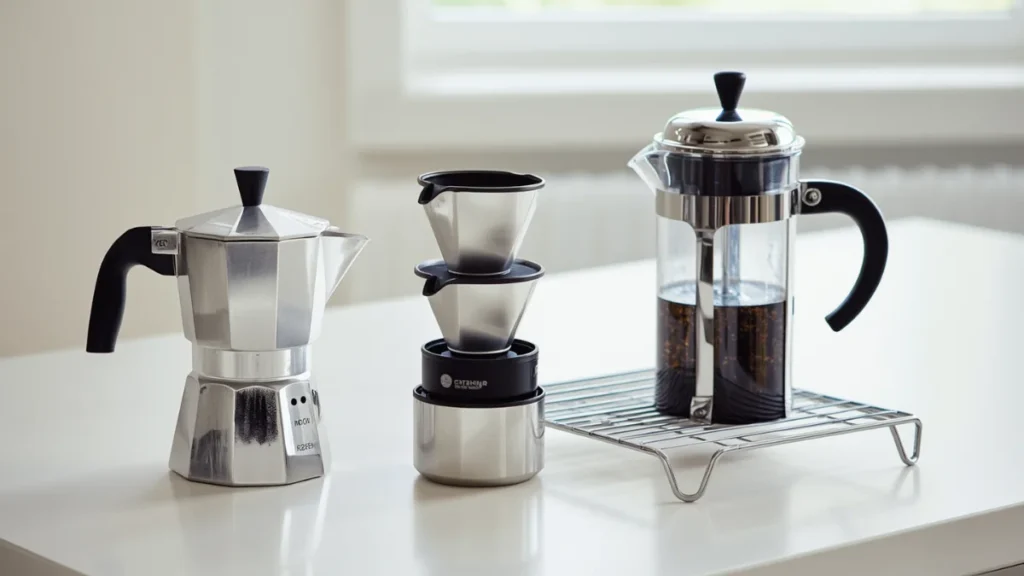
If you want one brewer and you drink more than a single small cup, buy the French press — it’s forgiving, scales to a table, and works with coarse grounds. If you want concentrated coffee for milk drinks, small servings, or travel, buy a moka pot — the Bialetti Moka Express is the safe, cheap, proven choice.
Honestly, these two aren’t rivals: a French press is the everyday batch brewer, and a moka pot is the strong-shot machine. Many home brewers eventually own both, and between them they cover almost everything except true espresso.
Related Posts
- French Press vs Pour-Over (2026)
- French Press Coffee Ratio Explained
- French Press Grind Size Guide
- Best Coffee Beans for French Press
- How to Reduce Sediment in French Press Coffee
- Best Insulated Stainless Steel French Presses