
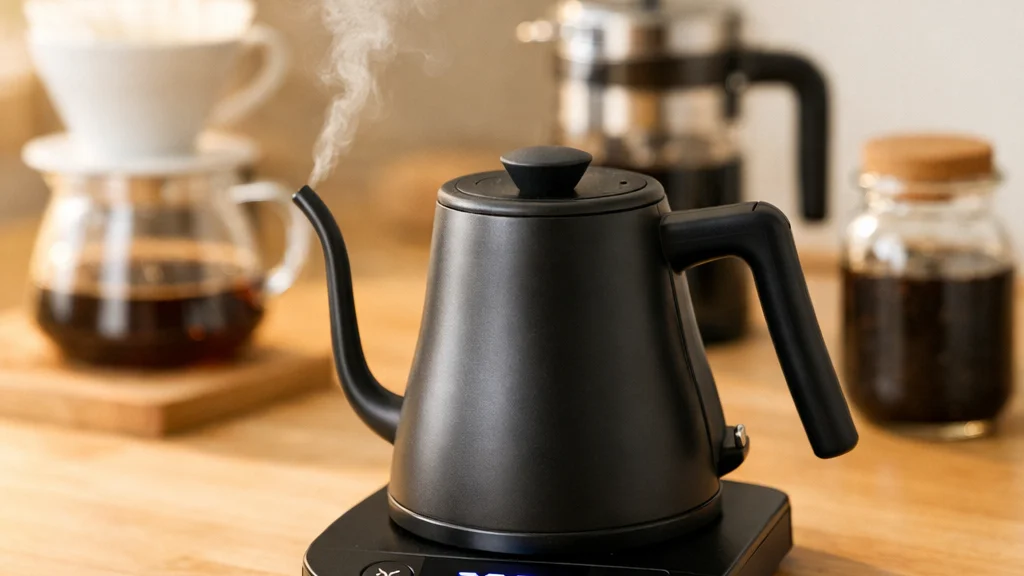
Quick Answer Box
The best water temperature for most coffee brewing is 195°F–205°F (90°C–96°C). Water that’s too cool under-extracts and produces sour, thin coffee. Water that’s too hot over-extracts and produces bitter, harsh coffee. Cold brew is the exception — it uses room-temperature or cold water and relies on time instead of heat.
Introduction
Water temperature is one of the quieter variables in coffee brewing. Most beginners focus on grind size, ratio, and beans — which makes sense. But temperature is working in the background on every brew, affecting how quickly flavor compounds dissolve into your cup and which ones end up there.
The good news: you don’t need laboratory precision to get this right. A workable range, a basic understanding of what happens at each extreme, and a simple method for measuring (or estimating) temperature is all you need.
This guide covers the right temperature for pour over, French press, drip coffee, AeroPress-style brewing, moka pot, and cold brew — and explains how to adjust when something tastes off.
Best Drip Coffee Makers (2026): 6 Picks for an Easy Morning Cup
Learn How to Use an AeroPress with this complete beginner guide for 2026
Why Water Temperature Matters for Coffee
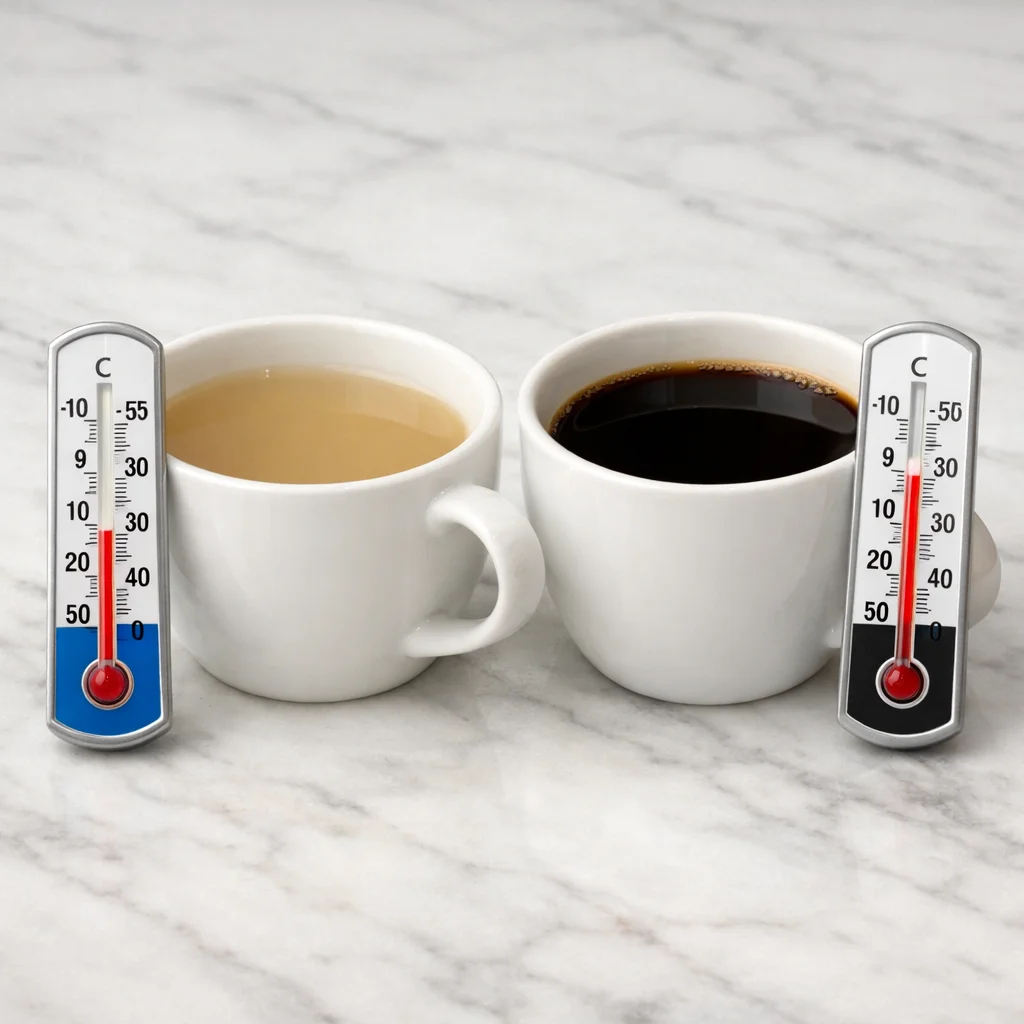
Hot water is a solvent. It dissolves flavor compounds from coffee grounds during extraction. Temperature directly controls how fast that extraction happens — and which compounds get pulled into the cup.
Hotter water extracts more aggressively and quickly. Cooler water extracts more slowly and selectively.
The compounds in coffee don’t all extract at the same rate. Acids come out first, then sugars and other pleasant compounds, then bitter and astringent compounds last. Temperature affects where in that sequence your brew stops.
Too cool: Water doesn’t extract efficiently. Acids dominate the cup. The result is thin, sour, under-extracted coffee that tastes sharp and hollow.
Too hot: Water extracts too aggressively, pulling bitter compounds into the cup before the brew is done. The result is harsh, dry, over-extracted coffee.
In the right range: Water extracts a balanced mix of acids, sweetness, and depth — producing a full, rounded cup.
For a deeper look at how extraction works, see Coffee Extraction Explained and Under-Extracted vs Over-Extracted Coffee.
The Best General Coffee Brewing Temperature Range
For most hot-water brewing methods, the widely accepted starting range is 195°F–205°F (90°C–96°C).
This isn’t a rigid rule. It’s a well-tested starting point that works for most beans, most roast levels, and most brewing situations.
Several factors influence where within that range you should brew:
- Roast level: Lighter roasts are denser and benefit from hotter water. Darker roasts extract more readily and can taste harsh with very hot water.
- Grind size: Finer grinds extract faster, which slightly reduces the need for high temperature. Coarser grinds extract slower and may benefit from the hotter end of the range.
- Brewing method: Immersion methods like French press and drip machines behave differently from flow-through methods like pour over.
- Coffee freshness: Freshly roasted coffee releases CO2 that can slightly slow water penetration. Very fresh beans sometimes benefit from slightly cooler water to slow extraction and prevent harsh results.
Coffee Brewing Temperature Chart by Method
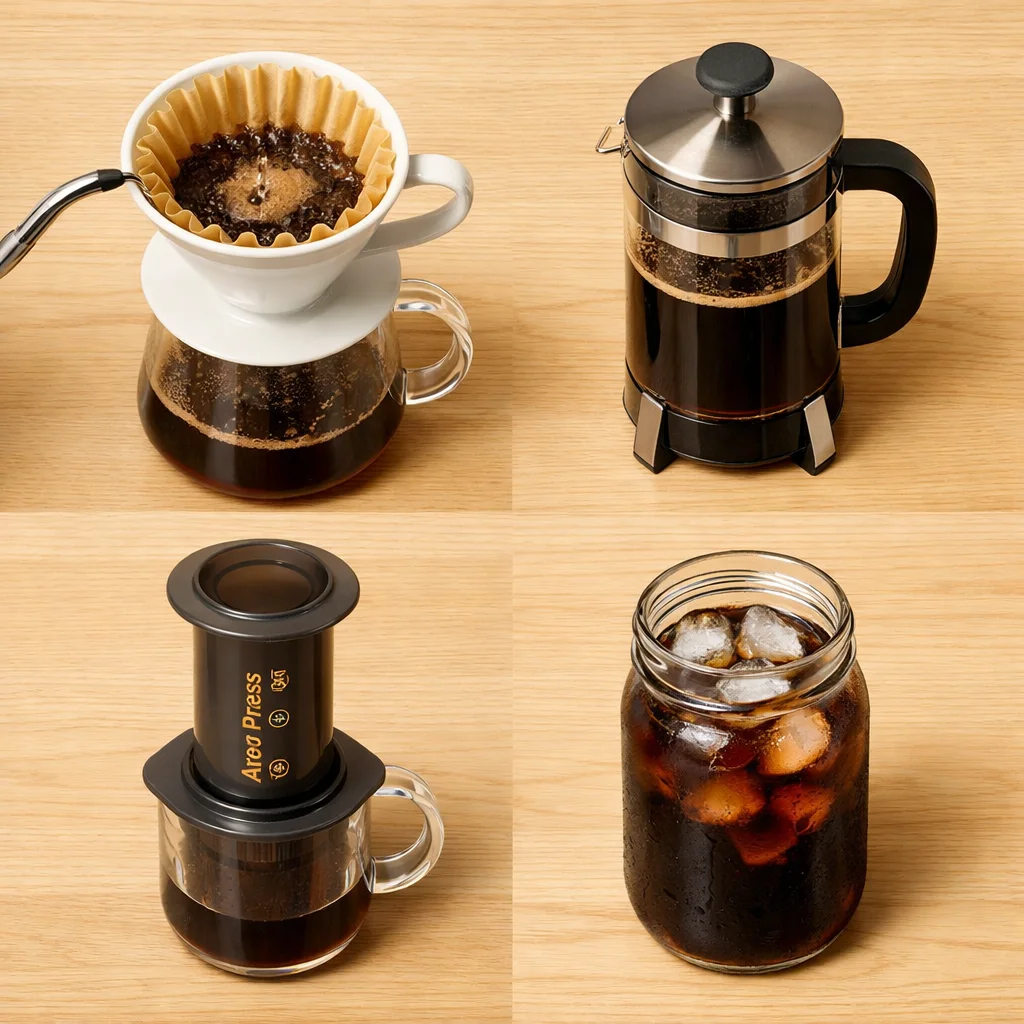
| Brewing Method | Recommended Temperature | Notes |
|---|---|---|
| Pour over | 195°F–205°F / 90°C–96°C | Use hotter water for lighter roasts |
| French press | 195°F–205°F / 90°C–96°C | Steep time also matters significantly |
| Drip coffee maker | Usually 195°F–205°F / 90°C–96°C | Machine quality affects actual water temperature delivered |
| AeroPress-style | 175°F–205°F / 80°C–96°C | Lower temperatures suit darker roasts well |
| Moka pot | Start with hot water in the base | Avoids scorching grounds during heat-up |
| Cold brew | Room temperature or cold water | Long steeping replaces heat entirely |
Best Water Temperature for Pour Over Coffee
Pour-over is one of the most temperature-sensitive brewing methods because water flows through the grounds quickly, and extraction depends heavily on that brief contact time.
The recommended range is 195°F–205°F (90°C–96°C), but where you sit within that range matters.
For light roasts: Aim for the hotter end — around 200°F–205°F (93°C–96°C). Light roasts are denser than medium or dark roasts. They need more heat to break down cellular structure and properly dissolve flavor compounds. Brewing a light roast with cooler water often produces a flat, sour cup, even with the correct grind and ratio.
For medium roasts: 195°F–200°F (90°C–93°C) is a reliable starting point. This range extracts sweetness and body without pushing into harshness.
For dark roasts: Stay at the lower end — around 195°F (90°C). Dark roasts are more porous and extract quickly. Higher temperatures can accelerate bitterness and mask the chocolate and caramel notes that make dark roast appealing.
For pour-over-specific techniques, see Best Water Temperature for Pour Over Coffee and How to Pour Water for Pour Over Coffee.
Best Water Temperature for French Press Coffee
French press is an immersion brewing method. Grounds sit in hot water for several minutes before the plunger separates them. This longer contact time means temperature has a slightly different dynamic than pour over — steep time and grind size play a larger role in the overall extraction.
A reliable starting point for French press is 200°F (93°C). This sits comfortably in the upper-middle of the general brewing range and produces a balanced, full-bodied cup with most medium- and dark-roasted coffees.
A few practical notes:
- Using water slightly below boiling (rather than right at boiling) reduces the risk of scorching grounds.
- Because steeping time is fixed at around 4 minutes for most French press recipes, the temperature determines how much extraction occurs during that window. A slightly cooler temperature won’t ruin a French press the way it might a pour-over — but consistency still matters.
- Lighter roasts in French press benefit from slightly hotter water, same as pour over.
For a complete guide to the French press method, see our French Press Coffee Guide and French Press Coffee Ratio Explained.
Best Water Temperature for Cold Brew Coffee
Cold brew is a different category entirely. It doesn’t use heat as an extraction tool. Instead, it relies on a long steep — typically 12 to 24 hours — with room-temperature or cold water.
Without heat, fewer acidic and bitter compounds extract from the grounds. This is why cold brew naturally tastes smoother and less acidic than hot-brewed coffee made with the same beans.
Room-temperature steeping (around 68°F–72°F / 20°C–22°C) produces a slightly faster extraction than refrigerator steeping and can bring out a bit more flavor complexity.
Refrigerator steeping (around 35°F–40°F / 2°C–4°C) extracts more slowly and tends to produce a cleaner, milder concentrate. It also reduces the risk of spoilage during longer steeps and is the safer option for batches steeping beyond 18 hours.
Either approach works. Refrigerator steeping is generally more practical and predictable for home brewing.
For complete brewing instructions and recommended ratios, see the Cold Brew Coffee Guide and the Cold Brew Ratio Chart.
Should You Use Boiling Water for Coffee?
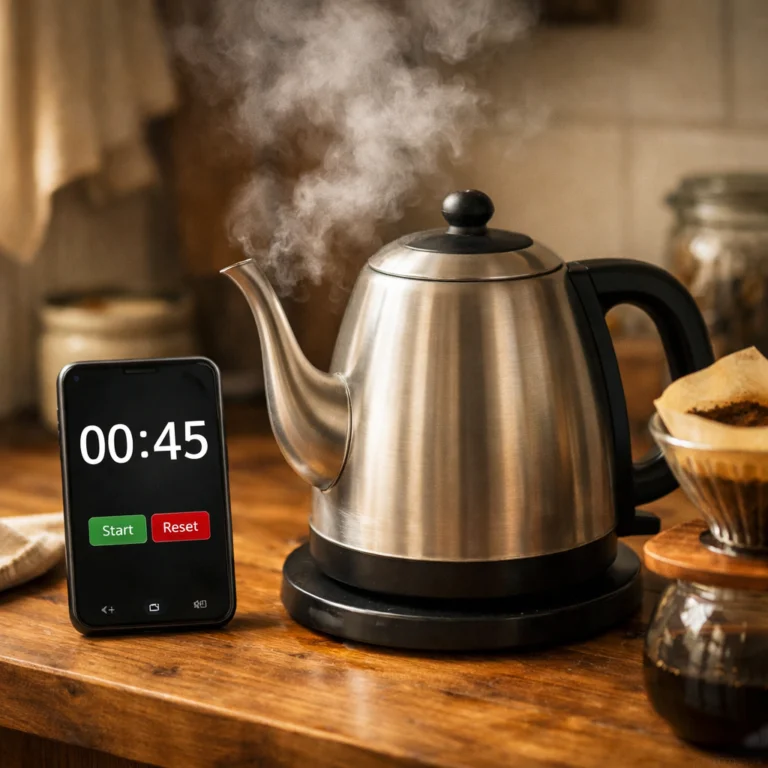
Boiling water sits at 212°F (100°C) at sea level — above the recommended brewing range for all manual methods.
Using freshly boiling water directly on coffee grounds risks over-extraction. The extra heat pulls bitter compounds out faster, particularly from medium and dark roasts. The result often tastes harsh, dry, and heavy rather than balanced.
There are two practical exceptions worth noting:
Moka pot: The moka pot heats water in a sealed base chamber. Starting with hot (but not boiling) water in the base speeds up the brewing process and reduces the time grounds spend in contact with gradually heating water, which can scorch lighter compounds. This is actually a common technique for moka pot users.
Very light roasts: Some specialty light roasts — particularly dense, high-altitude beans — can tolerate and even benefit from water close to boiling (205°F–210°F / 96°C–99°C). These are very dense beans that genuinely resist extraction at lower temperatures.
For everyone else, a simple rule works well: bring water to a full boil, then let it sit off the heat for 30–60 seconds before pouring. This typically drops temperature to approximately 200°F–205°F (93°C–96°C) — right in the optimal range — without any measuring required.
How to Measure Coffee Water Temperature at Home
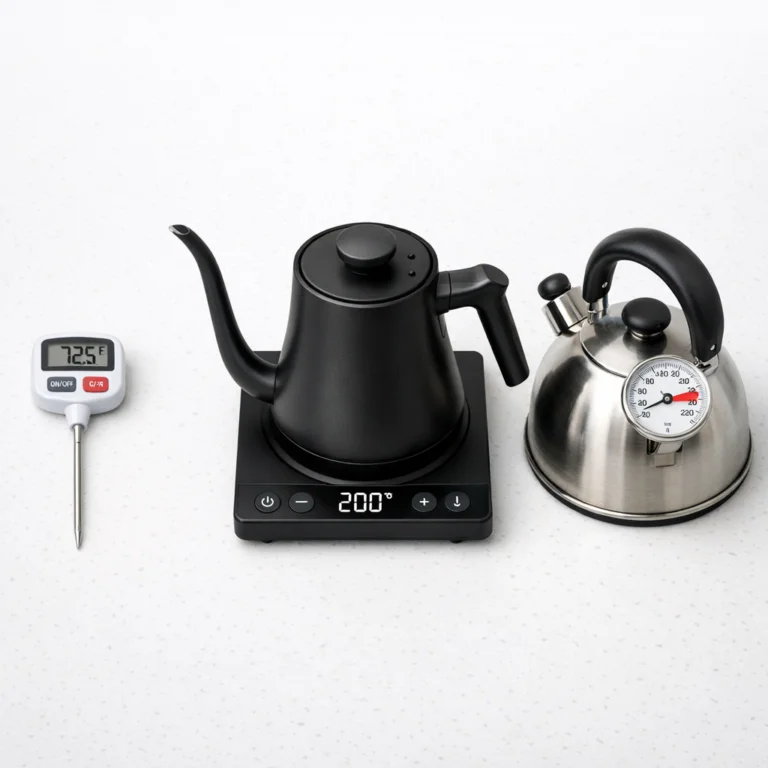
You don’t need expensive equipment to manage water temperature. These three approaches cover most situations:
Coffee thermometer: A basic instant-read kitchen thermometer costs very little and gives you an accurate reading within seconds. Insert it into your kettle or server after taking the kettle off the heat.
Temperature-controlled gooseneck kettle: This is the most convenient option for regular manual brewing. You set the target temperature, and the kettle holds it precisely. It removes all guesswork and lets you focus on pouring technique.
See Best Gooseneck Kettles for Home Brewing for options.
Waiting-time method: If you have no thermometer and no temperature control, bring water to a full boil and wait 30–60 seconds before pouring. This is approximate but produces results comfortably within the brewing range for most coffees. It’s a practical habit worth building even if you later add a thermometer.
How to Adjust Temperature When Coffee Tastes Bad
Temperature is one of several extraction variables, so it shouldn’t always be the first thing you adjust. Grind size and ratio are usually more impactful starting points. But once those are correct, temperature fine-tuning can make a real difference.
| Coffee Problem | Likely Temperature Adjustment |
|---|---|
| Sour or sharp | Raise temperature slightly — aim for the upper end of the range |
| Bitter or dry | Lower temperature slightly — try dropping 5°F and brew again |
| Weak or watery | Check ratio and grind size before raising temperature |
| Flat or dull | Use fresher beans first; then try a slightly hotter brew |
Always change one variable at a time. Changing temperature and grind size simultaneously makes it impossible to know which adjustment actually improved the cup.
FAQs
Is 200°F the best coffee temperature?
It’s one of the most reliable starting points, especially for medium roasts. It sits comfortably in the 195°F–205°F range and works well across pour-over, French press, and drip methods. Whether 200°F is ideal for your specific beans and roast level depends on a few variables — but it’s a very solid default.
Can I make coffee with water below 195°F?
Yes, but results tend to be sour and thin for most hot brewing methods. Some AeroPress recipes intentionally use cooler water (around 175°F–185°F / 80°C–85°C) with darker roasts to reduce bitterness. For pour-over and French press with light or medium roasts, water below 195°F typically yields under-extracted coffee.
How long should I wait after boiling water?
Cooking for 30–60 seconds off the heat typically drops the temperature from 212°F to approximately 200°F–205°F. For a very light roast that needs hotter water, 30 seconds is enough. For a medium or dark roast, 45–60 seconds is a good default.
Do darker roasts need cooler water?
Generally yes. Dark roasts are more porous and extract faster than light roasts. Brewing them at the cooler end of the range (around 195°F / 90°C) helps avoid unnecessary bitterness and preserves the chocolate, caramel, and nutty notes they’re valued for.
Do I need a temperature-controlled kettle?
Not strictly. The waiting-time method works reasonably well for most situations. A temperature-controlled kettle is a convenience upgrade rather than an essential, but if you brew manually every day, the consistency it provides is genuinely worthwhile.
Key Takeaways
- 195°F–205°F (90°C–96°C) is the right starting range for most hot coffee brewing methods.
- Lighter roasts benefit from hotter water; darker roasts benefit from slightly cooler water within that range.
- Cold brew is completely different — it uses cold or room-temperature water and relies on time instead of heat.
- Boiling water is usually too hot for manual brewing — let it sit for 30–60 seconds after boiling before pouring.
- Adjust temperature last, after grind size and ratio are already dialed in.
Recommended Reading
- Home Coffee Brewing Guide
- Coffee Extraction Explained
- Under-Extracted vs Over-Extracted Coffee
- Best Water for Coffee Brewing
- Best Water Temperature for Pour Over Coffee
- Best Gooseneck Kettles for Home Brewing
- French Press Coffee Guide
- Cold Brew Coffee Guide