
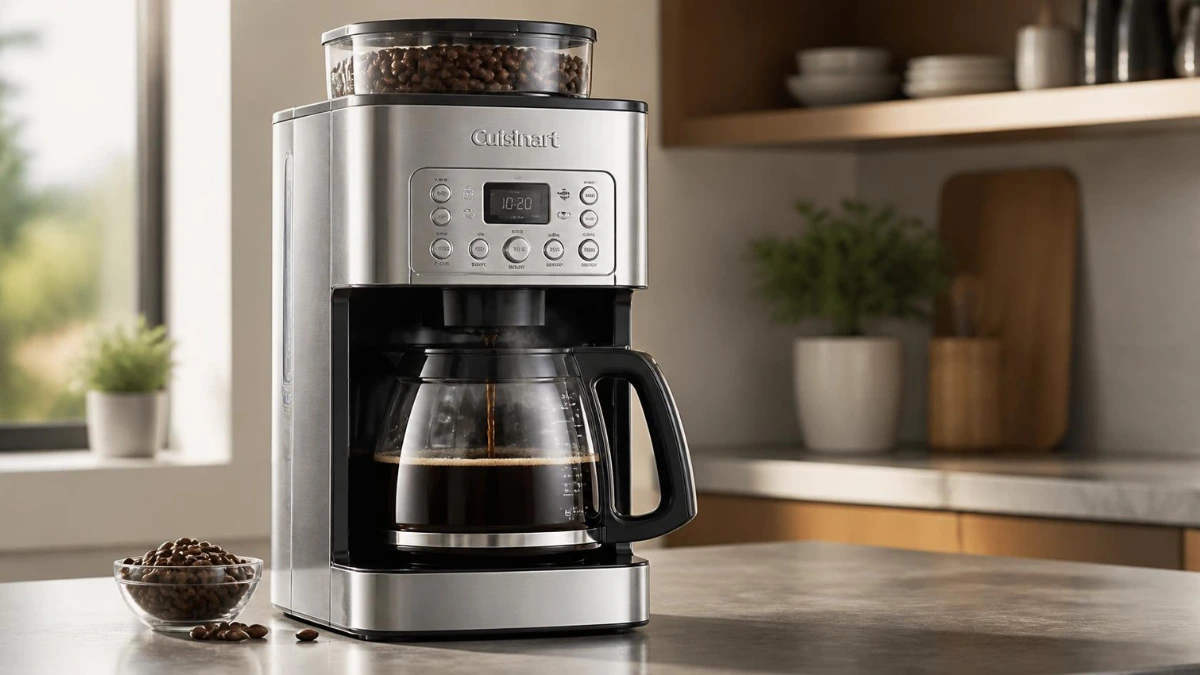
Best overall: Breville Grind Control — for café-level freshness from whole beans at the press of a button.
A coffee maker with a built-in grinder promises the simplest coffee routine: pour in beans, press start, and pour a cup no pre-ground bag can match. Whole beans hold their aromatics for weeks; ground coffee starts fading in minutes. Grinding at the moment of brewing is the single biggest flavor upgrade most drip drinkers can make.
But built-in grinders vary more than the coffee makers they live in. Some use proper conical burrs. Some use cheap blade “choppers.” Some clog with dark roasts, some are miserable to clean, and some quietly ruin good beans.
This guide sorts the real grind-and-brew machines from the marketing — five picks across every budget, plus what to check before you buy one of any brand.
Our Review & Research Disclaimer
At RoastVista, our product reviews are based on detailed research and analysis rather than hands-on physical testing. We review manufacturer information, product specifications, independent sources, and real user feedback to understand a product’s performance, quality, features, strengths, and limitations. We also compare products with similar alternatives to provide a broader perspective.
Our goal is to give prospective buyers a clear, balanced, and well-researched picture of each product so they can make a more informed purchasing decision.
Quick Verdict
| Pick | Model | Best For | Grinder Type | Approx. Price |
|---|---|---|---|---|
| 🏆 Best overall | Breville the Grind Control (BDC650BSS) | Daily drip for enthusiasts | Conical burr, 8 settings | ~$300–350 |
| Best single-serve | De’Longhi TrueBrew (DCM851) | Pod-quality convenience, bean-to-cup | Conical burr, 5 settings | ~$550–650 |
| Best value burr | Cuisinart Grind & Brew (DGB-800) | Families on a mid budget | Conical burr, auto dose | ~$180–230 |
| Most compact | Capresso CoffeeTeam Plus (465.05) | Small counters, small households | Conical burr, 6 settings | ~$150–190 |
| Best budget | BLACK+DECKER Mill & Brew (CM5000B) | First grind-and-brew under $70 | Blade (see caveat) | ~$50–70 |
Approximate price bands at publication — confirm the live Amazon listing before purchase.
At-a-Glance Comparison
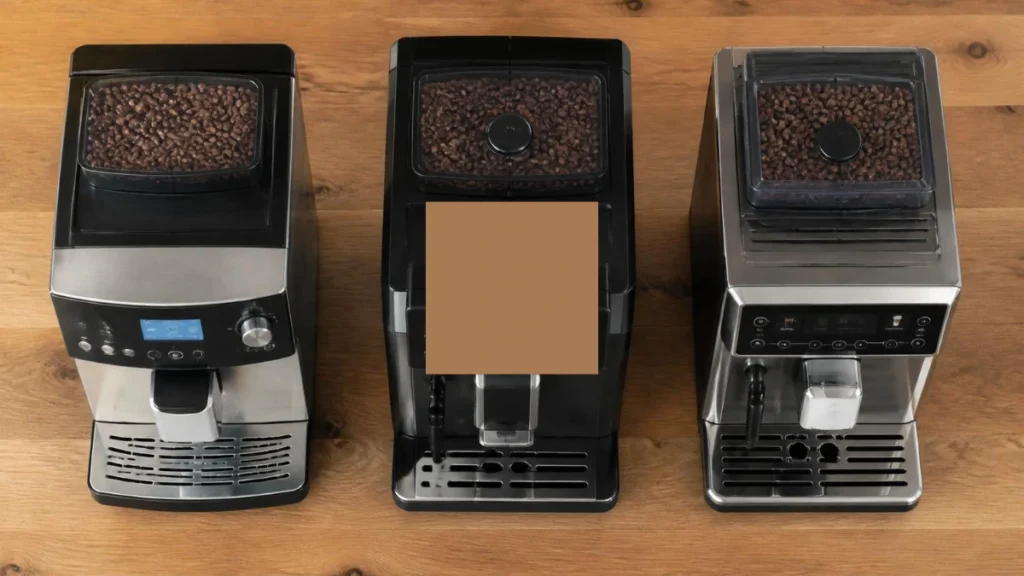
| Feature | Breville Grind Control | De’Longhi TrueBrew | Cuisinart DGB-800 | Capresso CoffeeTeam Plus | BLACK+DECKER Mill & Brew |
|---|---|---|---|---|---|
| Grinder | Conical burr | Conical burr | Conical burr | Conical burr | Blade |
| Grind settings | 8 | 5 | 1 auto-dose | 6 | Fixed |
| Capacity | 12 cups | 8 oz–24 oz cups | 12 cups | 10 cups | 12 cups |
| Filter type | #4 paper or gold | Permanent | #4 paper or gold | #4 paper | Permanent |
| Bean hopper | ½ lb | Built-in | 8 oz | 2.7 oz | 8 oz |
| Cleaning difficulty | Moderate | Easy | Moderate | Easy | Easy |
| Best for | Control + quality | Single-serve ease | Families | Small kitchens | Tight budgets |
The Picks in Detail
1. Breville the Grind Control (BDC650BSS) — Best Overall

The Breville is the only machine in this class that treats the grinder as the product and the brewer as its accessory — which is exactly the right order.
- Conical burr grinder with 8 grind settings, adjustable in meaningful steps rather than marketing steps
- Steep-and-release “Schotties” brew mode mimics pour-over extraction for smaller batches
- 12-cup thermal carafe that actually holds temperature without a hotplate cooking the coffee
- Adjustable strength and dose independent of grind — the variables the grind size chart says actually matter
The honest trade-offs: it is tall (needs under-cabinet clearance), the hopper holds half a pound of beans (freshness rule: grind within a week — see coffee storage), and the chute needs the weekly rinse we describe in maintenance below. At $300+, it costs as much as a separate burr grinder plus dripper — you are paying for automation, not value.
Who should buy it: daily drip drinkers who want one machine, café-level freshness, and the patience for one rinse cycle a week.
2. De’Longhi TrueBrew (DCM851) — Best Single-Serve Grind-and-Brew

The TrueBrew is the machine for households that disagree about coffee. Beans go in the top; it grinds, brews, and serves one 8–24 oz cup at a time over either a carafe or a single mug — no pods, no pre-ground compromise.
- Bean-adapt technology auto-adjusts dose and grind per bean batch
- Cold brew style option brews a smooth concentrate over ice — though dedicated cold brew fans may still prefer our best cold brew makers
- Self-cleaning brew unit — the least maintenance of any machine here
The Honests the most with mixed preferences: it’s expensive by a wide margin, single-serve only (a family of four brews four sequential cups), and its 5 grind settings are coarser steps than a standalone burr offers (see conical vs flat burr differences).
Who should buy it: pod-machine escapees and households with mixed preferences.
3. Cuisinart Grind & Brew DGB-800 — Best Value Burr Machine

The DGB-800 is the workhorse pick — a genuine conical burr grinder bolted to a proven 12-cup brewer, for half the Breville’s price.
- Aauto-doseburr grinder — grinds exactly the beans the cycle needs, then seals the hopper against humidity
- 24-hour programmability with the classic Cuisinart control layout
- Brewshower-hechute ad water distribution similar to our best drip coffee makers picks
The honest trade-offs: one auto-dose setting (no manual grind-size control—you are trusting Cuisinart’s calibration), a smaller 8 oz hopper that still tempts you to store beans in it (don’t), and the tightest chute of the burr machines to clean.
Who should buy it: families who want set-and-forget, real burr-grind freshness under $250.
4. Capresso CoffeeTeam Plus (465.05) — Most Compact

The CoffeeTeam Plus is the machine for small kitchens—the narrowest burr-grind-and-brew footprint here, with a design that separates the grinder (dry side) from the brewer (wet side) to keep old grounds from baking onto wet surfaces.
- Conical burr with 6 settings — unusually fine control at this price
- 10-cup glass carafe with a low-profile hotplate
- Simple three-button interface that guests can actually use
The honest trade-offs: the 2.7 oz hopper demands refilling every few brews (a feature disguised as a flaw — fresher beans), the glass carafe loses heat faster than the Breville’s thermal, and the plastic housing reads budget next to the Breville’s stainless.
Who should buy it: apartment counters, dorms, and offices of two or three.
5. BLACK+DECKER Mill & Brew (CM5000B) — Best Budget (Blade Grinder Caveat)

The Mill & Brew is the cheapest way into bean-to-cup convenience — and it is honest about the compromise: its grinder is a blade chopper, not a burr.
- Permanent filter and a one-piece brew basket that rinses clean
- 12-cup capacity at the lowest price here by a factor of three
- Sneaky-strong brew — the machine runs hot in a good way
The caveat, stated plainly: a blade grinder chops beans into uneven fragments — coarse dust and fine boulders together — which is why we rank blades last in our burr vs blade comparison. The result is a brew that is less even than any burr machine here, but still fresher-tasting than week-old pre-ground from a bag. If the budget is fixed under $70, this is the right machine; if it can stretch to $150, the Capresso’s burr is a categorically better cup.
Who should buy it: students, renters, and anyone testing whether fresh-ground drip justifies a bigger machine later.
Grind-and-Brew Buying Guide: What Actually Matters
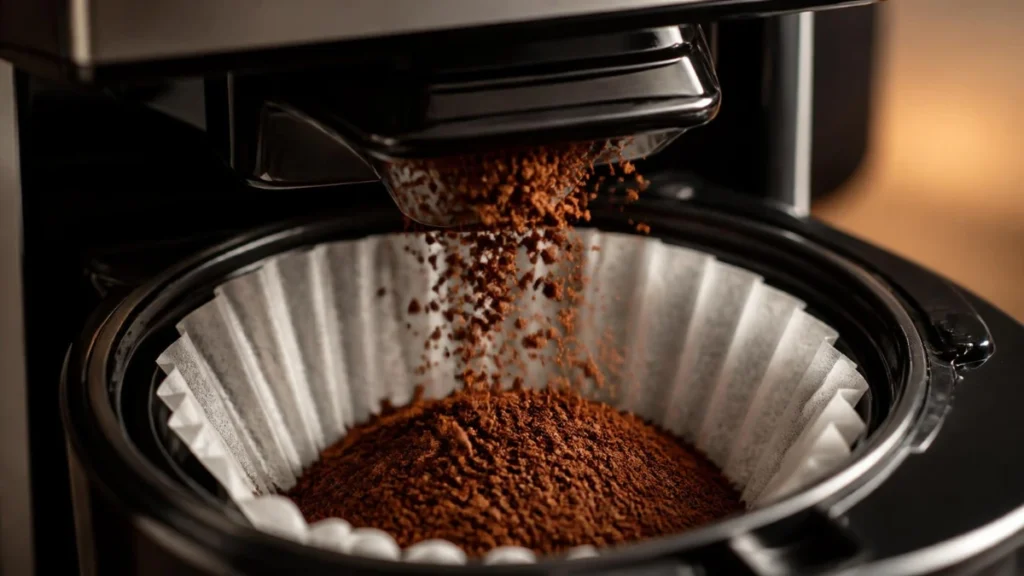
1. Burr beats blade — non-negotiable if you can afford it. A burr grinder produces uniform particle sizes, which is the foundation of even extraction. Every machine above $150 here uses a burr for a reason.
2. Look for a removable grinder chute. The chute is where old grounds collect, moisture breeds, and stale flavors transfer to fresh cups. Machines with a removable chute (Breville, Capresso) clean in a minute; fixed chutes (Cuisinart) need a dry brush and patience. Our grinder cleaning guide covers the technique.
3. A small hopper is a feature. Big hoppers invite bean storage, and beans go stale fastest when the hopper lid exposes them to air daily. Buy the machine whose hopper size matches your weekly consumption — and store the reserve properly (see vacuum vs airtight storage).
4. Match the grind range to your roast. Dark roasts are oily and clog fine burr settings; light roasts need finer grinding to extract (the temperature guide explains why light roasts need more extraction overall). A machine with at least 5 grind settings adapts; fixed-grind machines lock you into one roast style.
5. Bean quality still decides the cup. A grind-and-brew machine amplifies whatever you put in it—our best-beans-for-every-brewing-method guide pairs beans to machines.
Common Complaints — and the Fixes
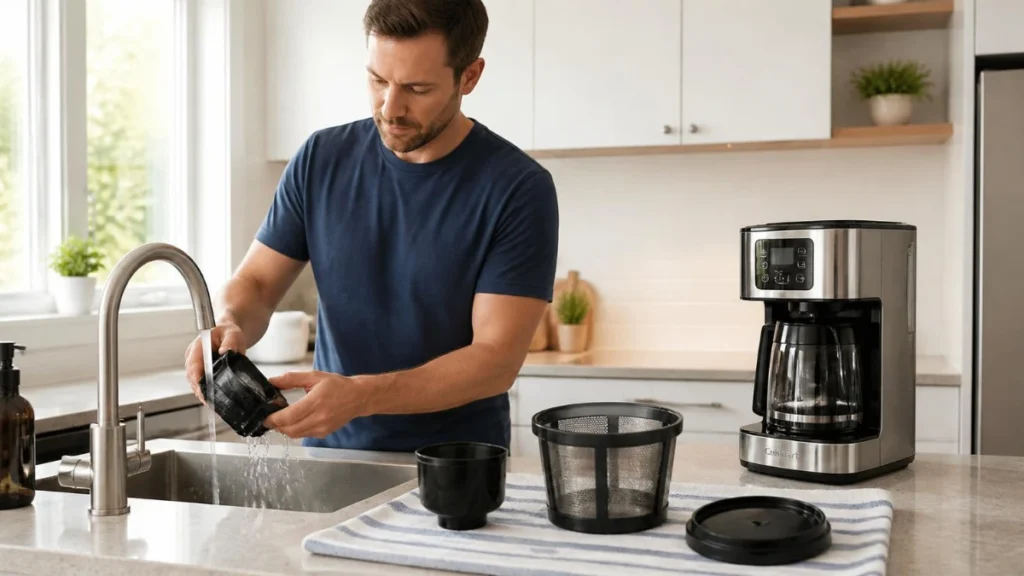
- “My grind-and-brew clogs for each cup.” Oily dark roasts gum up chutes. Run a cleaning cycle weekly, brush the chute dry, and grind slightly coarser for dark roasts (how long to grind, by method).
- “The coffee tastes weak.” Machines dose by cup count, not weight — they under-dose. Add one extra “cup” of beans for each cup you want, or calibrate with a scale once (see using a coffee scale).
- “It’s loud at 6 a.m.” All burr grinders whir for 30–60 seconds. The Capresso is quietest here; the Breville is loudest but fastest.
- “Static makes grounds fly everywhere.” A single drop of water misted on the beans before grinding (the Ross Drop) cuts static dramatically — the same trick our common pour-over mistakes readers use.
FAQs
Is a coffee maker with a built-in grinder worth it?
Yes — if you drink drip daily and value freshness, one machine beats a two-step routine. Skip it only if you already own a quality burr grinder, or if you brew methods (espresso, AeroPress) that drip machines can’t produce — see our AeroPress guide for those.
Do built-in grinders damage coffee machines?
No — but oily beans and skipped cleaning do. The grinder itself is a wear item: burrs last 2–4 years of daily use at this price class and are usually replaceable.
Can I use pre-ground coffee in a grind-and-brew machine?
Every machine here has a bypass (add pre-ground to the basket, skip the hopper). It defeats the purpose, but it is there for decaf emergencies.
How long do beans stay fresh in the hopper?
Three to five days in a sealed hopper, less if exposed to light. Buy whole beans in two-week quantities, store the reserve airtight, and refill the hopper weekly.
Burr or blade for a built-in grinder?
Burr, whenever the budget reaches ~$150. Below that, a blade machine still out-brews pre-ground — but you are leaving flavor on the table.
Final Verdict
The Breville Grind Control is the best coffee maker with a built-in grinder for enthusiasts who want control and can pay for it. The De’Longhi TrueBrew wins single-serve households. The Cuisinart DGB-800 is the family value pick, the Capresso CoffeeTeam Plus owns small counters, and the BLACK+DECKER Mill & Brew is the honest entry point under $70.
Whichever you choose: buy whole beans, store them airtight, and rinse the chute weekly. The machine handles the rest.
| Product | Model | ASIN |
|---|---|---|
| Breville the Grind Control | BDC650BSS | B00VGGVQCI |
| De’Longhi TrueBrew | DCM851 | B0F3ZSVPPG |
| Cuisinart Grind & Brew | DGB-800 | B079NM2ZYN |
| Capresso CoffeeTeam Plus | 465.05 | B002QG0RRC |
| BLACK+DECKER Mill & Brew | CM5000B | B00LU2I46E |
Recommended Reading
- Best Electric Coffee Grinders for Home Brewing (2026)
- Conical vs Flat Burr Grinders
- Best Drip Coffee Makers (2026)
- Best Beginner Coffee Setup Under $100
- Coffee Grind Size Chart