
The short answer
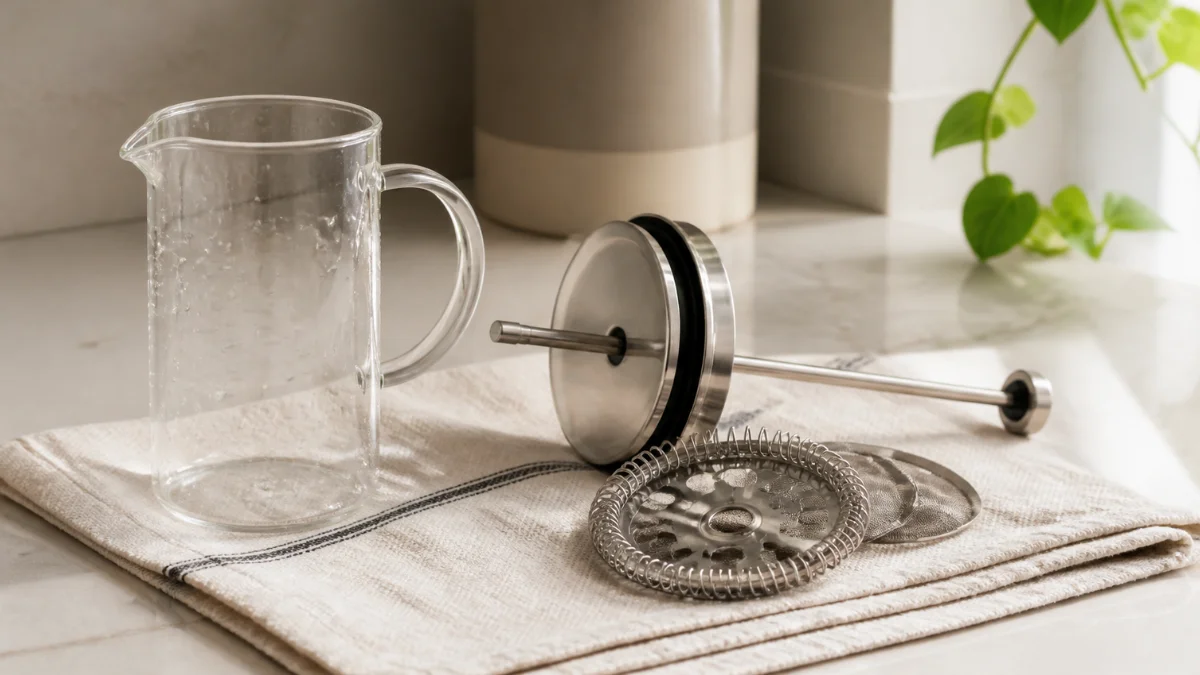
Rinse the carafe and plunger with hot water after every brew, deep-clean once a week with dish soap and a soft brush, and descale monthly with a 1:1 white vinegar-and-water soak. Disassemble the plunger — the mesh sandwich is where the stale taste lives.
A French press has four parts that touch coffee and about a dozen small gaps where coffee hides. That is why a press that looked clean can smell like old socks three days later. The glass is not the problem. The filter stack is.
This guide covers daily care, a weekly deep clean, and the specific fixes for cloudy glass, stale smells, mold, and a plunger that no longer seals.
Why a French Press Needs More Cleaning Than Other Brewers
Every brewing method leaves coffee oils behind. A French press leaves more of them, for two reasons.
First, it uses no paper filter. Paper traps oils along with the fine particles; a metal mesh lets both through. Those oils coat the glass, the mesh, and the underside of the lid.
Second, the grounds stay in contact with the coffee for four minutes and then sit in the carafe until you finish the pot. Warm, oxygen-exposed coffee oil oxidizes and turns rancid. Rancid oil is the source of the “stale” or “sour” note people blame on their beans.
A dirty press also affects the brew itself. Oil buildup on the mesh clogs the holes, slowing the press and letting fine particles bypass the filter, adding sediment to the cup. If you have already tried our fixes for sediment in French press coffee and nothing worked, clean the filter stack before changing your grind.
The mechanism is the same two-stage extraction that governs every brewing method: a fast wash of solubles from damaged surface cells, then a slow draw from intact cells inside each ground [4].
In a French press, that second phase never really stops while the grounds sit in the carafe — which is exactly why the oils left on the mesh go rancid rather than merely stale.
How Often Should You Clean It?
| Frequency | What to do | Time |
| After every brew | Rinse carafe and plunger with hot water; remove grounds | 30 seconds |
| Weekly | Full disassembly, hot soapy wash, brush the mesh | 5–10 minutes |
| Monthly | Vinegar or espresso-cleaner soak to remove mineral film and oil | 30 minutes |
| As needed | Baking soda paste for stains, odor, or mold | 20 minutes |
If you brew daily, the weekly clean is not optional. If you brew once a week, a full clean after each use is enough.
What You Need
- Soft bottle brush or the brush that came with the press
- Mild dish soap
- White vinegar
- Baking soda
- A clean towel or drying rack
- Optional: espresso-machine cleaning powder (Cafiza or similar)
Avoid steel wool, abrasive scouring pads, and bleach. Steel wool scratches glass and stainless steel; bleach pits stainless steel and can damage gaskets.
Step 1 — Disassemble the Plunger
Most people skip this step, and it matters most.
A standard French press plunger stack, from top to bottom, is:
- Plunger rod
- Lid or top plate
- Coarse filter screen
- Fine mesh filter
- Spring
- Bottom plate or cross plate
- Retaining nut or knob
Unscrew the bottom nut and slide the layers off the rod. Note the order — photograph it with your phone the first time. Reassembling in the wrong order is the most common reason a press starts letting grounds through.
Some presses use a single folded mesh basket instead of a layered stack. Those still unscrew from the rod and should be opened as far as the design allows.
Step 2 — Rinse and Knock Out the Grounds
Scrape the spent grounds into the bin or compost. Don’t wash them down the sink—a tablespoon of grounds can clog a drain over time.
Rinse the carafe with hot water. If the grounds have dried on, fill the carafe halfway with hot water and let it stand for two minutes before scrubbing.
Step 3 — Wash With Hot Soapy Water
Fill the carafe with hot water and a few drops of mild dish soap. Wash the glass with a soft brush, paying attention to the bottom corners where oil collects.
Wash each plunger component separately. Brush both sides of the mesh, not just the top. Hold the mesh up to the light when you are done — if you can see clogged patches, keep brushing.
Rinse everything under running water until the water runs clear and no soap film remains. Soap residue tastes worse than old coffee.
Step 4 — Deep Clean the Glass
For a carafe that looks cloudy or has brown staining, use one of these:
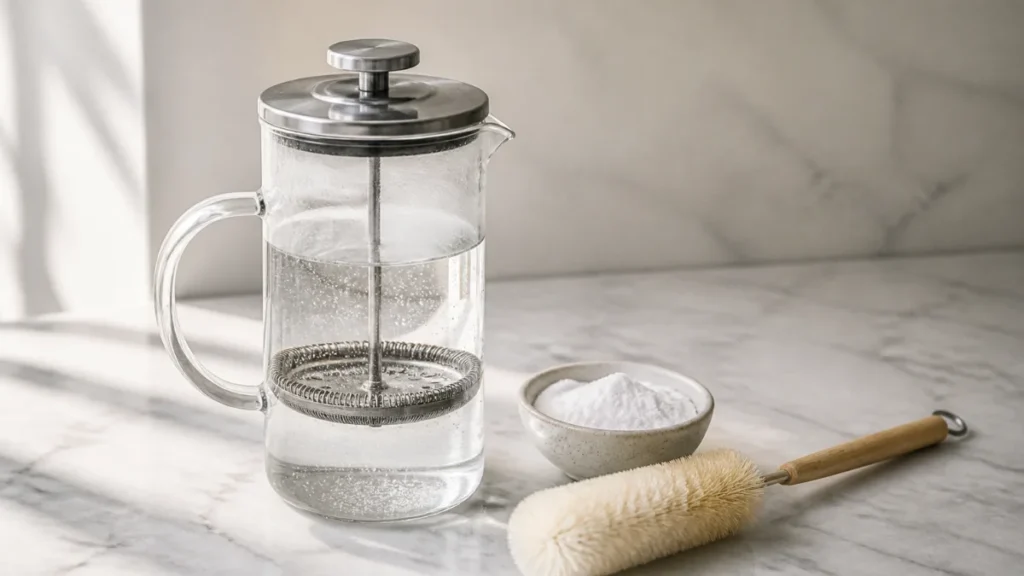
Baking soda paste. Mix three tablespoons of baking soda with a little water to form a paste. Rub it over the stains with a soft cloth, let it sit for 15 minutes, then rinse. This is the safest option for printed measurement marks.
White vinegar soak. Fill the carafe with equal parts white vinegar and warm water. Soak for 30 minutes. This dissolves mineral scale — the chalky film that builds up in hard-water areas — and lifts light oil stains.
Espresso cleaner. A teaspoon of Cafiza-style powder in 500 ml of hot water, soaked for 10 minutes, removes coffee oil completely. Rinse very thoroughly afterward.
Do not combine vinegar and baking soda in the same soak. They neutralize each other. Use one, rinse, then the other if needed.
Step 5 — Clean the Filter Stack Properly
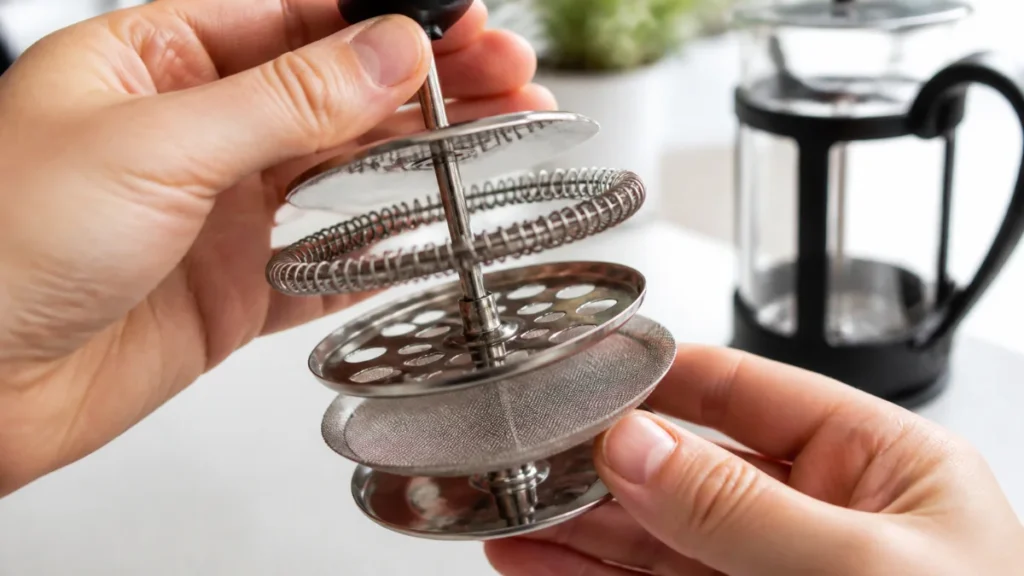
The mesh is where old coffee hides. After brushing, soak the disassembled filter parts in hot water with a drop of dish soap for ten minutes. For heavy buildup, use the vinegar solution.
If the mesh has visible brown residue that will not brush off, replace the filter assembly. They are inexpensive and widely available. A worn or clogged filter usually causes a press to suddenly produce gritty coffee.
Check the gasket or seal at the same time. If it is hardened, cracked, or stretched, it will not scrape the carafe walls cleanly, and grounds will slip past. Most manufacturers sell replacement seals.
Step 6 — Dry Completely Before Reassembling
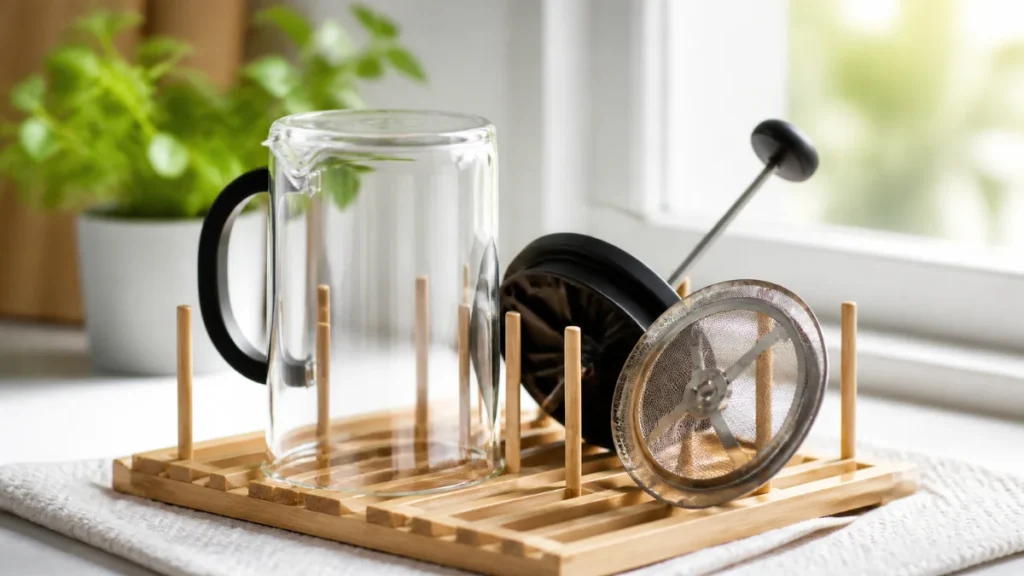
Water left in the filter stack can grow mold between brews. Shake off excess water, then stand the parts on a drying rack or towel until fully dry. Do not reassemble a wet press and put it in a cupboard.
If you are in a hurry, dry the mesh with a clean towel and leave the plunger out of the carafe overnight.
Step 7 — Reassemble in the Right Order
Stack the components back onto the rod in the reverse order of disassembly: bottom plate, spring, fine mesh, coarse screen, top plate, then the nut. Hand-tighten only. Over-tightening warps the plates and creates gaps.
Test the seal by pressing the empty plunger through the carafe. It should move with light resistance and no scraping.
Glass, Stainless Steel, and Insulated Presses
| Type | Dishwasher | Notes |
| Borosilicate glass carafe | Usually yes, top rack | Remove wood, leather, or plastic collars first |
| Stainless steel carafe | Yes, but hand wash preferred | Avoid bleach; dry immediately to prevent water spots |
| Double-wall insulated | No | Water can enter the vacuum layer and ruin insulation |
| Plunger and mesh | Yes, if all metal | Check for plastic bushings first |
| Wood or leather collar | No | Wipe with a damp cloth and dry immediately |
When in doubt, hand wash. The drying cycle in a dishwasher can warp plastic lids and degrade gaskets. If you are choosing between materials rather than cleaning something you already own, our roundup of the best insulated stainless steel French presses compares double-wall models on heat retention, seal quality, and how easily the plunger stack comes apart.
Removing Stubborn Smells and Mold
A sour, musty, or “dishrag” smell means mold or bacterial growth, usually in the mesh or under the lid.
- Disassemble completely.
- Soak all parts in a solution of one tablespoon of baking soda per 500 ml of warm water for 30 minutes.
- Scrub the mesh with a soft brush.
- Soak in a 1:1 white vinegar-to-water solution for 15 minutes.
- Rinse thoroughly and dry in direct sunlight if possible — UV helps.
If the smell persists after two rounds, replace the filter assembly and gasket. Mold can colonize the space between mesh layers that the brush can’t reach.
Troubleshooting
| Problem | Cause | Fix |
| Cloudy glass | Mineral scale | Vinegar soak, 30 minutes |
| Brown film on glass | Coffee oil | Baking soda paste or espresso cleaner |
| Gritty coffee | Clogged or worn mesh | Deep clean; replace filter if worn |
| Plunger hard to press | Grounds in the seal, or grind too fine | Clean gasket; use a coarser grind |
| Black flakes in coffee | Dried grounds under the lid | Disassemble and brush the lid threads |
| Musty smell | Mold in mesh | Baking soda and vinegar soaks; replace if needed |
| Loose plunger | Worn gasket | Replace the seal |
| Soapy taste | Residue in mesh | Rinse longer; soak in clean water |
If the plunger is hard to press and the press is clean, the grind is probably too fine. Our French press grind size guide explains the coarse setting you should be using.
How to Keep It Cleaner, Longer
- Rinse immediately after pouring the last cup. Dried coffee oil is much harder to remove.
- Never leave grounds in the press overnight.
- Store the press with the plunger out and the lid off so air can circulate.
- Use a coarse grind — fewer fines means less material trapped in the mesh.
- If you brew every day, keep two presses or do the weekly deep clean on a fixed day.
The grinder deserves the same routine. Coffee oils build up on burrs and in the chute exactly as they do on the mesh, and a grinder that is never cleaned will put stale grounds into every fresh dose — our guide to cleaning a coffee grinder covers the brush-out without a full teardown.
Frequently Asked Questions
How often should you clean a French press?
Rinse it after every brew, then fully disassemble and wash it with soap once a week. Descale monthly if you have hard water.
Can you put a French press in the dishwasher?
The glass carafe and metal plunger parts are usually dishwasher safe on the top rack, but remove wood, leather, and plastic collars first. Double-wall insulated presses should always be hand washed.
How do you get the smell out of a French press?
Disassemble it, soak the parts in baking soda and water for 30 minutes, then in equal parts white vinegar and water for 15 minutes. If the smell remains, replace the filter assembly and gasket.
Why does my French press coffee taste bitter after cleaning?
Soap residue is the usual cause. Rinse the mesh and carafe with hot water until no film remains, then rinse once more.
Can I use bleach to clean a French press?
No. Bleach pits stainless steel, degrades gaskets, and leaves a residue that is hard to rinse from the mesh.
How do I remove coffee stains from the glass?
A baking soda paste, left for 15 minutes and wiped with a soft cloth, removes most stains. For mineral haze, soak it in a 1:1 white vinegar solution.
Do I need to replace the filter? Yes, eventually. If the mesh is clogged, torn, or the press produces grit after cleaning, a replacement filter assembly restores performance for a few dollars.
Final Thoughts
Cleaning a French press takes about ten minutes a week, and most of that time is soaking. The difference it makes is not subtle: a clean press produces a cleaner, sweeter cup with less sediment and no stale aftertaste.
If you are still dialing in the brew itself, start with our French press coffee guide for the full method, then the ratio explainer to fix the numbers. Clean equipment and the right grind solve most complaints about French press coffee—the rest is just good beans.
References
- U.S. Environmental Protection Agency. “Mold Cleanup.” — scrub mold from hard surfaces with detergent and water, dry completely, and note that porous materials may be impossible to clean fully. epa.gov/mold/mold-cleanup-your-home
- Centers for Disease Control and Prevention. “Mold Cleanup — Who shouldn’t clean mold.” — protective equipment, bleach dilution limits, and the warning never to mix bleach with ammonia or any other cleanser. cdc.gov/mold-health/about/clean-up.html
- U.S. Department of Agriculture, Food Safety and Inspection Service. “Molds on Food: Are They Dangerous?” — baking soda cleaning dilution, and the guidance that a musty smell means mold is being spread and uncleanable items should be discarded. fsis.usda.gov
- Moroney, K.M., Lee, W.T., O’Brien, S.B.G., Suijver, F., & Marra, J. (2015). “Modeling of coffee extraction during brewing using multiscale methods: An experimentally validated model.” Chemical Engineering Science, 137, 216–234. DOI: 10.1016/j.ces.2015.06.021
Citation note: references 1–3 are government guidance on mold and cleaning, applied here to coffee equipment; reference 4 explains why oils remain in the press and turn rancid. None are coffee-specific studies, so where the guidance is general household advice, this article says so rather than implying a coffee-industry standard exists.